
Pre-Wedding Shoot Outfits: The Ultimate 2026 Luxury Style Guide
The secret to a cinematic gallery isn't just the price tag of your wardrobe. It's how your choice of fabric interacts with the wind and the architecture of your location. Selecting the right pre-wedding shoot outfits is a high-stakes exercise in visual storytelling where color theory and movement matter as much as the labels you wear. You've likely felt the pressure of trying to look modern without losing your cultural identity, or worried that your coordinated looks will end up feeling dated and too matchy in a few years. It's a common struggle for couples aiming for that editorial, high-end aesthetic.
This guide will help you master the art of luxury styling by providing curated templates designed specifically for professional photography and cinematography. You'll learn how to blend traditional South Asian elements with contemporary 2026 trends like flowy, lightweight fabrics and vintage-inspired silhouettes. We'll also cover essential logistics, including how to navigate photography permit requirements at iconic venues like the Vizcaya Museum or the National Mall. By the end, you'll have a cohesive wardrobe plan that ensures you look effortless and feel confident in front of the lens.
Key Takeaways
Learn how to treat your wardrobe as a cinematic production to ensure your photos remain timeless and editorial.
Discover how to balance South Asian heritage with high-fashion trends using our curated templates for pre-wedding shoot outfits.
Master the "holy trinity" of fabrics—silk, chiffon, and organza—to create breathtaking movement and catch natural light on camera.
Identify how to align your outfit's silhouette with your specific location, whether it's an urban cityscape or a destination landscape.
Access a final 48-hour styling checklist to ensure every accessory and garment is camera-ready for your professional session.
Table of Contents
The Art of Visual Storytelling: Why Pre-Wedding Shoot Outfits Matter
Your choice of pre-wedding shoot outfits serves as the visual script for your entire session. In a luxury context, these garments aren't just clothes; they're the primary building blocks of a cinematic legacy. When you look back at your gallery in a decade, the textures and silhouettes you choose today will dictate whether the images feel like a fleeting trend or a timeless work of art. Styling is the foundation of the session's emotional tone. It tells the viewer if your story is one of high-fashion drama, quiet intimacy, or playful adventure.
There's a significant difference between looking "nice" and looking "editorial" on camera. Looking nice is what we aim for during a weekend brunch. Looking editorial requires a professional understanding of how a lens compresses space and how light interacts with specific textiles. Even a "casual" look in a luxury shoot isn't accidental. It involves a curated selection of high-quality fabrics and tailored fits that ensure you don't disappear into the background. The history of pre-wedding photography reflects a clear evolution from stiff, formal studio portraits to these highly stylized, narrative-driven sessions that demand professional curation.
Beyond Coordination: Building a Visual Narrative
We've moved past the era of the "same color shirt" cliché. Sophisticated styling relies on complement, not imitation. Instead of wearing identical shades, focus on using contrast and texture to create depth. For example, if one partner wears a heavy, embroidered South Asian silk, the other might opt for a matte wool suit. This creates a rich visual hierarchy that pops in high-resolution photography. Your wardrobe should also align with your long-term wedding cinematography goals. If you want a film that feels grand and sweeping, you need outfits with enough volume to catch the wind and create a sense of scale.
The Psychology of Color in Luxury Shoots
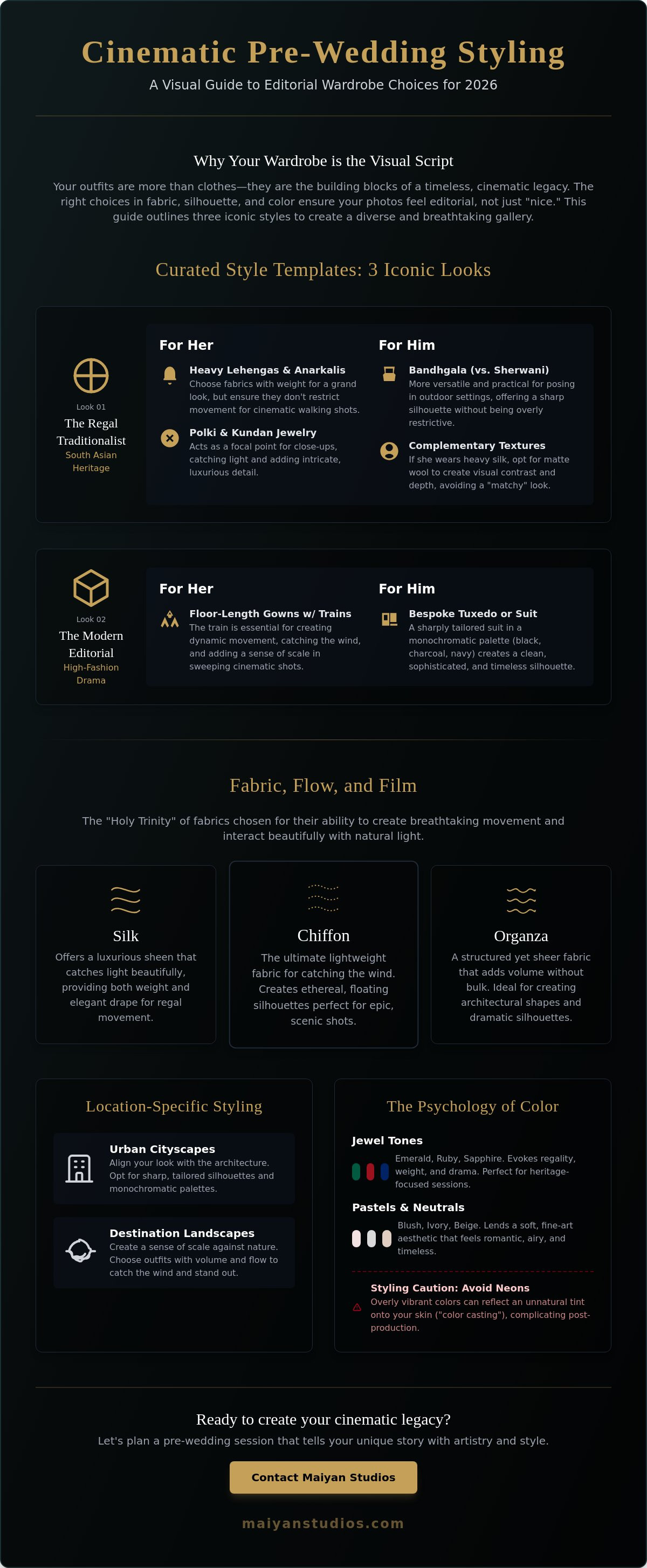
Color is a powerful tool for setting the mood of your film. Jewel tones like emerald, ruby, and deep sapphire bring a sense of regality and weight, which is particularly effective for heritage-focused sessions. In contrast, pastels and neutrals lend themselves to a soft, fine-art aesthetic that feels romantic and airy. You should generally avoid neon or overly vibrant colors. These can cause "color casting," where the fabric reflects an unnatural tint onto your skin, making the post-production process more difficult. Sticking to a refined palette ensures the focus remains on your connection rather than a distracting wardrobe choice.
Curated Style Templates: 3 Iconic Looks for 2026
Planning a high-end session usually involves three distinct wardrobe changes. This variety ensures your final gallery feels like a complete narrative rather than a single moment frozen in time. By selecting pre-wedding shoot outfits that span across different styles, you create a diverse portfolio of images that look stunning in both a physical album and a cinematic highlight reel. The key is to ensure each look serves a specific purpose in your visual storytelling, from honoring your roots to showcasing your modern fashion sensibilities.
The Regal Traditionalist: South Asian Heritage
For heritage-focused sequences, the goal is to balance grandeur with practicality. Heavy Lehengas or Anarkalis look magnificent in still shots, but they can be difficult to manage during cinematic walking sequences. Choose fabrics that offer weight without restricting your movement. For the groom, a Bandhgala often works better for pre-wedding contexts than a full Sherwani. It's more versatile and allows for easier posing in outdoor settings. Don't forget the impact of Polki and Kundan jewelry. These pieces act as focal points for close-up cinematography, catching the light and adding a layer of intricate detail that defines the luxury aesthetic. If you're planning a luxury pre-wedding session, this look provides the foundational elegance that anchors your heritage.
The Modern Editorial: High-Fashion Drama
This template is about creating a magazine-ready look that feels both timeless and bold. For brides, floor-length gowns with dramatic trains are essential because they provide the movement needed for dynamic shots. For grooms, a bespoke tuxedo or a sharply tailored suit in a monochromatic palette creates a clean, sophisticated silhouette. This style works best in architectural settings where the sharp lines of the clothing contrast with the curves of the building. Monochromatic styling is particularly effective here. It keeps the viewer's eye on your expressions and the environment rather than a busy pattern.
The third look for 2026 is the Romantic Fusion, which blends contemporary chic with a cultural twist. Current trends show a rise in multicolor crop tops paired with flowy skirts or structured corset tops with side-slit skirts. These outfits offer a contemporary edge while maintaining a soft, romantic vibe. Mixing these three templates across a premium session, which often spans eight hours of coverage, allows you to capture heritage, high-fashion drama, and modern romance in one cohesive production. It's about building a wardrobe that moves as beautifully as you do.
Fabric, Flow, and Film: Choosing Outfits for Cinematic Movement
The way your clothing moves is just as important as how it looks in a mirror. In high-end cinematography, the interaction between fabric and the environment creates the "dreamy" quality seen in luxury films. While a stiff fabric might look structured and sharp in a single portrait, it often fails to translate during a slow-motion walking sequence. Selecting the right pre-wedding shoot outfits requires a shift in perspective; you aren't just dressing for a camera, you're dressing for the wind, the light, and the motion of the scene. Stiff textiles like heavy denim, thick cotton, or rigid brocades can appear bulky or awkward during candid transitions, often hiding your natural silhouette rather than enhancing it.
Silk, chiffon, and organza are the "holy trinity" of cinematic movement. These materials are lightweight enough to react to the slightest breeze, providing the effortless flow that defines modern pre-wedding aesthetics. This movement is essential for the "dress toss" or "trailing fabric" shots that have become staples of luxury productions. When a gown has a significant train made of these airy materials, it allows a production team to create dynamic, sweeping visuals that feel grand and expensive. This isn't just about the bride. The groom's choice of material matters too. A heavy wool suit might look great, but in a warm outdoor setting, it can lead to visible perspiration and discomfort. Opting for high-quality, wrinkle-resistant wool blends or tailored linens ensures the groom looks sharp even after hours of movement.
Movement-Friendly Fabrics for Video
Cinematic flow is the visual harmony created when lightweight, layered textiles catch the air and trail gracefully behind the couple. Using layers of tulle or thin silk allows the camera to capture depth and dimension as you move through a space. It's also vital to consider how embellishments interact with professional lighting. While sequins and heavy embroidery are beautiful, they can reflect light in ways that "blow out" the camera sensor if not managed carefully. Your production team will often use these reflections to create a sparkling, star-like effect, but this requires fabrics that have a base of soft, matte material to balance the shine.
Technical Considerations: Patterns and Moire
Technical clarity is a hallmark of luxury film. You should generally avoid small, busy patterns like tight pinstripes or tiny houndstooth checks. These patterns often cause the "Moire effect," a distracting visual vibration that occurs when a digital sensor can't resolve the fine detail of the fabric. This effect can ruin an otherwise perfect shot. Instead, stick to solid colors or large-scale prints that remain clear and stable on screen. Finally, never overlook the importance of seamless undergarments. High-definition lenses and professional lighting are incredibly revealing, and visible lines can break the polished, editorial silhouette you worked so hard to curate.
Location-Specific Styling: From Cityscapes to Global Destinations
Selecting the right pre-wedding shoot outfits requires a deep understanding of your environment. Your wardrobe should never compete with the backdrop; instead, it should serve as the final, perfecting element of the scene. When you align your aesthetic with the best locations for engagement photos, you create a visual harmony that feels intentional and expensive. A common mistake is choosing a look that "matches" the setting too closely, which can cause you to blend into the background. Instead, professional stylists often use the "Contrast Rule." This involves wearing highly formal, structured garments in rugged, natural settings or soft, ethereal fabrics against hard, modern architecture.
The Contrast Rule is particularly effective for creating high-fashion drama. Imagine a voluminous, red silk gown against the neutral, jagged rocks of a desert or a sharp, black-tie tuxedo in the middle of a wildflower field. This juxtaposition instantly elevates the image from a standard portrait to a piece of editorial art. Whether you're planning a local session or a global production, your clothing must be a response to the textures and colors of the world around you.
The Urban Sophisticate
For a metropolitan love story, focus on structure and clean lines. Urban environments are dominated by glass, steel, and stone, so your outfits should mirror that sophistication. Structured blazers, tailored trousers, and sleek cocktail dresses work perfectly against city skylines. Use bold pops of color like cobalt blue or deep emerald to stand out against neutral buildings. Footwear is a critical logistical detail here. While a four-inch heel is perfect for the actual shot, the reality of city shoots involves a lot of walking across pavement and grates. Always bring a pair of stylish flats for transitions between setups to keep your energy high and your feet comfortable.
The Global Traveler: Destination Style
International shoots demand a specific approach to heritage and environment. If you're heading to the "Old World" charm of Lake Como or a Parisian villa, choose outfits that reflect that timeless elegance. Soft pastels, delicate lace, and light linens complement the historic architecture without overpowering it. For desert sessions, lean into warm earth tones like terracotta, gold, and sand. Use billowing fabrics that the wind can catch to create a sense of vastness and scale. If you're ready to capture your story on a global stage, you can secure your destination wedding coverage and pre-wedding session with a team that understands these international logistics.
Packing for these sessions is an art in itself. Luxury fabrics like silk and organza are prone to deep creasing during flights. Never rely on hotel irons, which can often damage delicate fibers. Always carry a professional-grade handheld steamer and hang your outfits immediately upon arrival. For high-end South Asian attire with heavy embroidery, consider using a specialized garment box to prevent the weight of the beads from stretching the fabric during transit. Proper preparation ensures that when the camera starts rolling, your wardrobe looks as flawless as the destination itself.
Preparing for Your Shoot: The Final Styling Checklist
The final 48 hours before your production are the most critical for ensuring your pre-wedding shoot outfits look exactly as intended. While you've spent weeks selecting the perfect garments, the transition from hanger to high-definition lens requires meticulous attention to detail. This countdown is about removing the variables that can detract from a luxury aesthetic, such as a missed wrinkle or a poorly fitting sleeve. Professional tailoring is the single most important investment you can make during this phase. High-resolution camera sensors are unforgiving; they will highlight every bunch of fabric or gap in a waistline that might go unnoticed in person.
Professional hair and makeup for a pre-wedding session also differ significantly from your wedding day look. On your wedding day, makeup is designed for longevity and to look beautiful to the naked eye throughout a long event. For a pre-wedding shoot, the application is tailored specifically for the camera's sensor and the lighting conditions of your location. It's an editorial approach that focuses on contouring for the lens and ensuring your features remain defined under professional strobes or bright natural light. This ensures you look like the best version of yourself in every frame of your film.
Grooming and Tailoring Excellence
Off-the-rack clothing is often the enemy of a high-end visual. Even the most expensive designer pieces usually require minor adjustments to drape perfectly on your specific frame. Ensure your tailoring is finalized at least one week prior to the shoot to allow for a final fitting. For the groom, professional hair styling is essential, especially for outdoor sessions where wind can quickly turn a neat look into a messy one. Use products that provide structure without looking greasy or stiff on film. Your on-set emergency kit should include several key items to maintain a polished look throughout the day:
A high-quality lint roller for dark wool suits and velvet fabrics.
Double-sided fashion tape for securing necklines or silk drapes.
Safety pins and a small sewing kit for unexpected snags in delicate lace.
Jewelry cleaner to ensure your Polki or diamonds catch the light perfectly.
Neutral-toned blotting papers to manage shine without disturbing your makeup.
A handheld steamer for quick touch-ups between wardrobe changes.
The Maiyan Studios Styling Experience
At Maiyan Studios, we believe that the best results come from a collaborative preparation process. We don't just show up and start shooting; we work with you to review your outfit mood boards well in advance of the session. This allows our team to plan specific lighting setups that will best enhance the textures of your chosen fabrics, whether it's the subtle sheen of a silk saree or the sharp matte finish of a bespoke tuxedo. We analyze how your colors will interact with the environment to ensure every frame looks like a deliberate piece of art. If you're ready to transform your vision into a cinematic reality, book your luxury pre-wedding session today and let's begin crafting your visual narrative.
Bringing Your Visual Story to Life
Crafting a timeless gallery is about more than just following trends. It requires an intentional approach to how your garments interact with the camera lens and the environment. By focusing on the movement of fabrics like organza and the strategic contrast of your looks against architectural or natural backdrops, you ensure your session feels like a high-end editorial production. Your choice of pre-wedding shoot outfits serves as the foundation for a cinematic legacy that'll look as sophisticated in twenty years as it does today.
Maiyan Studios brings over 15 years of luxury South Asian wedding expertise to every production. As global destination photography specialists, we've had our cinematic storytelling featured in top bridal publications. We understand the technical nuances of lighting and fabric that make a gallery truly magazine-worthy. Plan your magazine-worthy pre-wedding session with Maiyan Studios and let's create something extraordinary together. Your journey deserves a visual narrative that's as unique as your love story.
Frequently Asked Questions
How many outfits should we bring for a pre-wedding shoot?
A three-outfit rotation is the industry standard for a comprehensive eight-hour luxury session. This allows you to capture a heritage look, a high-fashion editorial ensemble, and a more relaxed, contemporary fusion style. Bringing more than three often results in rushed transitions, reducing the time your production team has to capture cinematic movement and lighting variations.
Should we wear traditional South Asian attire or Western formal wear?
Incorporating both styles provides the most diverse visual narrative for your gallery. Traditional attire like Lehengas or Sherwanis honors your heritage and adds incredible texture to close-up shots. Western formal wear, such as a black-tie tuxedo or a floor-length gown, offers a timeless, editorial aesthetic that works exceptionally well in architectural or urban settings.
What colors look best in luxury pre-wedding photography?
Deep jewel tones and soft neutrals consistently produce the most sophisticated results. Emerald green, ruby red, and sapphire blue provide a regal weight that pops against most backdrops. Meanwhile, shades like champagne, ivory, and slate gray offer a fine-art quality that feels airy and romantic. Avoid neon colors, as they can reflect unnatural tints onto your skin under professional lighting.
How do we coordinate our pre-wedding shoot outfits without looking too "matchy"?
Focus on a shared color palette rather than wearing identical shades. If one partner wears a patterned fabric, the other should stick to a solid color that pulls from a minor tone in that pattern. You can also coordinate through texture; pairing a heavy silk with a matte wool suit creates visual interest without the dated feel of wearing identical colors.
What fabrics should we avoid for a cinematic pre-wedding film?
Avoid stiff, heavy fabrics like thick denim, rigid polyester, or starched cotton that don't react to movement. These materials can look bulky and awkward in candid walking sequences. Additionally, stay away from fabrics with extremely small, tight patterns like micro-checks, which cause a distracting visual vibration known as the Moire effect on high-resolution digital sensors.
Do we need professional hair and makeup for the pre-wedding session?
Professional application is essential because camera-ready makeup is applied differently than everyday or even guest-wedding makeup. Artists who specialize in photography understand how to contour for specific lighting and ensure your features don't disappear under bright flashes. Professional hair styling also ensures your look remains secure against wind, which is crucial for outdoor destination sessions.
How do we choose outfits that complement our destination location?
Research the primary colors and textures of your destination before finalizing your wardrobe. For instance, the warm stone of a Parisian villa pairs beautifully with soft pastels, while the blue waters of Lake Como call for crisp whites or deep blues. Use the Contrast Rule to ensure you stand out; wear structured, formal pieces in rugged nature and soft, flowy fabrics in structured urban environments.
Should the groom wear a suit or something more casual?
A tailored suit or tuxedo is preferred for a luxury aesthetic, as casual wear often lacks the structure needed for high-end photography. Even for a relaxed look, a well-fitted blazer paired with chinos provides a more polished silhouette than a t-shirt or hoodie. The goal is to match the level of formality of your partner's attire to ensure the visual story remains cohesive and intentional.


Comments