
Hindu Wedding Rituals Photography: The Ultimate 2026 Luxury Checklist
- Maiyan Studios
- Jun 2
- 13 min read
What if the most spiritually significant moment of your three day celebration happens in the blink of an eye while your creative team is busy adjusting a lens? It's a common fear for couples planning a South Asian wedding. You've spent months perfecting every detail, and the thought of missing a single sacred gesture during your Hindu wedding rituals photography is genuinely stressful. You want a team that understands the cultural weight of the Mangalsutra or the Saptapadi while maintaining a high-fashion, magazine-style look.
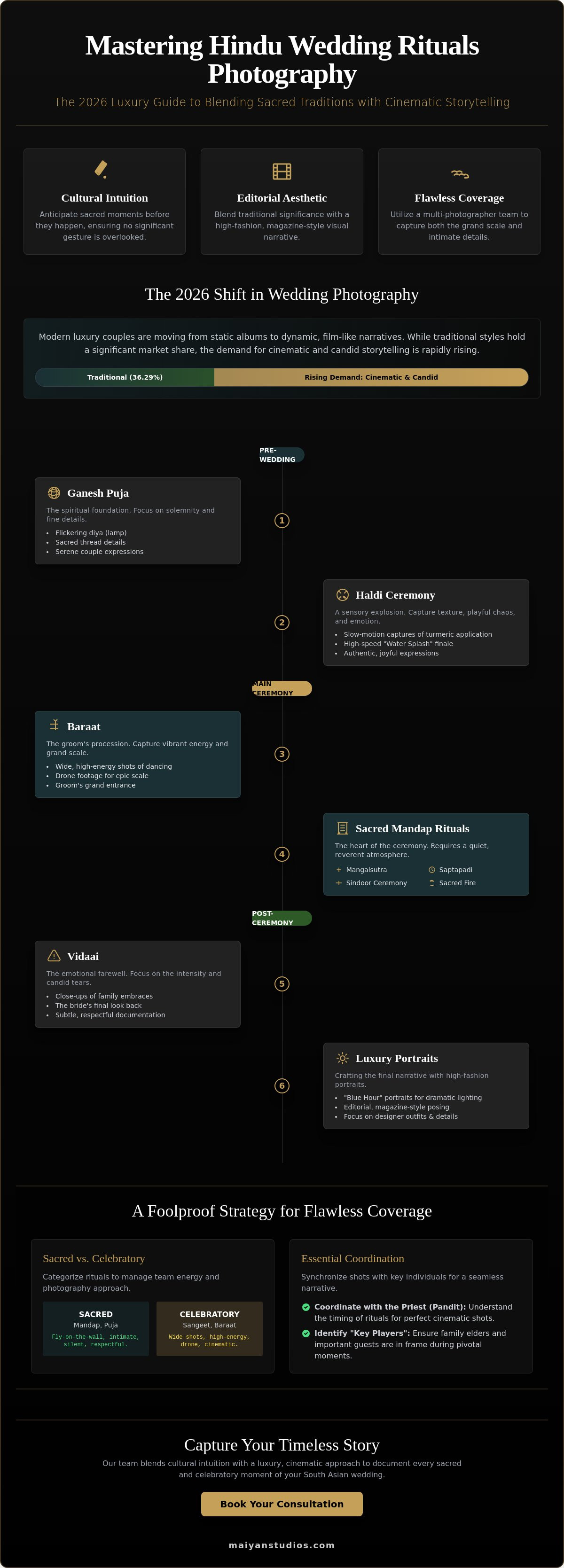
We understand that documenting these ceremonies requires more than just a camera; it requires a deep appreciation for tradition blended with modern cinematic storytelling. In 2026, couples are increasingly moving away from static albums toward dynamic, film-like narratives that include drone footage and editorial-style portraiture. This article provides a foolproof checklist to help you master the complex art of wedding documentation. You'll learn how to ensure your team captures every milestone with precision, from the vibrant energy of the Sangeet to the "blue hour" portraits that define luxury visual storytelling.
Key Takeaways
Learn how cultural intuition allows a creative team to anticipate sacred moments before they happen, ensuring no significant gesture is overlooked.
Discover the specific techniques for Hindu wedding rituals photography that blend traditional significance with a high-end, editorial aesthetic.
Identify the essential shots for multi-day events, from the vibrant energy of the Baraat to the emotional intensity of the Vidaai.
Understand why a multi-photographer team is vital for capturing the grand scale and intimate details of a luxury South Asian celebration.
Gain practical tips for coordinating with the priest to synchronize cinematic shots with the timing of the Mandap rituals.
Table of Contents
The Art of Capturing Hindu Wedding Rituals in 2026
Capturing a South Asian celebration is an exercise in high-stakes visual storytelling. In 2026, Hindu wedding rituals photography has evolved beyond the standard shot list. It's now about capturing the "energy of the sacred" through a lens that blends editorial flair with documentary honesty. The challenge isn't just the sheer number of events; it's the speed at which these deeply symbolic moments occur. A photographer who doesn't understand the sequence of a ceremony will likely miss the subtle glance between a father and daughter or the precise moment the sacred fire is ignited.
Modern luxury couples are moving away from rigid, posed photography. Instead, they're looking for a cinematic storyboard that feels like a high-fashion film. This approach requires a team that can transition seamlessly between the chaotic joy of a Baraat and the quiet, reverent atmosphere of the Mandap. By 2026, the industry standard for premium weddings has shifted toward a 36.29% market share for traditional styles, yet the demand for cinematic and candid narratives continues to rise. Success lies in balancing these two worlds.
Why Cultural Nuance Matters in Luxury Photography
Understanding the theological and emotional weight of Hindu wedding rituals fundamentally changes how a photographer chooses their angles. For example, knowing the significance of the Sindoor ceremony allows a photographer to position themselves for a tight, dramatic macro shot that captures the groom's hand and the bride's expression without obstructing the view of the family. This "cultural intuition" is what separates a standard creative team from a luxury one. You want a team that acts as a silent participant in these sacred spaces, respecting the sanctity of the ritual while documenting it with precision. Blending these traditional expectations with modern South Asian wedding photography styles ensures your gallery feels timeless yet contemporary.
Preparing Your Shot List for a Multi-Day Celebration
A multi-day event requires a strategic approach to energy management. We recommend categorizing rituals into "sacred" and "celebratory" buckets. Celebratory events like the Sangeet allow for wide, high-energy shots and drone footage, while sacred rituals require a more intimate, fly-on-the-wall perspective. To keep the creative team sharp, it's essential to use a structured wedding day photography schedule. This helps identify "key players" like the Pandit and family elders, ensuring they're always in the frame during pivotal moments. When your team knows who the main characters are, they can focus on the authentic emotions that make your story unique.
Pre-Wedding Rituals: Capturing Color, Joy, and Intimacy
The days leading up to the main ceremony are filled with a distinct energy that ranges from quiet devotion to high-octane celebration. For a creative team, this phase of Hindu wedding rituals photography is about documenting the transition from individual preparation to communal joy. It starts with the Ganesh Puja. This ritual is the spiritual foundation of the week. Capturing the solemnity of the first official prayer requires a focus on the fine details: the flickering diya, the sacred thread, and the serene expressions of the couple as they seek blessings. This quiet beginning provides a necessary contrast to the vibrant events that follow.
As the schedule moves into the more celebratory rituals, the visual language shifts. You aren't just taking photos; you're documenting the building anticipation. Managing the logistics of these multi-day events requires a team that knows when to be a fly on the wall and when to direct a high-fashion portrait session. If you're planning a grand celebration, our luxury wedding photography team can help streamline the visual narrative across every pre-wedding chapter.
The Haldi: A Masterclass in Texture and Action
The Haldi ceremony is a sensory explosion of golden yellow and playful energy. To capture this with a luxury finish, the focus must remain on texture and authentic emotion. We look for the "playful chaos" where the turmeric application becomes a communal celebration. A standard checklist for this event includes:
Slow-motion captures: Documenting the turmeric being smeared with cinematic precision.
The "Water Splash" finale: Capturing the high-speed action as the couple is drenched, creating beautiful droplets in the air.
Candid laughter: Focusing on the unscripted interactions between the bride and her closest relatives.
Outdoor lighting is a significant factor here. To maintain elegant skin tones despite the bright yellow paste, we often use diffused natural light. This ensures the mess of the ritual never loses its high-end, editorial feel. It's about finding the beauty in the chaos without compromising the quality of the image.
Mehendi and Sangeet: Intricacy and Movement
The Mehendi and Sangeet rituals offer a study in contrasts. Mehendi photography is all about the fine details. We utilize macro lenses to capture the intricate henna patterns and the bridal anticipation. It's the perfect time for editorial-style portraits that showcase the bride's jewelry and designer attire before the whirlwind of the wedding day begins. These quiet moments of preparation are often some of the most cherished in the final gallery.
The Sangeet, however, demands high-speed photography to freeze the motion of dance performances. Using wide-angle lenses is essential for Sangeet photography services to show the full scale of the venue and the synchronized energy of the performers. We focus on freezing the peak of a dance move while keeping the vibrant stage lighting in the background to create a dynamic, film-like narrative that feels alive even in a still frame.
The Main Ceremony: Sacred Mandap Rituals Checklist
The main ceremony is the spiritual peak of the entire celebration. While previous days focused on preparation and social joy, the Mandap represents the center of the universe where the actual union occurs. Effective Hindu wedding rituals photography during this stage requires a team that can transition from wide-angle grandiosity to tight, emotional close-ups in a heartbeat. It isn't just about documenting a sequence of events. It's about capturing the heavy silence of the Kanyadaan and the sudden, explosive joy of the Sindoor ceremony. You need a creative team that stays three steps ahead of the priest to ensure every sacred gesture is framed with cinematic precision.
Capturing the emotional gravity of the Kanyadaan requires a documentary eye that doesn't intrude on the family's space. This is the moment of "giving away," and it's often the most poignant part of the day. We look for the subtle hand placements and the raw, unscripted expressions of the parents. These shots provide the emotional anchor for your wedding gallery. As the ceremony concludes with the Sindoor and Mangalsutra, the energy shifts to one of triumph. These definitive milestones happen quickly, so your photographers must be positioned to capture the "just married" glow without any obstructions.
The Baraat and Milni: Grandeur in Motion
The Baraat is the ultimate test of a photographer's ability to handle high-speed movement and large crowds. It's a high-energy procession that demands a mix of perspectives. We utilize drone wedding videography to show the sheer scale of the family dancing toward the venue. A standard checklist for this phase includes:
The Groom's Entrance: Capturing the groom on a horse or in a luxury car surrounded by his cheering family.
The Milni: Focusing on the formal meeting and embrace between the two families, with a specific emphasis on the respect shown to elders.
Family Energy: Candid shots of cousins and friends leading the dance, capturing the vibrant atmosphere before the transition to the sacred Mandap.
The Seven Steps (Saptapadi): A Cinematic Approach
The Saptapadi is the cinematic heart of the Hindu wedding. The Agni Pradakshina, or circling the sacred fire, needs careful camera placement to avoid capturing only the backs of the couple's heads. We position our team to use the fire as a foreground element, creating a warm, ethereal glow on the couple's faces. It's a balance between capturing the intricate movement of the feet and the focused expressions of the bride and groom as they take their vows. During the Pushpanjali, or the shower of flower petals, we use high frame rates to freeze the petals in mid-air. This creates a dreamlike, editorial aesthetic that elevates the moment from a simple ritual to a masterpiece of visual storytelling.
Post-Ceremony and Luxury Details: The Final Narrative
The conclusion of the Mandap rituals doesn't signal the end of the story; it marks the beginning of the emotional and celebratory finale. In luxury Hindu wedding rituals photography, the post-ceremony phase is where the narrative shifts from ancient tradition to modern high-glamour. This transition often begins with the "First Look," a contemporary addition to the South Asian wedding schedule. While not a traditional ritual, it has become a vital milestone for capturing the couple's raw reaction in a private, editorial setting before the public festivities begin. It allows for curated, high-fashion portraits that showcase the intricate details of the bridal attire without the time constraints of the main ceremony.
As the day moves toward the reception, the visual style evolves into a high-glamour editorial approach. This is the time for dramatic lighting, sweeping shots of the grand ballroom, and cinematic captures of the couple's grand entrance. The goal is to produce a gallery that feels like a luxury fashion spread while maintaining the emotional thread of the day. To ensure every detail of your multi-day celebration is captured with this level of precision, you should book a professional wedding photography team experienced in the nuances of South Asian traditions.
The Vidaai: Capturing Raw Emotional Heritage
The Vidaai is perhaps the most challenging ritual to document because of its unpredictable and deeply personal nature. It requires a "fly on the wall" photojournalistic approach. The photographer must remain unobtrusive while staying close enough to capture the bittersweet reality of a bride leaving her childhood home. Key moments on our checklist include:
The Rice Throwing: A symbolic gesture of the bride repaying her debt to her parents, captured with a focus on the movement of the grain.
The Final Embrace: Documenting the raw, unscripted tears and hugs between the bride and her parents.
The Car Departure: A wide-angle shot that captures the physical and emotional distance as the couple begins their new life together.
Success here depends on balancing the sorrow of the departure with the inherent beauty of the moment. We focus on the eyes and the hands, as these often tell the most compelling story of the family's bond.
Preserving the Luxury: Jewelry and Attire
The sheer craftsmanship of a South Asian wedding deserves its own dedicated visual chapter. Macro photography is essential for documenting the luxury details that define the event. We pay special attention to the "getting ready" ritual, which serves as a bridge between the quiet morning and the grand ceremony. This is the best time to capture the Mangalsutra, the Nath (nose ring), and the heavy embroidery of the sherwani before they're in motion. Lighting gold and diamond jewelry requires technical expertise to avoid harsh glares while emphasizing the sparkle. By using soft, diffused light, we ensure that the textures of the designer lehenga and the brilliance of the stones are preserved with cinematic clarity.
Ensuring Flawless Coverage of Your Hindu Wedding Rituals
Mastering Hindu wedding rituals photography requires more than just high-end gear; it demands a logistical strategy that accounts for the scale of South Asian celebrations. A single lead photographer simply can't be in two places at once. They can't document the groom's final preparations for the Baraat while simultaneously capturing the bride's intimate moments before her entrance. This is why investing in a comprehensive 3-day wedding photography coverage package is essential for luxury events. A multi-person team ensures that no sacred gesture is lost to the chaos of a crowded Mandap or a high-energy procession.
Coordination with the Pandit is another non-negotiable part of the process. The priest acts as the director of the ceremony. If your creative team doesn't establish a rapport with him before the rituals begin, they'll struggle to anticipate the exact timing of the Mangalsutra or the Saptapadi. We recommend a brief check-in with the priest to understand his specific flow and where he prefers the team to stand. This prevents the "uncle with an iPhone" interference and ensures the professionals have a clear line of sight for every pivotal milestone.
The Power of a Unified Photo and Cinema Team
One of the biggest challenges during a crowded Hindu ceremony is the potential for "camera wars." This happens when independent photo and video teams compete for the same physical space around the fire. Hiring a unified team solves this problem through coordinated movement. When your photographers and cinematographers work for the same studio, they synchronize their ritual checklists. They know exactly who is taking the wide shot and who is going in for the macro detail. This synergy allows for cinematic lighting setups that enhance the traditional atmosphere without becoming an intrusive presence in your sacred space.
Logistics: Managing the Multi-Day Timeline
The complexity of Hindu wedding rituals photography is often found in the transitions. A successful gallery relies on a timeline that includes built-in buffer zones. These 15 to 30 minute windows between rituals are vital for capturing editorial portraits while the couple's attire and energy are still fresh. Before Day 1, we conduct a "ritual briefing" to align on cultural nuances and family expectations. This preparation ensures the team is ready for everything from the specific regional variations of the ceremony to the logistical hurdles of a large-scale venue.
Backup Gear: Every lead must carry redundant bodies and lenses to ensure zero downtime during ceremonies that cannot be paused.
Cultural Etiquette: Understanding when to remove shoes or avoid certain areas of the Mandap preserves the sanctity of the event.
Post-Production Storytelling: The final narrative should feel like a cohesive film, blending the raw emotions of the Vidaai with the high-glamour energy of the reception.
Elevating Your Vision for a 2026 Celebration
Your wedding isn't just a series of events; it's a sacred narrative that deserves to be told with cinematic precision. Mastering Hindu wedding rituals photography requires more than technical skill. It demands a deep respect for the spiritual weight of the Mandap and the logistical expertise to manage a complex, multi-day schedule. By prioritizing a creative team that understands cultural nuances and utilizes a coordinated approach, you ensure that every emotional glance and sacred gesture is preserved forever. From the golden glow of the Haldi to the bittersweet beauty of the Vidaai, your gallery should reflect the full spectrum of your heritage.
Whether you're planning a grand local event or a celebration abroad, the right team will bridge the gap between ancient tradition and modern luxury. Don't leave your visual heritage to chance. Secure your 2026 Hindu wedding photography with Maiyan Studios and benefit from our award-winning South Asian cinematography and global destination wedding expertise. As specialists in luxury multi-day coverage, we focus on documenting your story with the elegance it deserves. Your legacy is waiting to be captured, and we're here to help you tell it beautifully.
Frequently Asked Questions
What are the most important Hindu wedding rituals to photograph?
The most critical rituals include the Ganesh Puja, the Haldi, the Baraat, the Kanyadaan, the Saptapadi (Seven Steps), and the Sindoor/Mangalsutra application. These ceremonies represent the spiritual and legal union of the couple. Capturing these moments ensures the visual narrative covers the entire journey from preparation to the final vows. Each ritual offers a unique emotional depth that defines the story of the day.
How many photographers do I need for a multi-day Hindu wedding?
A minimum of two photographers is recommended for a luxury celebration, though three or four are common for larger guest counts. This allows for simultaneous coverage of the bride and groom's separate preparations. One photographer can focus on wide-angle environmental shots while another captures intimate close-ups of the Hindu wedding rituals photography milestones. A larger team ensures no detail is missed during high-energy events.
Is it okay for the photographer to be inside the Mandap?
Photographers should generally stay on the perimeter of the Mandap to maintain the sanctity of the space. While they may step in briefly for specific shots like the Sindoor application, coordination with the priest is vital. Professional teams use long lenses to capture intimate details from a distance without obstructing the view of the family or the sacred fire. It's about respecting the ritual while getting the shot.
How do we capture the Baraat if it’s very crowded?
Using a mix of aerial drones and high-angle perspectives is the most effective way to document a crowded Baraat. This captures the scale of the procession without getting lost in the crowd. A lead photographer often stays close to the groom on a horse or car, while assistants capture the energy of the dancing family from the sidelines using wide-angle lenses to freeze the vibrant movement.
What should we include in our Hindu wedding photography shot list?
Your shot list should include macro details of the jewelry, the couple’s first look, the "Milni" family meeting, and the emotional "Vidaai" departure. Don't forget the "Pushpanjali" flower shower and the "Agni Pradakshina" around the fire. A comprehensive list ensures the creative team knows which family members are priorities during these fast-moving ceremonies. It helps the team stay organized across multiple days of celebration.
Can we get cinematic video of the rituals without using bright lights?
Modern camera technology allows for high-quality cinematic video in low-light conditions without the need for intrusive, blinding spotlights. Professional teams use fast prime lenses and high-ISO sensors to preserve the warm, natural glow of the sacred fire. This maintains the intimate atmosphere of the Mandap while ensuring every ritual is documented with clarity. It's the best way to keep the ceremony's mood authentic.
How do photographers handle the long hours of a multi-day Indian wedding?
Luxury photography teams manage long hours through strategic rotation and scheduled breaks between ceremonies. By having a multi-person crew, photographers can take turns covering minor events while the lead focuses on the main rituals. This ensures the team remains sharp and creative for the high-energy reception after three full days of coverage. Proper planning keeps the energy high from the first puja to the final dance.
What is the best way to document the Vidaai ceremony?
The best way to document the Vidaai is through a purely photojournalistic approach. The photographer should remain a silent observer, focusing on the raw emotions of the bride and her parents. Using natural light and staying at a respectful distance allows the family to experience their bittersweet departure without feeling watched. This results in more authentic and moving images that capture the true heritage of the moment.


Comments