
Fine Art Wedding Prints: A Guide to Preserving Luxury Memories in 2026
Did you know that in 2026, printed formats are projected to lead the global wedding photography market with a 56.59% share? It's easy to feel overwhelmed by a digital gallery containing thousands of images, especially when you fear those memories might eventually fade or become obsolete. You want a tangible legacy that honors the intricate rituals and vibrant colors of your South Asian or luxury wedding. Investing in high-quality fine art wedding prints is the most effective way to transform a fleeting digital file into a museum-quality heirloom.
This guide will give you the confidence to navigate technical standards like the new ISO 18937-3:2026, which ensures your photos remain stable even under modern LED lighting. We'll explain how professional printing preserves color accuracy and detail for your family's future generations. You'll learn how to curate your gallery into a physical heritage that captures the cinematic, intentional spirit of your wedding day. We'll also explore why more couples are moving away from massive digital deliveries in favor of smaller, curated collections that tell a cohesive and artful story.
Key Takeaways
Understand the technical shift from standard C-Type prints to Giclée processes to ensure your wedding gallery meets archival museum standards.
Identify the specific paper types and pigment-based inks that preserve the intricate details and vibrant palettes of luxury South Asian wedding attire.
Master the art of curation by learning how to balance cinematic "hero shots" with candid storytelling when selecting your fine art wedding prints.
Learn how to protect your investment using UV-filtering museum glass and acid-free matting to prevent fading and environmental damage.
Discover how a professional cinematography-led approach to color grading ensures your physical prints match the high-end aesthetic of your digital films.
Table of Contents
What Are Fine Art Wedding Prints? Beyond the Standard Photograph
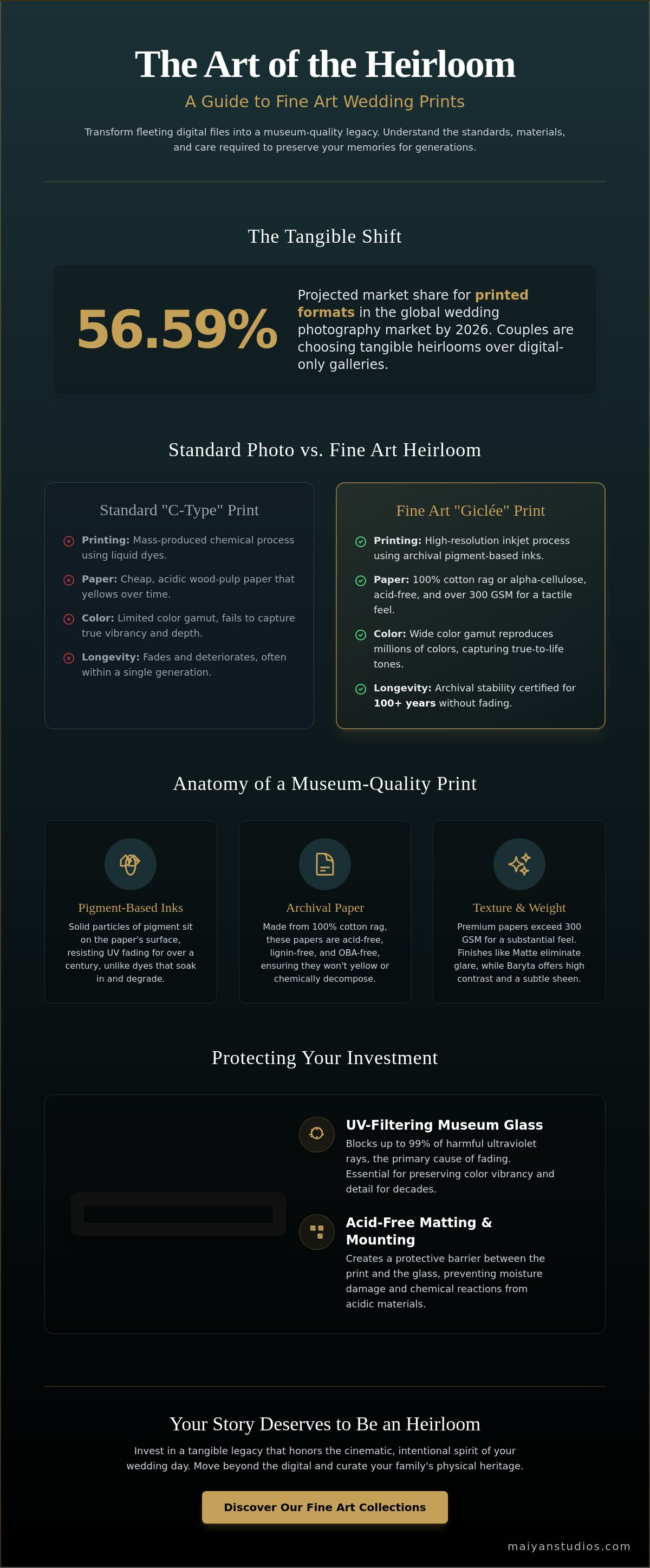
A standard photograph is often a mass-produced product of a chemical reaction. In contrast, fine art wedding prints are intentional works of art created through the Giclée printing process. This method uses high-resolution inkjet technology with specialized pigment-based inks rather than the liquid dyes found in standard "C-Type" prints. While C-Type prints are common in high-street labs, they often lack the dynamic range required to capture the deep shadows and brilliant highlights of luxury wedding photography. They can't match the precision of a professional giclée setup.
For South Asian weddings, where the vibrancy of a red lehenga or the intricate gold of a sherwani is central to the visual story, standard printing often falls short. Fine art processes offer a wider color gamut. This means they can reproduce millions more colors than a standard printer. It ensures that the specific shade of marigold or henna is captured exactly as it appeared on the day. Beyond the technical specs, there's a psychological weight to a physical print. In a world where we scroll past thousands of images daily, a physical heirloom demands attention. It's a quiet, permanent anchor for your family's history that digital files can't replicate.
The Science of Longevity: Why Fine Art Lasts 100+ Years
Standard photos often yellow or fade within a generation because they use cheap, acidic wood-pulp papers. Professional fine art wedding prints utilize 100% cotton rag or alpha-cellulose papers that are entirely acid-free and lignin-free. These materials don't degrade or react with the atmosphere. Archival stability is the resistance to chemical decomposition over time. When paired with pigment-based inks, which are made of solid particles that sit on the paper surface, these prints can resist UV fading for over a century. This ensures your heritage remains as vivid for your grandchildren as it was on your wedding night.
Texture and Depth: The Sensory Experience
The luxury of a print isn't just seen; it's felt. High-end papers are categorized by their weight, measured in grams per square meter (GSM). A premium fine art paper usually exceeds 300 GSM, giving it a substantial, tactile quality that feels like a museum artifact. The texture of the paper also plays a functional role in reducing glare.
Matte and Velvet: These finishes eliminate glare entirely. They're perfect for large wall displays in rooms with heavy natural light.
Baryta: This paper includes a barium sulfate coating. It offers a slight sheen that mimics traditional darkroom prints and provides the highest contrast for cinematic portraits.
While our wedding cinematography captures the fluid motion and sound of your celebration, these textured prints preserve the intricate details of lace and jewelry in a way a screen never can. The lack of surface reflection allows the viewer to focus on the depth of the image rather than the reflection of the room.
The Anatomy of a Luxury Print: Materials That Matter
The longevity and visual impact of fine art wedding prints depend entirely on the chemistry of the components used during production. Luxury photography isn't just about the digital file; it's about the physical medium that holds the image. Professional labs typically rely on two industry leaders: Hahnemühle and Moab. Hahnemühle, a German mill with centuries of heritage, produces papers that feel like heavy watercolor sheets. Moab is equally respected for its Somerset line, which offers incredible versatility for high-end portraits. These brands are essential because they provide a high "D-max," which refers to the deepest black a paper can produce. This depth is vital for maintaining the rich shadows and contrast found in luxury ceremony photos.
For South Asian weddings, color accuracy is non-negotiable. The vivid reds, deep emeralds, and shimmering golds of traditional attire require a wide color gamut that standard printers simply can't reach. Many commercial papers use Optical Brightening Agents (OBAs) to make the paper appear brighter. However, these chemicals break down over time, leading to a yellowed appearance. Selecting OBA-free papers ensures your highlights stay crisp and neutral for decades. Following photograph preservation best practices starts with choosing these chemically stable substrates. If you're planning a luxury wedding, ensuring your physical prints match the quality of your digital gallery is a vital final step.
Choosing Your Paper Finish: Matte vs. Lustre vs. Gloss
Deep matte is the gold standard for magazine worthy wedding photos because it absorbs light entirely. This allows you to view the image from any angle without distracting reflections. Lustre serves as a middle ground, offering a slight pebbled texture that resists fingerprints, making it ideal for family albums that will be handled frequently. For couples seeking a nostalgic, traditional look, Baryta papers are the best choice. These use a barium sulfate coating to mimic the "silver halide" look of old-school darkroom prints, providing a high-gloss finish with exceptional detail.
Pigment vs. Dye: The Color Accuracy Debate
Pigment inks are essentially microscopic particles of color suspended in a liquid. Unlike dye-based inks that soak into paper fibers and can bleed, pigment sits on the surface. This precision is necessary for capturing the sharp edges of intricate henna patterns or the glimmer of fine jewelry. Low-end prints often suffer from metamerism, a phenomenon where colors appear to shift when moved from natural sunlight to indoor LED bulbs. Professional 12-color pigment printers achieve smoother gradients and more accurate skin tones than standard 4-color processes by using additional shades like light gray and photo black. This ensures your fine art wedding prints look consistent regardless of the lighting in your home.
Curating Your Heritage: Selecting Images for Your Home Gallery
Digital galleries often contain upwards of 1,500 images, which makes the selection process for fine art wedding prints feel daunting. The goal isn't to replicate your entire gallery on your walls, but to curate a visual narrative that summarizes the essence of your multi-day celebration. Think of your home as a gallery space where each image serves a specific purpose in telling your story. Selecting the right images is a process of distillation, turning a weekend of festivities into a permanent family heritage.
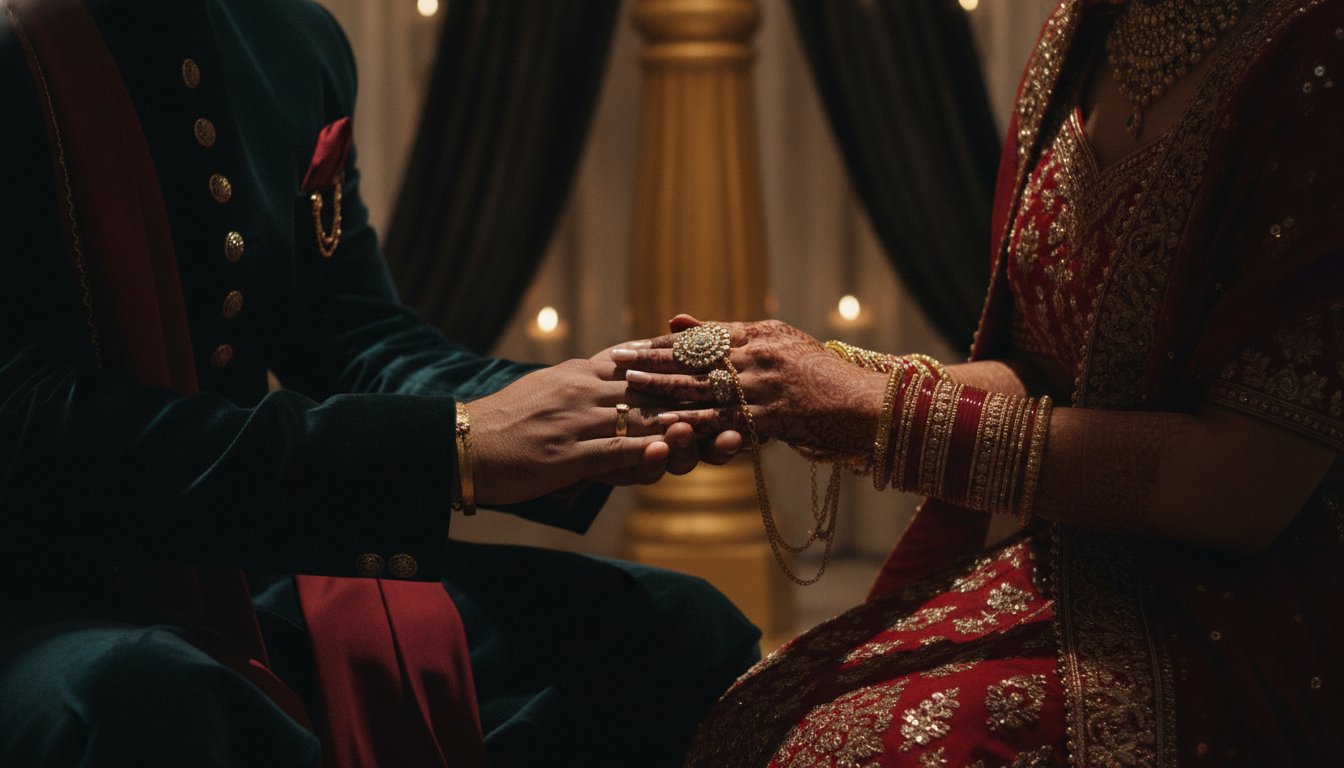
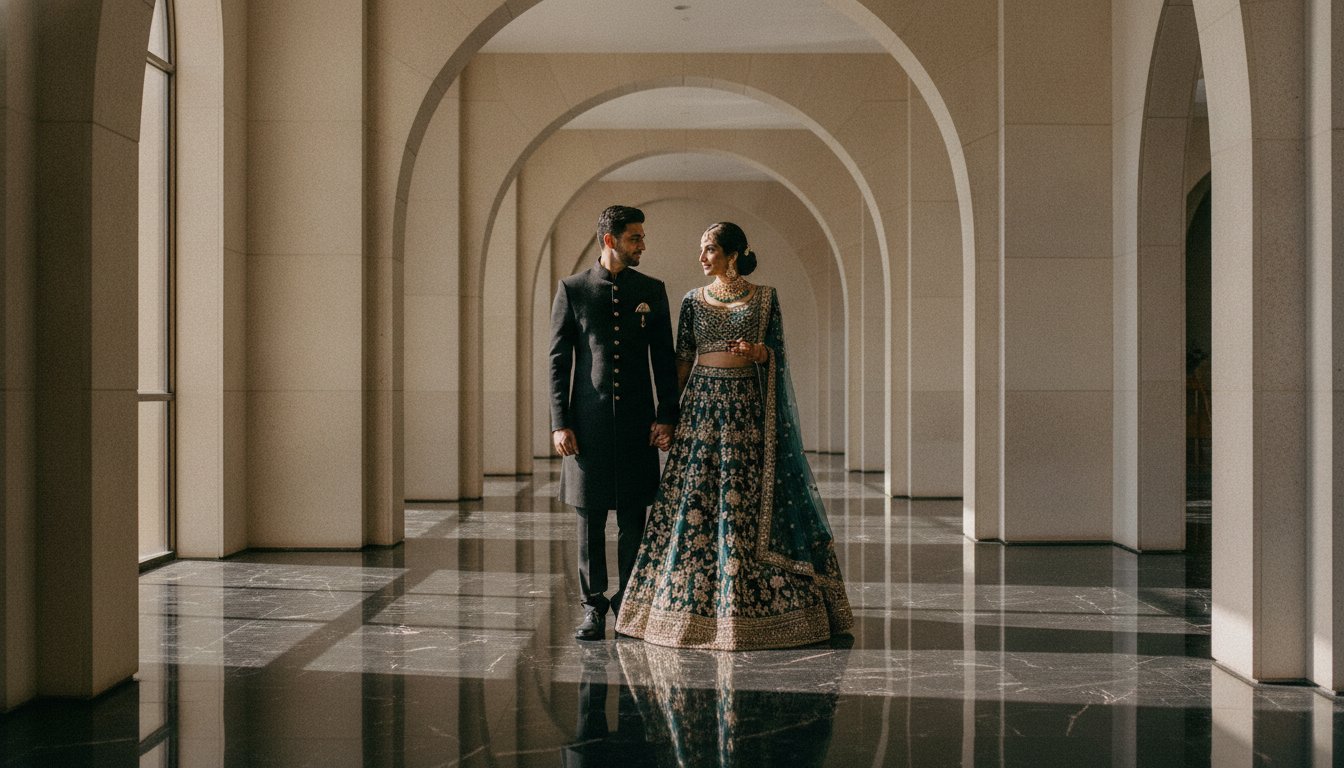
A "Hero Shot" is a large-scale, cinematic image that anchors a room. This is usually a formal portrait that showcases the scale of your venue or the grandeur of your attire. In contrast, "Storyteller" images are smaller, candid moments. These might include a shared laugh during the Sangeet or a quiet glance during the reception. Balancing these two types prevents your home gallery from feeling like a rigid museum exhibit; it adds a layer of warmth and personality. When you choose your anchors, using specific Indian wedding couple poses can help direct the viewer's eye toward the center of a display, creating a natural focal point for the room.
Don't overlook the power of detail prints. Images of family heirlooms, bridal jewelry, or the intricate floral arrangements of a mandap provide visual "breathing room" between portraits. These shots highlight the specific textures and rituals that make a luxury wedding unique. A well-posed portrait serves as the heart of the display, while surrounding candid shots and details provide the necessary emotional context.
The Rule of Three: Creating Triptychs and Wall Groupings
Triptychs, or groups of three, are a classic way to display fine art wedding prints. To maintain harmony with your home interior, try grouping your photos by color palette. For instance, a Sangeet grouping might feature vibrant oranges and pinks, while a ceremony set stays within a more muted, traditional range. A successful grouping often includes:
One wide-angle environmental shot to show the setting.
One intimate, close-up portrait of the couple.
One candid moment or significant detail shot.
This "Legacy Wall" approach allows you to integrate your new wedding heritage with existing family history, creating a continuous timeline of your lineage that feels both modern and timeless.
Preserving the Ritual: Curation for South Asian Traditions
Specific rituals like the Anand Karaj or Pheras demand a higher level of intentionality in the printing process. These sacred moments deserve large-format, high-texture printing that emphasizes the tactile nature of the ceremony. For high-energy events like the Haldi or Sangeet, use high-saturation pigment inks to capture the true vibrance of the colors. Even a single "First Look" image can stand alone as a fine art piece, capturing the raw anticipation before the festivities begin. By curating with these specific traditions in mind, you ensure that the most culturally significant moments receive the prominence they deserve.
Framing and Protection: Ensuring Your Investment Remains Pristine
Once you have selected your fine art wedding prints, the final stage of preservation is choosing the right frame. A frame is more than a decorative border; it's a protective micro-environment designed to shield your memories from the outside world. The most critical choice you'll make is the type of glazing used. Standard glass often reflects light like a mirror, which obscures the fine details of your photos. Museum glass, however, is virtually invisible. It features an anti-reflective coating that allows you to see the true colors and textures of the paper without distraction. More importantly, it provides superior protection against ultraviolet (UV) light, which is the primary cause of fading.
Equally important is the quality of the matting. You must ensure the lab uses 100% acid-free, archival mat boards. Lower-quality mats contain lignin, which releases acidic gases as it breaks down. This process, known as "outgassing," causes "mat burn," a permanent yellow stain on the edges of your print. To keep your display looking its best, avoid hanging your art in areas with high humidity or extreme temperature shifts. This means keeping your prints away from bathrooms, kitchens, or directly above active fireplaces. If you're ready to start your journey toward a physical heritage, explore our options for luxury wedding photography and cinematography.
The Role of the Mat: Aesthetic and Protective
A wide mat provides essential "breathing room," drawing the viewer's eye into the image while separating the art from the frame's edge. Beyond aesthetics, the mat serves a vital structural purpose by acting as a spacer. It's crucial that the print never touches the glass directly. If the two surfaces meet, moisture can become trapped, leading to mold growth or the print physically sticking to the glass. When choosing mat colors, avoid stark whites that can wash out the richness of South Asian bridal wear. Instead, opt for warm whites, creams, or subtle charcoals that complement deep skin tones and the intricate gold embroidery of a lehenga.
Modern Alternatives: Acrylic and Metal Mounting
For a more contemporary look, some couples prefer the "edge-to-edge" aesthetic of acrylic or metal mounting. Acrylic mounting involves face-printing the photo onto a thick sheet of high-grade plastic, which creates a high-gloss, cinematic feel with incredible depth. Museum-grade acrylic can block up to 99% of harmful UV rays, making it a robust choice for bright rooms. Metal prints are another durable alternative, especially popular for destination wedding memories. They're resistant to scratches and moisture, though they lack the traditional texture of paper. Whether you choose a floating frame for an editorial look or a traditional matted frame, the priority remains the same: shielding the physical legacy of your celebration.
The Maiyan Studios Approach: From Cinematic Capture to Fine Art Heirloom
At Maiyan Studios, we believe the final expression of a luxury wedding isn't found on a hard drive; it's found in the physical weight of a museum-grade album. Our approach to creating fine art wedding prints is deeply rooted in our experience with wedding cinematography. When we film a celebration, we look for light, movement, and color with a cinematic eye. We carry that same intentionality into the darkroom. The color grading used in our films informs the way we proof our prints, ensuring that the warmth of the ceremony and the high-energy vibrance of the reception are perfectly preserved on paper.
Bridging the gap between a three-day South Asian event and a lifelong physical collection requires a high level of curation. Most couples feel overwhelmed by the sheer volume of images from their Sangeet, Ceremony, and Reception. We offer a bespoke curation service to help you select the "Heritage 50." This is a carefully chosen set of fifty images that best represent the emotional arc of your weekend. By narrowing the focus, we help you build a cohesive narrative that fits perfectly on your walls or within a hand-bound album. Every piece we produce meets 100% archival standards, using the pigment-based inks and acid-free papers discussed in earlier sections to guarantee your legacy survives for generations.
Bespoke Color Calibration for Diverse Skin Tones
Generic printing labs often use automated color correction that fails to capture the nuance of South Asian complexions. These systems frequently over-saturate reds or wash out the golden undertones of the skin. We use a manual, bespoke color calibration process for every print. We meticulously proof each image to ensure that the deep reds of a bridal lehenga and the intricate sparkle of heirloom jewelry look exactly as they did in person. This synergy between our photography style and the final tactile result is what distinguishes a professional print from a standard digital copy. We treat every print as a unique piece of art that requires individual attention to detail.
Starting Your Family Legacy
Your wedding album is the first chapter of your family's visual history. This legacy often begins well before the wedding day itself. Many of our couples use our engagement photo ideas to create cinematic pre-wedding prints that serve as the opening pages of their collection. These sessions allow us to establish a consistent visual language that carries through to the wedding day and into the final fine art wedding prints. Whether you're planning a local luxury event or destination wedding coverage, the physical print is the only way to ensure your memories remain accessible as technology changes. Contact Maiyan Studios for a personalized print consultation to begin curating your family's physical heritage today.
Build Your Family Heritage Today
Transitioning from a massive digital gallery to a curated physical collection is the final step in honoring your wedding journey. By choosing fine art wedding prints, you ensure that the intricate details of your attire and the emotional weight of your rituals aren't lost to changing technology. You now understand how pigment-based inks and OBA-free papers work together to prevent fading and yellowing over time. These museum-grade materials transform fleeting digital moments into a permanent legacy that your family will cherish for over a century.
Maiyan Studios brings over 15 years of luxury wedding experience to every project. We specialize in vibrant South Asian color science, ensuring that every print reflects the true richness of your celebration. Our commitment to 100% archival, museum-grade materials means your investment is protected against the elements. Don't let your memories stay hidden on a hard drive. Preserve your legacy with Maiyan Studios luxury print services and turn your wedding story into a tangible masterpiece. Your history deserves to be seen, felt, and passed down through the generations.
Frequently Asked Questions
What is the difference between Giclée and a standard photo print?
Giclée printing is a high-resolution inkjet process using archival pigment inks, whereas standard prints often use dye-based inks on lower-quality paper. Pigment inks are essentially solid particles that resist fading and moisture much better than liquid dyes. This process allows for a wider color gamut, which is vital for capturing the specific, rich tones found in luxury wedding photography. It results in a more painterly, museum-quality finish.
How long do fine art wedding prints actually last?
Professional fine art wedding prints can last over 100 years when produced with archival-grade materials and stored in a stable environment. This longevity is due to the combination of acid-free, 100% cotton rag paper and pigment-based inks that don't chemically decompose like standard prints. To maximize this lifespan, you should keep your prints in a climate-controlled room away from high humidity and direct sunlight.
Is it worth the extra cost for museum-grade glass?
Investing in museum-grade glass is highly recommended because it blocks up to 99% of harmful UV rays. Standard glass lacks this protective coating, leaving your images vulnerable to irreversible fading over time. Additionally, museum glass features an anti-reflective coating that eliminates distracting glare. This allows you to see the vibrant colors and intricate details of your wedding photos clearly from any angle in the room.
Can I order fine art prints from my engagement session as well?
You can absolutely order fine art prints from your engagement sessions or pre-wedding shoots. These sessions are an excellent opportunity to create your first pieces of family heritage before the wedding day. Many couples choose to display these prints at their reception or integrate them into a larger home gallery later. We ensure the same archival standards apply to every session we capture, including destination wedding coverage.
What is the best paper finish for vibrant South Asian wedding photos?
A deep matte or velvet finish is often the best choice for vibrant South Asian wedding photos because it eliminates glare on intricate jewelry and silk fabrics. These finishes provide a rich, tactile feel that enhances the depth of red and gold palettes. If you prefer a slight sheen that mimics traditional photography, a Baryta paper offers exceptional contrast and sharpness for cinematic portraits without the harsh reflections of high-gloss paper.
How do I clean and maintain my fine art prints safely?
You should only clean your prints by gently dusting the frame glass with a clean, dry microfiber cloth. Never apply water or cleaning sprays directly to the print surface, as liquids can damage the delicate pigment layers. If your print is unframed, handle it only by the edges using white cotton gloves. This prevents skin oils from leaving permanent marks or smudges on the sensitive archival paper.
Why do my prints look different than they did on my phone or computer screen?
Prints look different than digital images because your phone and computer screens are backlit, which makes colors appear more luminous than they truly are. Physical prints rely on reflected light, so their appearance changes based on the lighting in your room. We use calibrated workflows and specialized color science to ensure the translation from screen to paper is as accurate as possible for all skin tones.
Can fine art prints be made in custom sizes for large wall displays?
Yes, fine art wedding prints can be produced in custom sizes to fit specific architectural spaces in your home. Whether you need a massive panoramic print for a foyer or a series of smaller, non-standard sizes for a gallery wall, professional labs offer great flexibility. This allows you to create a bespoke display that perfectly complements your interior design while highlighting the most significant moments of your celebration.
Comments