
Mastering the Lens: The Ultimate Guide to Your South Asian Destination Wedding Photographer
- Maiyan Studios
- Jun 15
- 11 min read
Updated: Jun 23
Imagine the vibrant colors of your Sangeet unfolding against a Mediterranean backdrop, only to realize your camera crew doesn't know where to stand for the critical rituals. It's a common fear for couples hiring a South Asian destination wedding photographer for a global celebration, where the stakes of missing a once-in-a-lifetime moment are incredibly high. You've likely spent months worrying about travel logistics, gear safety, and whether your photo and video teams can actually sync across different time zones.
We understand that your photography team must be more than just people with cameras; they need to be cultural scholars and logistics specialists. This guide will show you how to select a team that masters the intricate rituals of your heritage while effortlessly handling the complexities of luxury travel. You'll discover the secrets to achieving a stress-free experience and a magazine-worthy wedding album that captures every detail from the first Mehndi stain to the final reception dance. We'll walk through the essential steps for vetting professionals who ensure seamless, cinematic coverage regardless of the destination.
Table of Contents
Why a South Asian Destination Wedding Requires a Specialized Lens
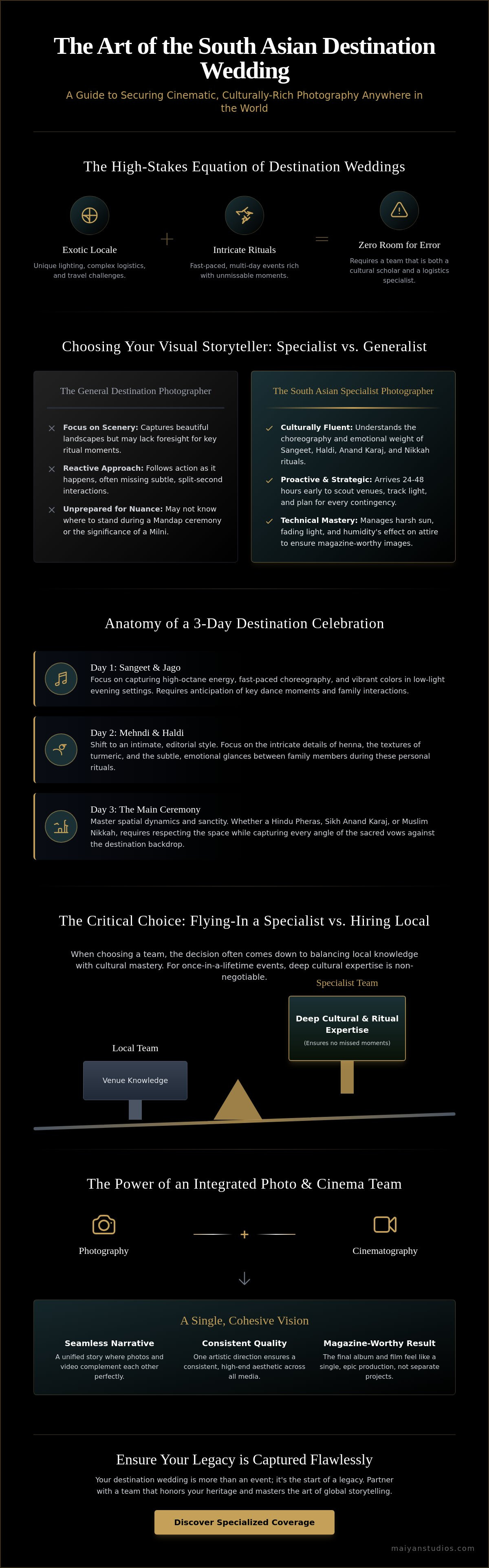
Planning a multi-day celebration in a foreign country introduces layers of complexity that a standard wedding photographer simply isn't prepared for. South Asian weddings are vibrant, fast-paced, and deeply rooted in tradition. When you move these events to a luxury destination, the logistical challenges multiply. A general destination photographer might capture a beautiful landscape, but they often lack the foresight to document the split-second moments that define your heritage. Choosing a specialized South Asian destination wedding photographer ensures that your visual narrative isn't just pretty, but culturally accurate and complete.
The Cultural Nuance of 3-Day Coverage
Capturing the high-octane energy of Sangeet and Jago nights requires more than just good lighting; it requires an understanding of the choreography and emotional weight behind each dance. From the intimate application of turmeric during the Haldi to the intricate patterns of Mehndi, every ritual deserves editorial flair. These Indian wedding ceremonies vary significantly by region and family tradition. If your photographer isn't familiar with these nuances, they'll likely miss the subtle glances between elders or the specific moment a ritual concludes. For couples seeking more detail on managing these events, our luxury Indian wedding photographer Dubai guide provides deep context on ritual-heavy schedules.
Navigating Exotic Venues and Lighting
Every global destination presents a unique set of optical hurdles. The harsh, midday sun of a Mexico beach ceremony creates deep shadows that can ruin a bridal portrait if not managed correctly. Conversely, the soft but rapidly fading light of a Lake Como evening requires a team that can pivot from natural light to sophisticated flash setups in minutes. A professional South Asian destination wedding photographer doesn't just show up on the wedding day. They arrive 24 to 48 hours early to scout the venue, tracking the sun's path and identifying backup locations for indoor rituals. This preparation ensures that whether you are in a historic European ballroom or a tropical garden, the lighting remains magazine-worthy.
Luxury coverage isn't just about high-resolution files. It's about a seamless experience where the photography team anticipates your needs before you even realize them. It means having a crew that knows exactly where to stand during the Milni without obstructing the view of your guests. This level of specialization is what transforms a standard album into a cinematic legacy that honors both the location and your legacy.
Mastering Rituals in Global Settings: From Mandap to Altar
Transitioning sacred rituals from a local temple to a cliffside in Bali or a chateau in France requires a deep understanding of spatial dynamics. A South Asian destination wedding photographer must navigate the religious nature of the ceremony while ensuring the background enhances the narrative rather than distracting from it. During the Hindu Pheras, the Mandap is your focal point. In an outdoor setting, the photographer needs to account for wind, shifting shadows, and guest placement to capture the circumambulations from every angle without obstructing the view of your loved ones.
Whether it's the solemnity of a Nikkah in a historic European ballroom or an Anand Karaj in an international Gurdwara, respecting the sanctity of the space is paramount. This involves a cross-cultural analysis of wedding rituals to understand where a photographer can stand and when they must remain still. In a Nikkah, the focus remains on the signature and the quiet elegance of the moment. Fusion weddings add another layer of complexity. They require a balance of two distinct cultural heritages without letting one overshadow the other. A skilled team knows how to transition the visual style from a traditional ceremony to a Western-style reception seamlessly.
Environmental Challenges for Traditional Attire
Tropical humidity can be brutal on heavy silk lehengas and velvet sherwanis. It doesn't just affect your comfort; it impacts how colors translate on camera. High moisture levels and bright equatorial sun can wash out the vibrant reds and golds traditional to South Asian palettes. Expert photographers use specific filters and post-processing techniques to maintain that richness. If you're curious about the latest trends in visual aesthetics, explore our guide on South Asian wedding photography styles for 2026.
The Logistics of Ritual-Specific Gear
Fast-paced moments like the Varmala happen in seconds. Having multiple camera bodies with different lenses ready is non-negotiable. It prevents the loss of a key shot because a photographer was busy changing equipment. For a destination Baraat, drone technology is essential. It captures the sheer scale of the procession against a stunning backdrop, like a beach or a mountain range. Don't forget audio. For cinematic films, high-quality external microphones are necessary to capture the vows and mantras clearly over the sound of ocean waves or mountain wind. This technical foresight ensures your film feels as immersive as the day itself. If you're planning a multi-day event abroad, consider how our Wedding Photography specialists can streamline your experience.
Flying-In vs. Local: Choosing Your Photography Team
One of the biggest decisions you'll face is whether to hire a photographer based at your destination or fly in a specialized team. While a local professional might know the best hidden spots for a sunset portrait, they often lack the specific expertise required for a multi-day South Asian celebration. Hiring a dedicated South Asian destination wedding photographer to travel with you ensures that the person documenting your Mehndi is the same one capturing your Vidai. This continuity is vital for a cohesive visual story. You don't want your wedding album to look like it was shot by three different people with three different editing styles.
Communication is another significant factor. Working with a team in your own time zone during the planning phase makes the process much smoother. You can hop on a quick call to discuss timeline shifts or outfit changes without calculating international time differences. This relationship builds a level of comfort that's hard to replicate with someone you meet for the first time on the morning of your event. When your photographers arrive at the destination, they aren't strangers; they're partners who already understand your family dynamics and priorities.
The Value of Cultural Fluency
A photographer who understands the sequence of a Hindu or Sikh ceremony won't be caught off guard when a key ritual begins. They know exactly when the Varmala happens or when the Guru Granth Sahib is being processed. This cultural fluency extends to your guests, too. A team that can communicate respectfully with elders or navigate traditional family structures creates a more relaxed environment for everyone. Many couples find that building this trust starts months before the trip. Investing in pre-wedding sessions allows you to get comfortable in front of the lens and refine your posing style before you ever step foot on a plane.
Logistical Peace of Mind
When you fly in a professional studio, you're paying for a standardized level of security. These teams are used to managing gear transport across borders, ensuring they have redundant camera bodies, lenses, and lighting kits. They carry professional indemnity insurance and operate under clear, legally binding contracts that protect your investment. In contrast, local vendors in some regions might operate under different legal standards or have limited backup equipment. Furthermore, having a single team manage the post-production for all three days ensures that the color grading and cinematic tone remain consistent from the first ritual to the final dance. This unified approach is what creates a truly magazine-worthy collection of memories.
Planning the Timeline for a 3-Day Destination Event
The clock is your biggest adversary during a multi-day celebration. To ensure every moment is captured with precision, your South Asian destination wedding photographer shouldn't be landing the morning of the Mehndi. A professional team arrives at least 24 hours before the first ritual. This buffer time is critical. It protects your investment against flight delays or lost luggage and allows the crew to recover from jet lag. Most importantly, it provides a window for a thorough venue walkthrough. Scouting the property under the exact lighting conditions they'll face during your events is the difference between a good photo and a masterpiece.
Managing the sheer volume of data is a nightly ritual for a high-end studio. Over a three-day period, a photography and film team will generate several terabytes of footage. A reliable team implements a multi-stage backup process every single night. They duplicate files to multiple portable drives and keep them in separate locations. This technical discipline ensures that even if a piece of hardware fails during international travel, your memories remain secure and ready for post-production.
The Destination Pre-Wedding Shoot
Use the arrival day for a relaxed, editorial session. It's the perfect time to explore the venue's "hidden gems" that might be too far to reach during the time-crunched wedding day. This session isn't just about the photos; it establishes a vital rapport between you and the cinematography team. You'll learn how to move together naturally, and they'll identify your best angles. This comfort level pays dividends when the high-pressure rituals begin, as you'll already trust the team behind the lens.
Ritual-to-Ritual Transitions
The turnaround between a morning ceremony and a grand evening reception is often incredibly tight. Your timeline must account for the team's need to reset gear, swap batteries, and move heavy lighting setups across the resort or villa. A detailed shot list is essential here, particularly for destination-specific family portraits. Since guests are often in "vacation mode," having a structured plan ensures no one is missing when the shutter clicks. High-energy coverage also requires a team that manages their stamina. Scheduling short, strategic breaks for the crew ensures they remain sharp and creative for the final dance of the night. If you're ready to map out your global celebration, contact our South Asian destination wedding photographer team to start building your custom timeline.
The Maiyan Studios Approach: Seamless Luxury Storytelling
Choosing a South Asian destination wedding photographer is about more than just booking a service; it's about securing a partner who understands the rhythm of your heritage. At Maiyan Studios, we believe the most powerful stories are told when photography and cinematography work in perfect harmony. Our "One Team" philosophy eliminates the creative friction that often occurs when separate vendors compete for the same angles. Instead, our artists move as a single unit, ensuring that every frame of your film and every page of your album feels like part of the same cinematic narrative.
Our global experience allows us to navigate the world's most exclusive wedding venues with confidence. Whether you're planning an intimate gathering in the Maldives or a grand celebration at a Lake Como villa, we bring a bespoke approach to every destination. We don't just show up to take pictures. We create a tailored visual strategy that respects your family's specific traditions while highlighting the unique beauty of your chosen location. This integration of cultural mastery and luxury aesthetics is what sets our work apart from standard coverage.
Cinematic Visuals Meets Ritual Mastery
We don't produce standard wedding videos. We craft films that feel like high-end cinema, using technical precision and editorial pacing to elevate every ritual. Capturing the "unseen" moments, such as the quiet pride in a father's eyes or the shared laughter during a private family prayer, is where we find the true heart of your celebration. Our editing process is equally rigorous, ensuring that the vibrant colors and intricate details of your South Asian attire are preserved with magazine-quality clarity. This focus on technical detail ensures your legacy is documented with the respect it deserves.
Your Global Wedding Partner
Planning an international event is stressful enough without worrying about your camera crew's travel plans. We handle all our own logistics, from gear transport to international insurance, so you can focus entirely on your guests and your partner. For those looking to explore heritage-rich locations in India, Tailormade Journeys Limited provides bespoke travel services that complement your luxury celebration. By choosing a unified team, you ensure a stress-free experience and a cohesive collection of memories that will last for generations. Investing in a specialized South Asian destination wedding photographer team isn't just about the wedding day; it's about the lifelong value of seeing your heritage captured through a world-class lens.
Secure Your Global Legacy
Capturing a multi-day celebration in an international setting is a high-stakes endeavor. You now understand how a specialized South Asian destination wedding photographer bridges the gap between complex rituals and the logistical demands of luxury travel. By prioritizing a team that understands the nuances of the Mandap and the timing of the Varmala, you ensure every vibrant detail is preserved. A unified photography and cinematography crew further guarantees a seamless, stress-free experience from the first arrival to the final dance.
Maiyan Studios specializes in three-day South Asian wedding coverage with deep expertise in luxury destination logistics. Our unified teams work in sync to create a cohesive narrative that honors your heritage and your location. Don't leave your most precious memories to chance. Begin your destination journey with Maiyan Studios today and ensure your wedding is documented with world-class precision. We're ready to help you turn your global vision into a cinematic reality.
Frequently Asked Questions
Should I hire a separate photographer and videographer for my destination wedding?
Hiring a unified team is highly recommended over booking separate vendors. A single studio ensures that the photographer and cinematographer don't compete for the same space during critical moments like the Varmala. This coordination leads to a more consistent visual style and smoother logistics. You'll also find it much easier to communicate with one point of contact for your entire visual narrative.
How far in advance should I book a South Asian destination wedding photographer?
Securing a South Asian destination wedding photographer should happen 12 to 18 months before your date. Luxury destination venues and specialized teams book up quickly, especially during peak wedding seasons. Booking early gives you ample time to coordinate travel logistics, secure visas if necessary, and plan your pre-wedding sessions without the stress of a last-minute search.
Do we have to pay for the photography team’s travel and accommodation?
Clients are responsible for covering airfare, transportation, and accommodation for the photography crew. It's standard practice for the team to stay at the wedding resort or a very nearby hotel. This proximity is vital for multi-day events, as it ensures the crew can easily transition between early morning rituals and late-night reception coverage without travel-related delays.
What happens if the photography gear is lost or damaged during international travel?
Professional teams carry specialized business insurance and bring redundant gear to every international shoot. This includes backup camera bodies, lenses, and lighting equipment. If a camera is damaged or a lens malfunctions, the team switches to their backup immediately. Your memories are protected by both physical hardware redundancy and professional liability coverage throughout the entire trip.
How do you handle lighting for outdoor South Asian ceremonies in tropical climates?
Handling the intense sun in tropical locations requires advanced lighting techniques like high-speed sync flash. Photographers use these tools to fill in deep shadows and balance the bright background. By scouting the venue 24 to 48 hours before the ceremony, the team identifies exactly where the sun will be during your rituals to ensure perfect skin tones.
Can a destination wedding photographer help with scouting locations at the venue?
Scouting is an essential part of the arrival process for a South Asian destination wedding photographer. The team arrives early to walk the grounds and identify the best light for your portraits. They look for unique architectural features or natural landscapes that will make your photos stand out while ensuring the locations are practical for your traditional attire.
How long does it take to receive the final photos and cinematic film after a 3-day wedding?
The post-production process for a three-day event typically takes 12 to 20 weeks. This timeframe allows the editors to meticulously cull thousands of images and hours of video footage. Every photo is color-graded to match the vibrant South Asian palette, and the cinematic film is carefully paced to tell your full story with magazine-quality precision.
Do you offer pre-wedding or engagement shoots at the destination location?
Arrival-day engagement or pre-wedding shoots are a fantastic way to utilize the destination's scenery. These sessions allow you to get comfortable with the cameras in a low-pressure environment before the main rituals start. It's also the perfect opportunity for the team to test specific lighting conditions at the venue, resulting in stunning, editorial-style portraits for your collection.


Comments