
Fine Art Wedding Photography: The 2026 Guide to Timeless Luxury
Will your wedding photos feel like a gallery masterpiece in twenty years, or will they simply look like a relic of a 2026 social media trend? It's a common fear for couples planning a high-end celebration. You want images that reflect the grandeur of your heritage without feeling trapped in a specific era. Choosing fine art wedding photography is the solution. This approach moves beyond the "bright and airy" versus "dark and moody" debate by focusing on intentional artistry, film-inspired textures, and timeless composition.
You likely feel overwhelmed by the pressure to pick a style that won't look dated by your tenth anniversary. You might also worry that a fine art approach is too slow or rigid for the fast-paced, vibrant rituals of a South Asian wedding. This guide will show you how this methodology transforms your wedding documentation into a museum-quality legacy tailored for luxury events. You will discover how to achieve a cohesive gallery across multiple days of celebration and why physical heirlooms, such as luxury albums, are the ultimate way to preserve your story for future generations.
Table of Contents
What is Fine Art Wedding Photography? Defining the 2026 Aesthetic
Fine art wedding photography is a philosophy rather than a simple checklist of poses. It's an approach where the photographer acts as an artist first and a documentarian second. While traditional photography focuses on recording "what happened," the fine art method is preoccupied with "how it felt" and how it looks as a piece of art. This distinction is vital for high-end celebrations. You aren't just hiring someone to take pictures; you're commissioning a creator to interpret your story through a specific, elevated lens. To better understand these roots, it's helpful to look at the broader definition of What is Fine Art Photography? and how it prioritizes the artist's vision over literal representation.
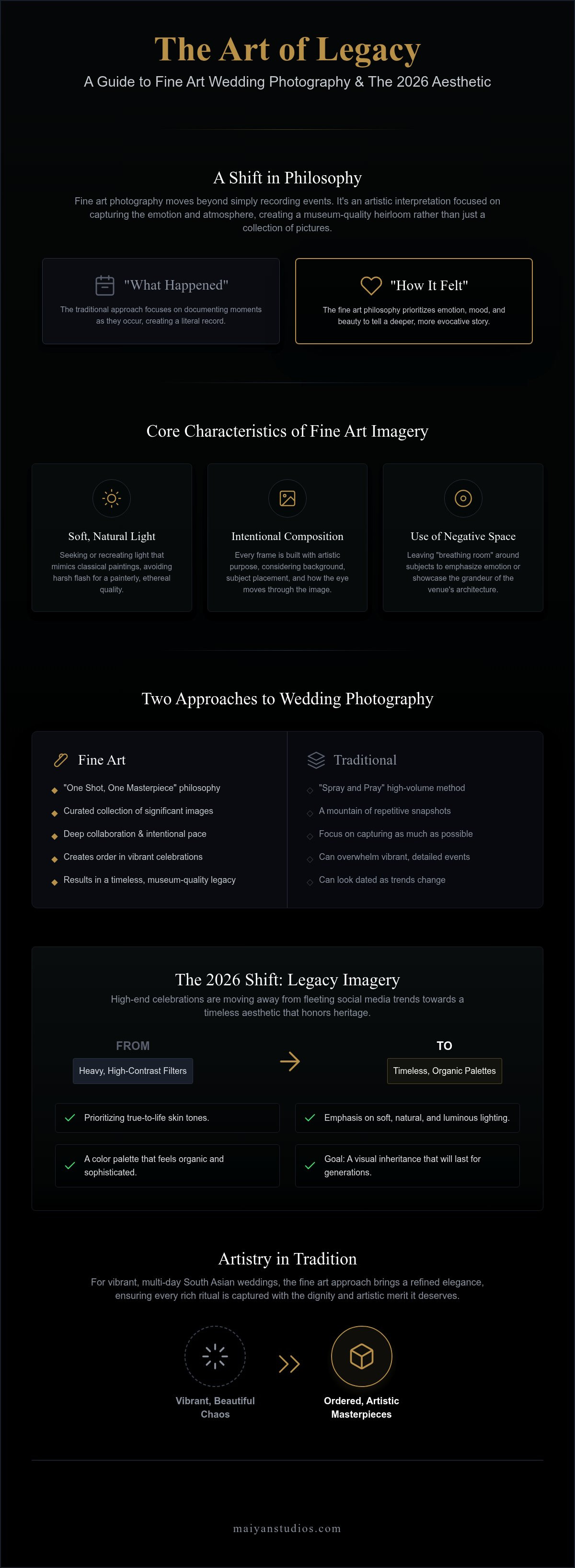
In 2026, the luxury market is seeing a massive shift toward "Legacy Imagery." High-end families are moving away from the heavy, high-contrast filters that dominated the last few years. Instead, they're seeking a timelessness that honors heritage. This means prioritizing true-to-life skin tones, soft lighting, and a color palette that feels organic. The goal is to create a gallery that looks as sophisticated in fifty years as it does on the day of the reveal. It's about creating a visual inheritance that survives the rise and fall of social media trends.
The Core Characteristics of Fine Art Imagery
Fine art images are immediately recognizable by their painterly quality. This isn't an accident. It's the result of several deliberate technical and artistic choices:
Soft, Natural Lighting: Photographers seek out or recreate light that mimics the soft glow found in classical paintings, avoiding the harsh, flat look of standard flash photography.
Compositional Intentionality: Every frame is built with purpose. The photographer considers the background, the placement of the subjects, and the way the eye moves through the image.
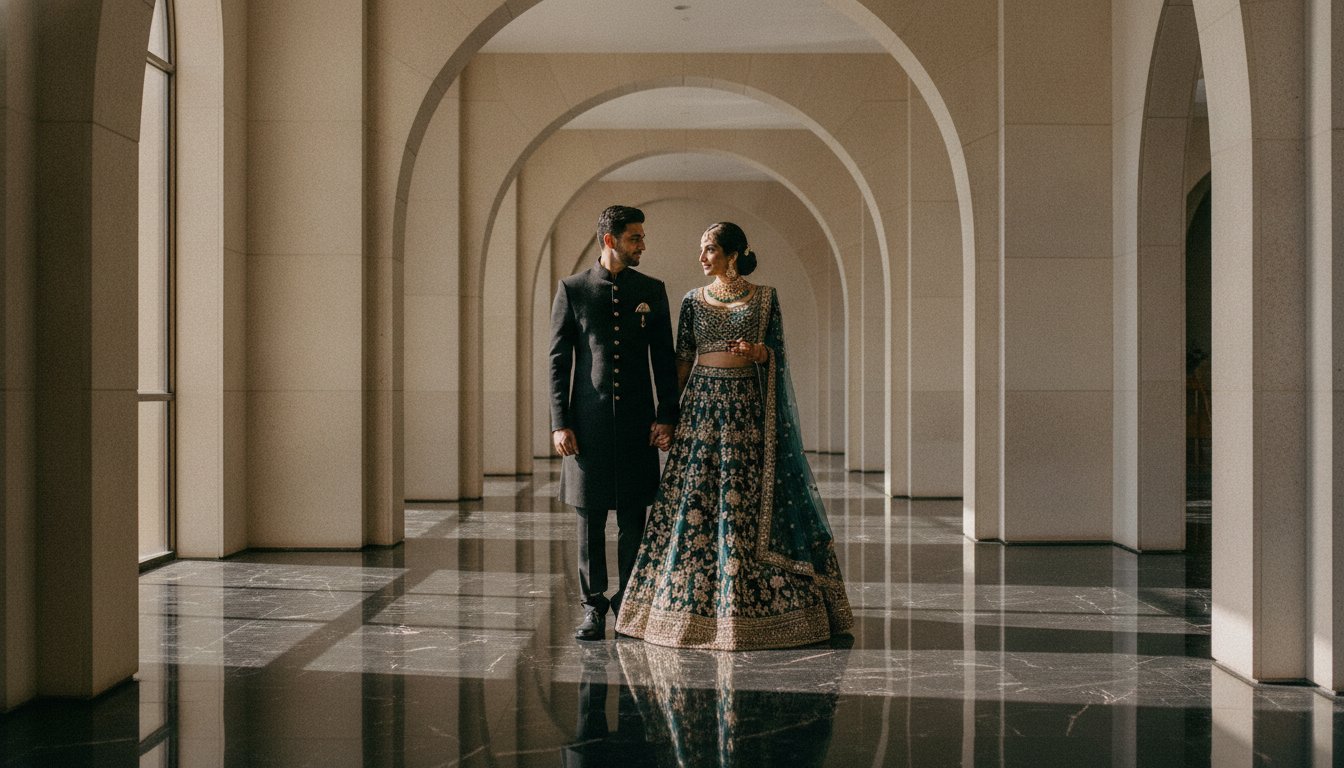
The Power of Negative Space: By leaving "breathing room" around a subject, the artist can emphasize a specific emotion or showcase the architectural grandeur of a luxury venue.
Fine Art vs. Traditional Wedding Photography
Traditional wedding photography often relies on a high-volume digital method, sometimes called "spray and pray," where the goal is to capture as many moments as possible. Fine art photography is the opposite. It follows a "one shot, one masterpiece" philosophy. This requires a deeper level of collaboration between the couple and the creator. You'll spend more time setting the scene, but the result is a curated collection of significant images rather than a mountain of repetitive snapshots.
This intentional pace is especially important when navigating the complexities of South Asian Wedding Photography Styles: The 2026 Luxury Guide. In these celebrations, the vibrancy of the rituals and the richness of the attire can easily become overwhelming in a photo. A fine art approach brings order to that beautiful chaos, ensuring that every ritual is captured with the dignity and artistic merit it deserves.
The Elements of a Fine Art Masterpiece: Light, Film, and Composition
Fine art wedding photography relies on a specific set of technical pillars to achieve its ethereal look. While the artist's eye is paramount, the equipment and lighting choices of 2026 provide the foundation for that museum-quality finish. It's about moving away from the clinical sharpness of standard digital captures toward a more organic, textured aesthetic. This approach requires a deep understanding of how physical elements interact with the lens to create a feeling of luxury.
In 2026, high-end digital sensors have reached a point where they can flawlessly emulate the grain and latitude of classic film stocks like Kodak Portra 400. This technical evolution is often recognized by major publications that track the intersection of technology and art. Couples no longer have to choose between the reliability of digital and the nostalgic, soft texture of film. Fine art photographers use these advanced tools to capture a "luminous" quality, choosing to "chase the light" rather than relying on the flat, harsh look of artificial flash. This light-centric philosophy ensures that every image feels airy and natural.
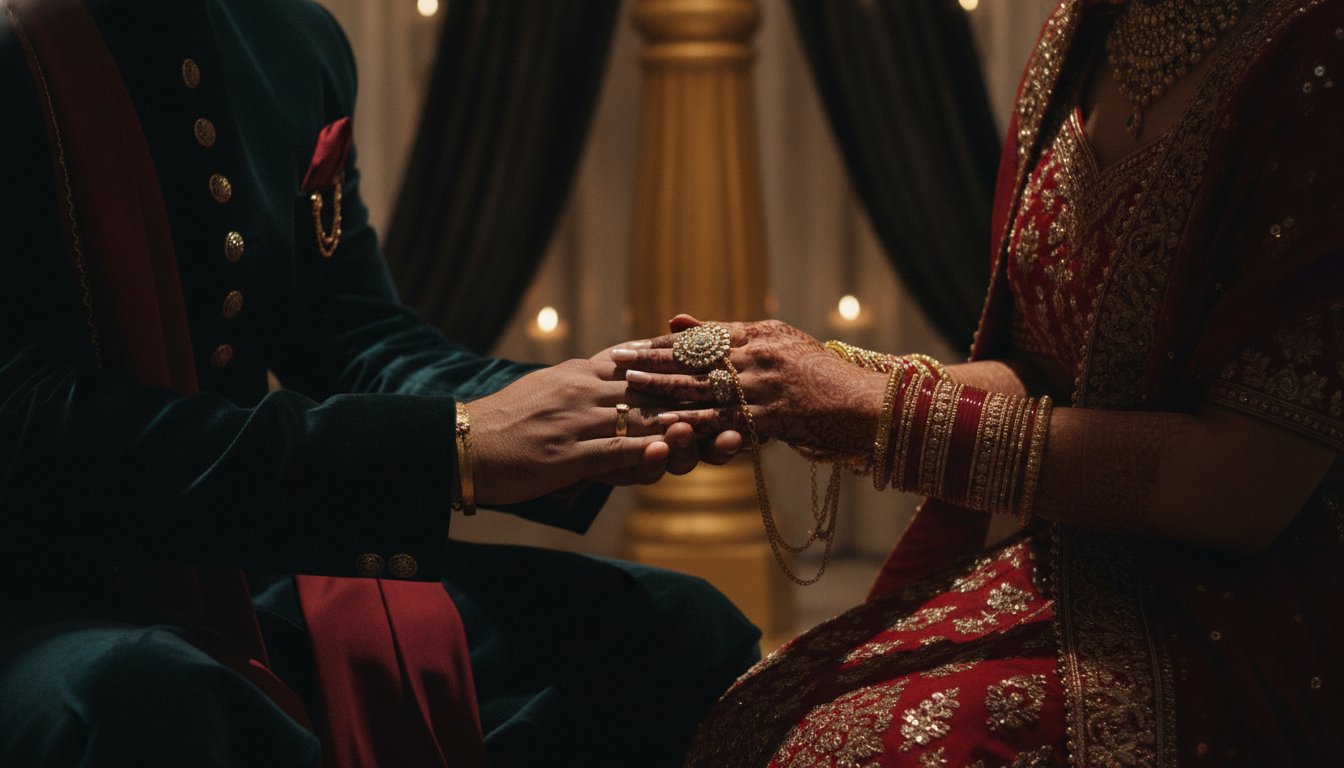
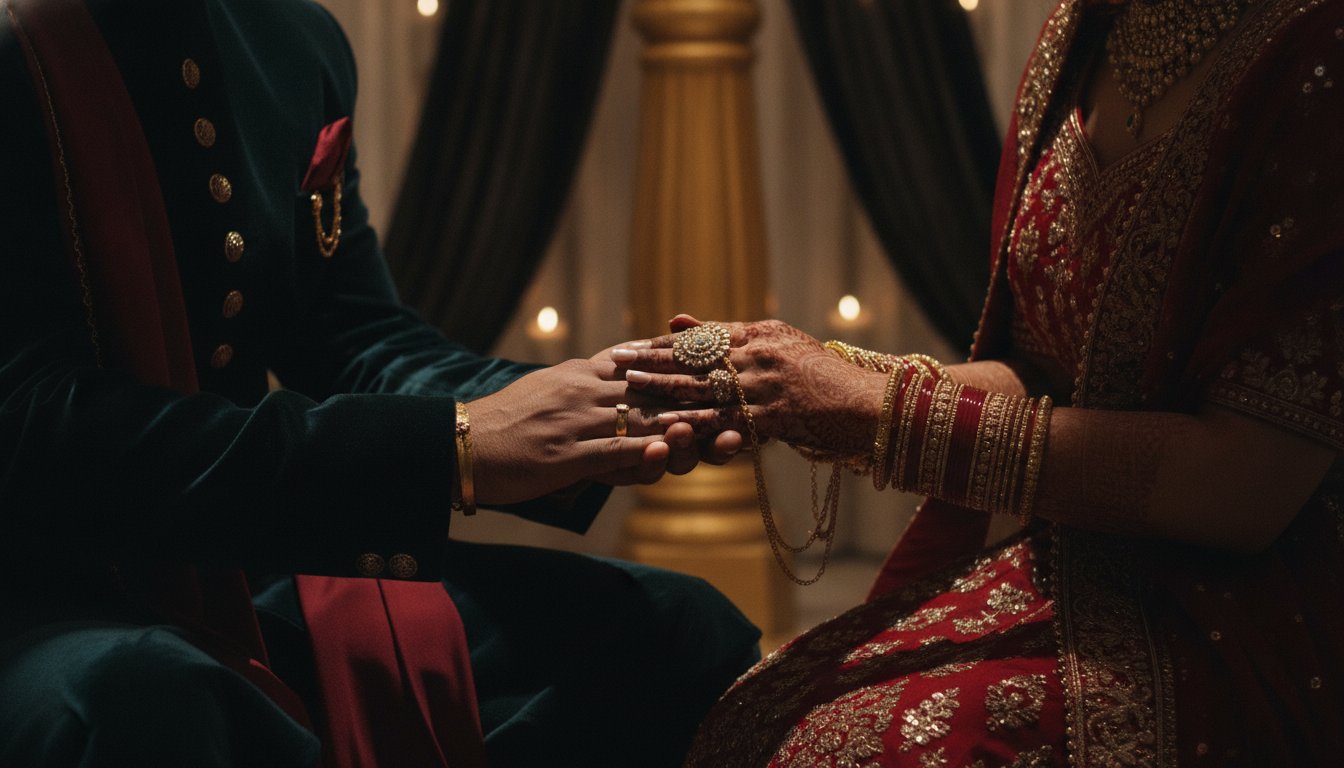
Storytelling through still life is another essential element. Capturing the intricate details of gold jewelry, the delicate patterns of henna, or the embossed texture of bespoke invitations isn't just about documentation. It's about building a visual narrative. These shots provide necessary context and breathe life into the final gallery, acting as the connective tissue between the high-energy moments of the day.
Mastering Natural and Ambient Light
The "Golden Hour" remains the holy grail for fine art portraits because it provides a warm, directional glow that is impossible to replicate. When moving indoors to luxury venues, photographers utilize "window light" techniques to create soft transitions between highlights and shadows. Dynamic range is the ability to see detail in both the brightest whites of a bridal gown and the deep shadows of a tuxedo. By mastering this range, photographers ensure that the fine textures of your wardrobe are preserved rather than lost in a blur of white or black.
The Role of Medium Format Aesthetics
The "Medium Format Look" is characterized by a unique compression effect that makes subjects pop from a creamy, blurred background. This creates a shallow depth of field and beautiful "bokeh" that draws the eye exactly where it needs to be. Because this aesthetic requires high resolution for large-scale printing, it's the standard for physical heirlooms. For those planning extensive celebrations, 3-day wedding photography coverage provides the necessary time to execute these complex shots across multiple locations. Maiyan Studios applies these medium format principles to every event, ensuring your portraits feel like high-fashion editorials.
Fine Art in a South Asian Context: Balancing Artistry with Tradition
A common misconception persists that fine art wedding photography only suits neutral palettes and minimalist settings. This "pastel myth" often leads South Asian couples to believe they must choose between their vibrant cultural heritage and a high-end artistic aesthetic. In reality, the 2026 luxury market is moving toward "intentional minimalism," where the focus is on atmosphere and storytelling rather than sheer excess. A skilled artist doesn't strip away the color; they use the Elements of a Fine Art Masterpiece to organize it. By applying fine art principles to a multi-day celebration, the photographer brings a sense of calm and curated beauty to even the most high-energy moments.
Capturing the chaos of a Baraat or a crowded Milni requires more than just a fast shutter speed. It demands an eye for composition that can find order in movement. Instead of a flat, documentary record of the crowd, a fine art approach looks for the "painting within the frame." This might mean focusing on the groom's expression through a veil of rose petals or using the architectural lines of a palace to frame the procession. This level of intentionality ensures that your photos feel like a cohesive narrative rather than a series of disconnected snapshots. It's also why your photography must share a visual language with your wedding cinematography. When both teams work with a fine art mindset, your stills and film feel like two parts of the same museum-quality legacy.
Preserving Vibrant Cultural Palettes
In 2026, the trend for South Asian weddings is shifting toward earthy and neutral palettes for decor, which allows the traditional attire to truly stand out. Fine art wedding photography techniques are essential here to ensure that a royal blue sherwani or a deep red lehenga doesn't lose its richness. "Bright and airy" shouldn't mean "desaturated." By using soft, directional light and precise color grading, photographers can maintain "true reds" and "royal golds" while keeping the overall image luminous. Accurate skin tone reproduction is the most critical element in this process. It's the difference between a photo that looks like a trendy filter and one that feels like a timeless heirloom.
Detail Shots as Cultural Documentation
Fine art photography treats every object as a subject. This is particularly valuable for documenting the intricate details of South Asian traditions. The delicate patterns of Mehndi, the weight of heirloom jewelry, and the sculptural floral arrangements of a Mandap are all treated with the same reverence as a portrait. These detail shots serve as vital cultural documentation, preserving the craftsmanship that went into your celebration. This focus on curated details should begin long before the wedding day. You can see how this artistic lens applies to your first sessions in our guide to 25+ Creative Engagement Photo Ideas for a Cinematic 2026 Pre-Wedding Session. By treating rituals like the Agni or Anand Karaj as a series of still-life paintings, we create a gallery that feels both sacred and sophisticated.
How to Plan for Magazine-Worthy Fine Art Wedding Photos
Achieving a high-end gallery isn't just about hiring a talented professional; it's about creating the right environment for artistry to thrive. Fine art wedding photography requires a level of intentionality that standard documentation does not. You aren't just scheduling a photo shoot; you're coordinating a production where light, texture, and timing must align. By making a few strategic choices during your planning process, you ensure that your photographer has the "raw materials" needed to create a museum-quality legacy.
Step 1: Prioritize the Timeline. Fine art portraits aren't about quick snapshots. They require time to find the perfect angle and wait for the light to hit just right. Dedicating 60 to 90 minutes of focused portrait time ensures a relaxed environment where creativity can flourish without the pressure of a ticking clock.
Step 2: Curate the Details. Gather your "flat lay" items, such as bespoke invitations, heirloom jewelry, perfume, and rings, before your photographer arrives. Having these items in one place allows the artist to style editorial-quality detail shots that document the physical textures of your celebration.
Step 3: Lighting-First Venue Selection. When touring venues, look for spaces with large windows and neutral walls. These act as a clean canvas for soft, natural light, which is essential for the luminous skin tones characteristic of the fine art style.
Step 4: Wardrobe Coordination. Consider how different fabrics interact with the lens. Silk has a luminous sheen that catches the light, while velvet and lace add a tactile depth to the shadows. These textures photograph beautifully and add a sense of luxury to every frame.
Step 5: Trust the Artist. While the environment is curated, the most emotional shots often happen in the quiet moments between formal poses. Trust your photographer to direct you into the best light and then allow the genuine interactions to unfold naturally.
The Importance of the Pre-Wedding Shoot
An engagement session serves as a vital rehearsal for your fine art wedding photography experience. It allows you to build chemistry with your team and learn the nuances of fine art posing before the big day. This comfort level ensures you feel relaxed and confident when the stakes are higher. Additionally, these high-end images set a sophisticated tone for your wedding website and custom stationery, creating a cohesive visual brand for your entire celebration.
Collaborating with Your Creative Team
Your planner, florist, and photographer should be in sync regarding your "color story" and overall aesthetic. When the decor is designed with photography in mind, the final gallery feels much more cohesive. Clean lines and intentional negative space allow the subjects to stand out without distraction. It's helpful to remember that less is often more when creating a fine art backdrop. To ensure your vision is captured with this level of precision, contact Maiyan Studios to discuss your luxury wedding plans.
Maiyan Studios: Crafting Your Legacy Through Fine Art Storytelling
At Maiyan Studios, we believe your wedding isn't just an event; it's the beginning of your family's history. We specialize in fine art wedding photography that treats cultural traditions with the reverence of a masterpiece. By integrating our photography and cinematography teams, we eliminate the visual "clash" that often happens when separate vendors compete for the same space. This "One Team" approach ensures that your film and your stills share the same color grading, lighting philosophy, and artistic intentionality across all three or more days of your celebration. It's about creating a seamless visual experience that captures the "luxury heritage" of your story.
Our experience spans the globe, from the historic villas of Lake Como to the modern grandeur of Dubai. This global perspective allows us to bring a sophisticated, fine art lens to any environment, regardless of the venue's scale or the complexity of the rituals. We understand the nuances of South Asian traditions and how to translate them into a high-end visual language that resonates internationally. Whether you're hosting a multi-day palace wedding or an intimate destination ceremony, we bring the same level of artistic rigor to every frame.
The Luxury Wedding Album: Your First Family Heirloom
Physical prints are the final, essential step in the fine art process. A digital file on a screen cannot replicate the tactile quality of museum-grade materials and archival papers. We don't just provide photos; we curate a narrative. Our process involves hand-selecting images that work together to tell a cohesive story, ensuring your album feels like a curated exhibition rather than a random collection of shots. We use archival-quality materials designed to resist fading and wear, ensuring that your first family heirloom remains as vibrant in fifty years as it is today. This commitment to physical legacy is what distinguishes a fine art studio from a standard digital service.
Start Your Journey with Maiyan Studios
Planning a luxury wedding in 2026 or 2027 requires early coordination to ensure your vision is executed perfectly. We recommend booking a consultation well in advance to secure your dates and begin customizing your multi-day coverage. This allows us to align our artistic approach with your specific timeline, decor choices, and cultural requirements. We work closely with your planning team to ensure every artistic opportunity is maximized, from the pre-wedding shoot to the final reception. Your wedding is a once-in-a-lifetime masterpiece, and we're here to ensure it's documented with the sophistication it deserves.
Preserving Your Story as a Fine Art Masterpiece
Your wedding day is the foundation of a multi-generational story that deserves more than just a digital record. By choosing fine art wedding photography, you're investing in a deliberate methodology that prioritizes timelessness over temporary aesthetic trends. We've explored how intentional lighting, medium-format aesthetics, and a deep respect for cultural heritage turn vibrant rituals into museum-quality art. The result isn't just a gallery of images; it's a cohesive visual narrative that captures how your celebration truly felt.
Maiyan Studios brings award-winning cinematography and photography integration to every event, specializing in the intricate requirements of multi-day South Asian luxury celebrations. Our global destination logistics experts ensure a seamless experience, whether your heritage is being celebrated in a metropolitan ballroom or a historic coastal villa. We're dedicated to crafting physical heirlooms that honor your family's history with sophistication and grace.
Begin your legacy with a Maiyan Studios fine art consultation. We look forward to helping you transform your most precious moments into a lasting masterpiece that your family will cherish for generations.
Frequently Asked Questions
What is the difference between fine art and documentary wedding photography?
Fine art is an intentional, artist-led approach where the photographer curates the scene to create a masterpiece. Documentary photography is observational and focuses on recording events exactly as they unfold without intervention. While documentary captures what happened, the fine art method focuses on how the moment looked through an elevated, painterly lens.
Does fine art wedding photography work for colorful Indian weddings?
Yes, it's an ideal style for bringing a sense of order and sophisticated beauty to vibrant South Asian celebrations. Instead of washing out the colors, a skilled artist uses soft, directional light to preserve the richness of deep reds and royal golds. This approach ensures your cultural heritage feels like a timeless legacy rather than a dated trend.
Why is fine art wedding photography more expensive than traditional styles?
This style requires specialized high-resolution equipment, such as medium-format cameras, and a much higher level of artistic expertise. The editing process is also significantly more labor-intensive. Each frame undergoes meticulous color grading to achieve a film-like texture and museum-quality finish that standard high-volume photography can't replicate.
Do I need to pose for every photo in a fine art session?
No, you won't spend the entire day in stiff, traditional poses. The photographer provides "curated direction" to place you in the most flattering light and composition. Once the scene is set, they capture genuine, unposed interactions as they happen naturally. This creates a gallery that feels both high-end and emotionally authentic.
How long does it take to receive a fine art wedding gallery?
The delivery of a fine art wedding photography gallery typically takes between 8 and 12 weeks. This timeline is necessary for the artist to hand-select the best images and apply custom color grading to every shot. This careful curation ensures that the final collection functions as a cohesive narrative with consistent skin tones and textures.
Can fine art photography be done indoors or at night?
Absolutely, though it requires a master's understanding of light. Fine art photographers use "window light" techniques for indoor luxury venues and subtle off-camera lighting for evening events. They avoid the harsh, flat look of standard on-camera flash to ensure the images maintain their luminous, three-dimensional quality regardless of the time of day.
What should I look for in a fine art wedding photographer’s portfolio?
Look for consistency in skin tones, a sense of intentional composition, and an organic, film-like texture. A strong fine art wedding photography portfolio should feel cohesive even when moving between different venues and lighting conditions. Pay close attention to how they handle "negative space" and whether their images feel like individual pieces of art.
Comments