
Indian Wedding Cinematography Trends 2026: The Luxury Guide to Cinematic Storytelling
What if your wedding film felt less like a generic highlight reel and more like a prestige cinema premiere? Many couples fear their investment will result in a dated, "slow-mo" montage that fails to capture the true energy of a multi-day South Asian celebration. It’s frustrating when you can't quite explain your vision to a videographer, only to receive a video that looks just like everyone else's. You deserve a visual legacy that feels as high-end and intentional as the event itself.
In this guide, you'll discover the 2026 Indian wedding cinematography trends that are redefining luxury storytelling. We’ll show you how new technologies like FPV drones and AI-enhanced editing are creating immersive experiences that were impossible just a few years ago. You will learn how to blend editorial fashion aesthetics with authentic documentary moments for a result that is both polished and deeply personal. We'll preview the essential shifts in tech and style so you can walk into your consultation with a clear, sophisticated vision for your wedding film.
Key Takeaways
Understand the shift toward "cinematic heritage" and how current Indian wedding cinematography trends prioritize authentic emotion over staged poses.
Learn how to blend high-fashion editorial aesthetics with documentary-style candid moments to create a timeless, Vogue-inspired wedding film.
Discover how cutting-edge tools like FPV drones and spatial audio capture the immersive energy of luxury venues and traditional Baraats.
Get a roadmap for identifying your personal visual language and optimizing your multi-day schedule for the best cinematic lighting.
Explore how bespoke cinema approaches manage the complex logistics of luxury destination wedding coverage across the globe.
Table of Contents
The Evolution of Indian Wedding Cinematography: What to Expect in 2026
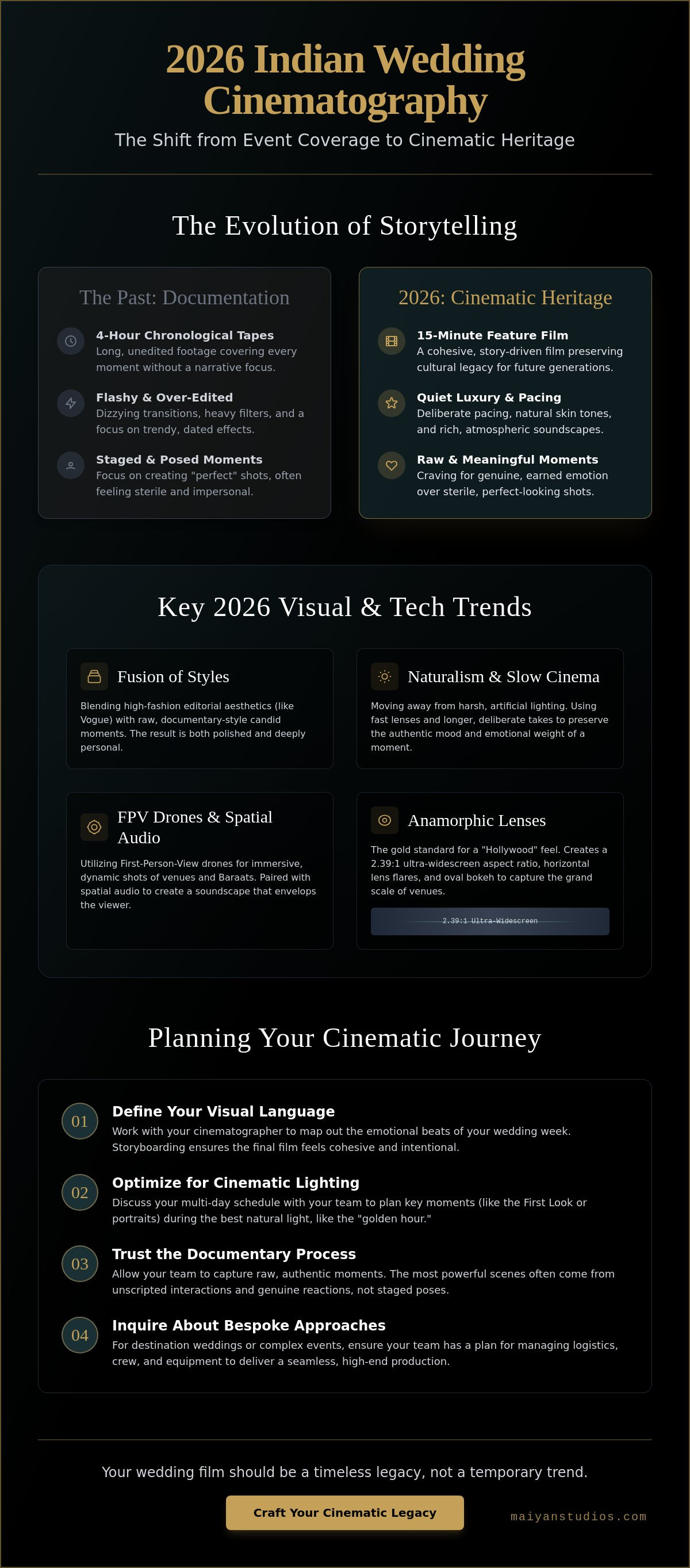
The days of receiving a four-hour, chronological video of every guest eating are behind us. Modern couples are no longer looking for simple event coverage; they're investing in a visual legacy. Current Indian wedding cinematography trends for 2026 show a definitive shift toward "Cinematic Heritage." This approach views the wedding film as a high-end production that documents family history with the same care as a prestige documentary. It's about creating a film that your grandchildren will watch to understand their roots, not just to see what the decor looked like.
The Evolution of Indian Wedding Cinematography has its roots in the deep cultural traditions and massive economic scale of South Asian celebrations. As these events grow in complexity, the storytelling must keep pace. In 2026, we see "Quiet Luxury" replacing the flashy, over-the-top editing styles of the early 2020s. Instead of dizzying transitions and heavy filters, the focus has returned to deliberate pacing, natural skin tones, and rich, atmospheric soundscapes. It’s a more sophisticated way to showcase a multi-day narrative.
From Documentation to Feature Film
The transition from 4-hour raw tapes to 15-minute cinematic highlights is now complete. For luxury weddings, Cinematic Heritage is the preservation of cultural legacy through film. To achieve this, storyboarding has become a standard part of the luxury pre-wedding process. Cinematographers now work with couples months in advance to map out the emotional beats of the week. This ensures that the final feature-length film feels cohesive, even when jumping between a high-energy Sangeet and a solemn Vidai.
The 2026 Focus: Authentic Luxury
There's a growing movement away from the "perfect" but sterile shots often seen on social media. Couples now crave raw, meaningful moments that feel earned. This change has transformed the "First Look" from a staged photo op into a private, high-production editorial moment. It's often filmed in a secluded location with minimal crew to allow for genuine reactions. Balancing the chaos of a 500-guest Sangeet with intimate, close-up cinematography is the hallmark of a 2026 luxury film. It requires a team that knows when to go wide to capture the scale and when to zoom in on a tearful parent or a shared joke between the couple.
Visual Trends: The Fusion of Editorial and Documentary Styles
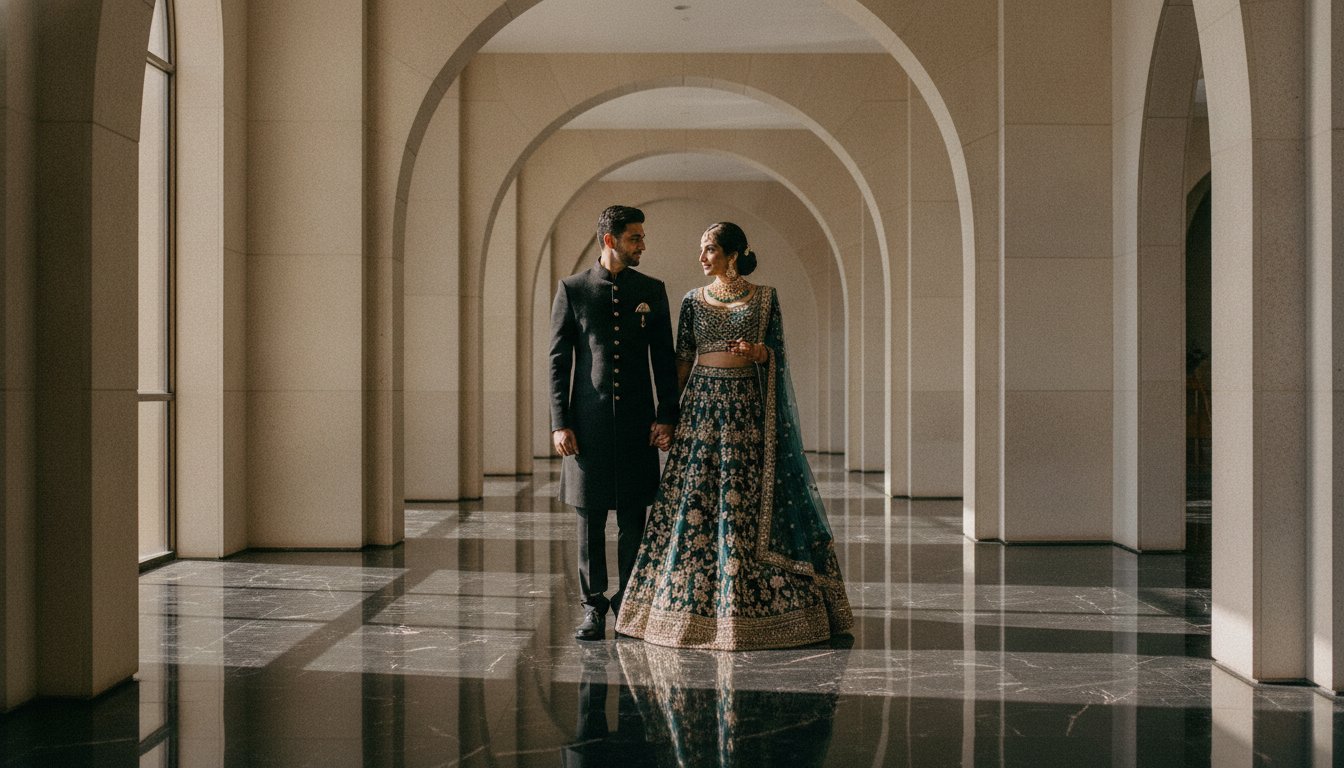
The visual language of 2026 is defined by a sophisticated blend of high-fashion editorial and raw documentary realism. This "Vogue" effect has transformed how we approach Indian wedding cinematography trends. Instead of separate segments for "posed" and "candid" shots, modern films weave editorial-style portraits directly into the live narrative. These moments feel like a high-end fashion film, utilizing intentional composition and lighting that highlights the intricate details of a designer lehenga or sherwani without interrupting the natural flow of the day.
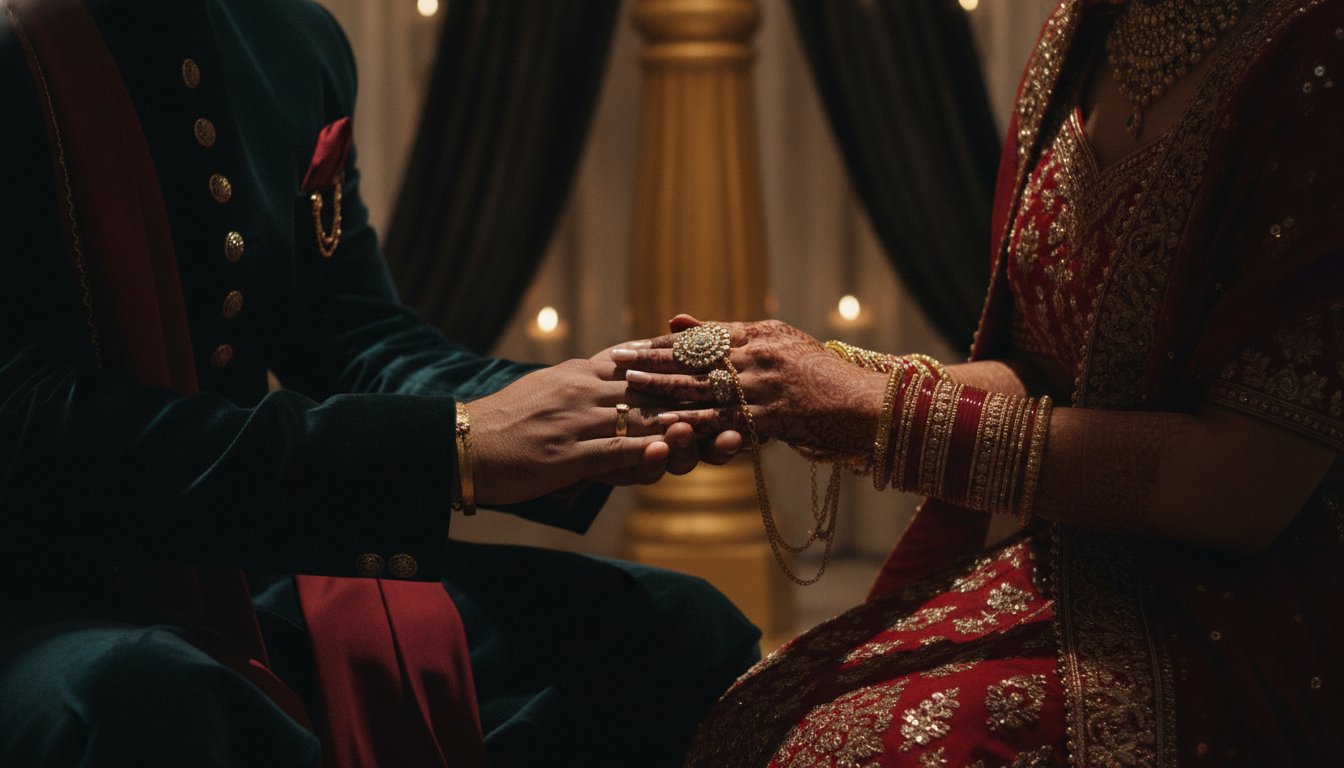
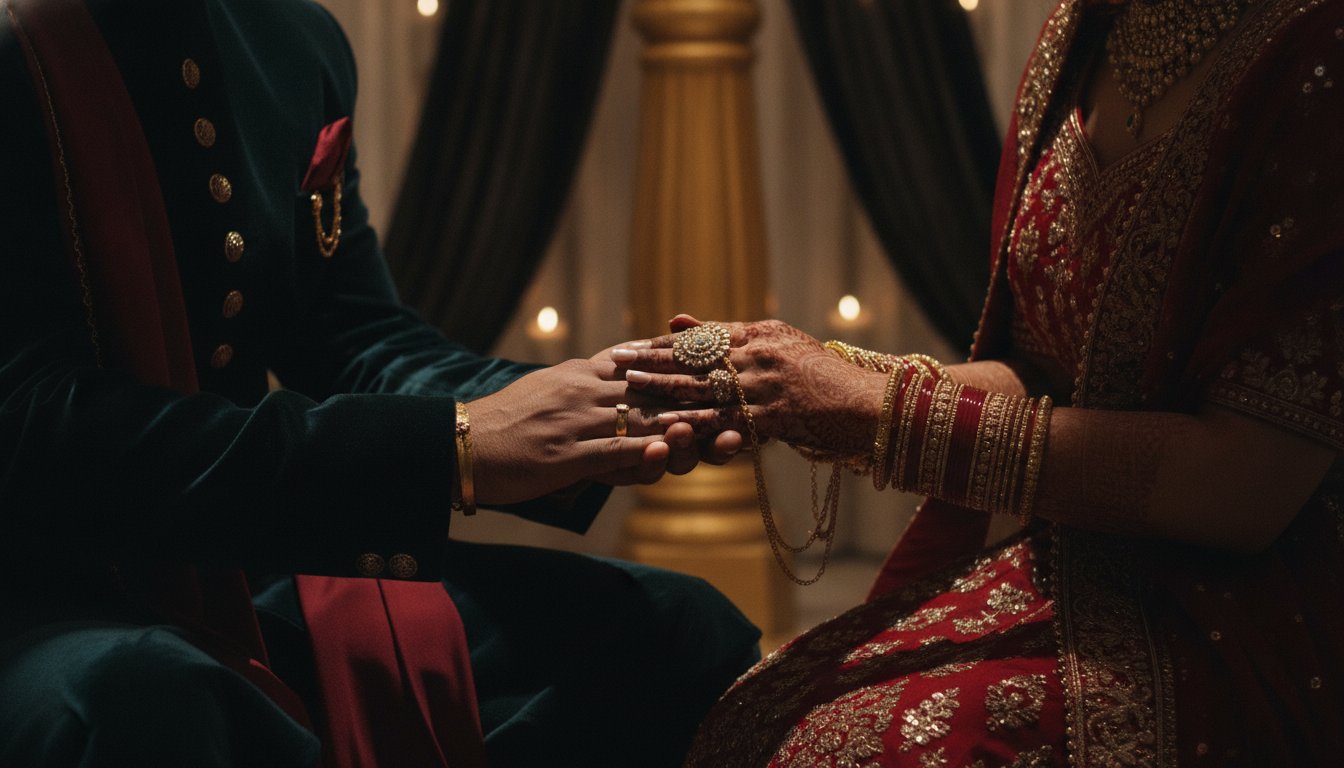
A key part of this aesthetic is the return of "Naturalism." Luxury couples are moving away from harsh, artificial lighting setups that can make a palace venue look like a television studio. Instead, cinematographers are using fast lenses and soft, ambient light to preserve the mood of the event. This approach often incorporates film-inspired textures, such as subtle grain and highlight bloom, to create a nostalgic feel. These textures add a layer of organic warmth that digital sensors often lack, making the footage feel like a timeless memory rather than a sterile recording.
Pacing has also shifted toward "Slow-Cinema." While older films relied on rapid, music-video-style cuts to create energy, the 2026 preference is for longer, more deliberate takes. This allows the viewer to absorb the emotional weight of a glance or the intricate movements of a ritual. If you are looking for a team that understands these nuanced bespoke wedding cinematography shifts, focusing on the "why" behind every shot is essential.
Anamorphic Lenses and the Ultra-Widescreen Look
To achieve a truly "Hollywood" feel, anamorphic lenses have become the gold standard for luxury South Asian weddings. These specialized lenses create a distinct horizontal flare and oval-shaped bokeh that immediately signals a high-production value. By using a 2.39:1 ultra-widescreen aspect ratio, cinematographers can capture the immense scale of grand Indian mandaps and sprawling destination venues in a single frame. Many couples now request specific vintage lens "characters" to give their film a unique optical signature that sets it apart from standard digital video.
Quiet Luxury in Color Grading
Color grading in 2026 has moved past the heavy "orange and teal" filters of the last decade. The current trend favors sophisticated, true-to-life palettes that respect the actual colors of the event. According to research on Technological Innovations: Immersive Sound and FPV Drones, the professionalization of the industry has led to a higher demand for technical excellence in post-production. Timeless Grading ensures the film doesn't look dated by 2036 by preserving the natural vibrancy of Indian textiles while maintaining healthy, realistic skin tones across all lighting conditions.
Technological Innovations: Immersive Sound and FPV Drones
While visual aesthetics define the mood, technology provides the framework for modern Indian wedding cinematography trends. In 2026, 8K resolution has transitioned from a luxury niche to a standard for high-end films. This isn't merely about current screen quality. It's about future-proofing your visual legacy so it remains sharp on the displays of the next decade. AI-assisted post-production has also become a vital tool for managing the massive amount of data generated by multi-day celebrations. By using AI to handle technical tasks like color matching and footage organization, editors can spend more time on the creative "human touch" that defines a bespoke film.
Many of these shifts mirror broader 2024 filmmaking trends that have now matured into the wedding industry. The goal is no longer just to record what happened, but to recreate the feeling of being there. This requires a sophisticated blend of hardware and software that works seamlessly in the background of your celebration.
The Narrative Power of Immersive Soundscapes
Audio is often the most overlooked element of a wedding film, but in 2026, spatial audio is a game-changer. High-fidelity recording of the Pheras and Vows creates a documentary feel that pulls the viewer directly into the sacred space. Cinematographers now layer ambient sounds into the edit, such as the rustle of silk lehengas, the crackle of the sacred fire, and the distant cheers of the Baraat. Instead of relying on generic stock tracks, luxury films often feature custom sound design and original scores. This ensures the music matches the specific emotional arc of your unique story, making the sound of the Baraat just as important as the visuals.
FPV Drones: The New Standard for Grandeur
FPV (First Person View) drones like the DJI Avata have redefined aerial storytelling. Unlike standard GPS drones that provide static overhead shots, FPV drones offer a dynamic "fly-through" experience. They can dive through grand palace entrances, weave between intricate floral installations, and follow a groom's motorcade with cinematic precision. These drones provide a perspective that was previously impossible, making the viewer feel like they are flying through the venue. However, these high-stakes maneuvers require strict adherence to safety and logistics. The Directorate General of Civil Aviation (DGCA) now manages airspace through the Digital Sky 5.0 system. Commercial pilots must also complete an Annual Competency Check (ACC) online refresher. Hiring expert pilots who understand these regulations is essential for ensuring your grand entrance is captured safely and legally.
Planning Your Cinematic Journey: A Roadmap for Couples
Creating a luxury wedding film requires more than just hiring a crew. It demands a production mindset. To leverage the latest Indian wedding cinematography trends, you need a structured approach that starts months before the first ceremony. This roadmap ensures your final film isn't just a collection of clips, but a cohesive narrative that reflects your personal style.
Step 1: Identify Your Visual Language. Decide if you lean toward Editorial (polished and posed), Documentary (raw and candid), or Traditional (comprehensive coverage). Most 2026 couples opt for a hybrid that blends high-fashion portraits with authentic moments.
Step 2: Align Your Schedule for Light. Lighting is the most critical technical element. Work with your planner to schedule your main outdoor portraits during the "Golden Hour" before sunset. This provides the soft, warm glow essential for that high-end cinematic look.
Step 3: Communicate Cultural Rituals. Your team needs to know the emotional weight of specific rituals like the Vidai or the Granthi's sermon. Clear communication ensures the cameras are in the right place for these unrepeatable moments.
Step 4: Establish the Narrative with a Pre-Wedding Film. Use your pre-wedding shoot to tell your origin story. This footage often serves as the perfect prologue for your main wedding feature.
Step 5: Re-evaluate the Same Day Edit. While popular in the past, the 2026 trend has shifted toward "Next Day Edits" or social media reels. This allows the team more time to apply sophisticated color grading and sound design rather than rushing a cut for the reception.
Integrating Trends into Multi-Day Celebrations
The challenge of a South Asian wedding is capturing the drastic shifts in energy across several days. A high-octane Sangeet requires dynamic camera movement and fast-paced editing to match the rhythm of the performances. Conversely, a solemn Anand Karaj or a Hindu ceremony demands a quiet, respectful presence that prioritizes the sacred fire and the depth of the vows. You can learn more about these nuances in our guide to South Asian Wedding Photography Styles: The 2026 Luxury Guide. To ensure every event is covered perfectly, schedule dedicated "Cinematic Portrait" sessions during the Mehndi and Haldi ceremonies when the atmosphere is relaxed and the lighting is often more natural.
Balancing Trends with Timelessness
Trends like FPV drone dives and film grain should be used as accents, not the foundation of your film. The core of your visual legacy must be the emotional connection between you and your family. The "Director’s Cut" is often the most valuable part of your cinematography package because it allows for a longer, more detailed exploration of these relationships. For a deeper look at how to structure your film, see our Wedding Cinematography: The Ultimate Guide to Luxury Visual Storytelling. If you're ready to start planning your custom production, you can book your luxury wedding cinematography team today to secure your dates for the upcoming season.
The Maiyan Studios Approach: Crafting 2026 Legacies
At Maiyan Studios, we believe that your wedding film shouldn't just look like a movie; it should feel like your history. Our commitment to "Bespoke Cinema" means we reject the cookie-cutter templates that have dominated the industry for years. Instead, we stay ahead of Indian wedding cinematography trends by focusing on the unique emotional architecture of each family. While we utilize the latest 8K cameras and anamorphic lenses discussed earlier, our true priority is "The In-Between Moments." These are the quiet, unscripted instances—a grandmother's private blessing or the shared laughter between siblings before the Baraat—that other teams often miss while chasing staged poses.
We specialize in crafting visual legacies for the world’s most discerning couples. This requires a deep understanding of both high-end fashion aesthetics and the cultural nuances of South Asian celebrations. Our approach ensures that the "Quiet Luxury" and "Slow-Cinema" pacing you desire are woven into every frame of your feature-length film. We don't just record an event. We document a heritage.
Bespoke Cinematography for Global Destinations
Managing the logistics of global destination wedding cinematography is a core part of our studio's DNA. We understand that light behaves differently in the crisp, coastal air of the Mediterranean compared to the humid, golden glow of the tropics. Our team adapts our color grading and filtration techniques to match these environmental shifts. We also handle the complexities of international permits and local drone regulations, ensuring your production is seamless and legal. If you are considering a celebration in the Middle East, our Ultimate Guide to Luxury 3-Day Wedding Photography Coverage in Dubai offers specific insights into planning a high-end production in a premier luxury hotspot.
Why One Integrated Team Wins
The most significant advantage we offer is an integrated photo and video team. When your wedding cinematography and wedding photography teams work under one creative director, you eliminate the friction that often occurs between separate vendors. There’s no clashing over floor space or conflicting lighting setups. Instead, you get a single, cohesive creative vision where your film and your album tell the exact same story. This synergy often begins during our pre-wedding shoots, where we establish your visual language early on. For inspiration on how to start this process, explore our 25+ Creative Engagement Photo Ideas for a Cinematic 2026 Pre-Wedding Session. By choosing an integrated team, you ensure that every asset—from the social media reel to the final director's cut—maintains a consistent, luxury aesthetic.
Preserving Your Legacy with Modern Cinema
The landscape of wedding films has moved far beyond simple documentation. By embracing the latest Indian wedding cinematography trends, you're choosing to transform your multi-day celebration into a timeless piece of heritage. Whether it's the dynamic energy of FPV drone footage or the sophisticated look of anamorphic lenses, every technical choice serves to tell your unique story. Our focus remains on blending these innovations with the raw, authentic emotions that make your family's journey special.
As an award-winning South Asian cinematography team and global destination wedding experts, we understand the complexities of luxury celebrations. We specialize in the high-stakes logistics of three-day events, ensuring that every ritual and emotion is preserved with cinematic precision. You don't have to navigate the overwhelming world of wedding videography alone. Your vision for a bespoke film is within reach with a team that prioritizes your personal style.
Book your 2026 luxury wedding consultation with Maiyan Studios today to begin planning your visual journey. Your celebration deserves a team that sees the beauty in every unscripted moment and turns it into a lasting legacy.
Frequently Asked Questions
What is the biggest Indian wedding cinematography trend for 2026?
The most significant trend for 2026 is "Cinematic Heritage," which moves away from simple documentation toward prestige, legacy-style storytelling. This approach uses high-end filmmaking techniques like anamorphic lenses and spatial audio to create a film that feels like a professional documentary. Couples are increasingly choosing authentic, raw emotional moments over the heavily staged and repetitive poses seen in previous years.
How much does luxury Indian wedding cinematography typically cost?
Industry data from 2025 and 2026 indicates that premium cinematography and photography packages for multi-day weddings often range between ₹6 lakhs and ₹10 lakhs. For high-end destination celebrations, such as a three-day palace wedding in Rajasthan, budgets typically fall between ₹8 lakhs and ₹17 lakhs. These costs reflect the use of specialized crews, advanced equipment, and the intensive post-production required for a cinematic feature.
What is an FPV drone and do I need one for my wedding?
An FPV (First Person View) drone is a high-speed aircraft that provides an immersive, "fly-through" perspective of your venue and grand entrance. It is a key part of modern Indian wedding cinematography trends because it captures dynamic movement that standard GPS drones cannot replicate. While not mandatory, it's highly recommended for luxury destination weddings where you want to showcase the scale of a grand estate or a dramatic Baraat.
Is a Same Day Edit (SDE) still popular for South Asian weddings?
Same Day Edits remain a tradition, but many luxury couples in 2026 are opting for "Next Day Edits" or high-end social media reels instead. This shift gives the creative team more time to apply sophisticated color grading and custom sound design that can't be rushed in a few hours. It ensures that the first look your guests see maintains the same "Quiet Luxury" aesthetic as your final feature film.
How long should my final wedding film be?
A standard luxury cinematography package usually delivers a 10 to 15-minute cinematic highlight film alongside a longer documentary feature. The highlight film focuses on the emotional narrative and key visual beats for easy sharing. The documentary version, which often runs 60 to 90 minutes, preserves the full context of the Pheras, speeches, and Sangeet performances for your family's private archives.
What is the difference between traditional videography and cinematography?
Traditional videography is primarily concerned with recording the event chronologically, while cinematography uses artistic filmmaking techniques to tell a story. Cinematographers use multiple camera angles, intentional lighting, and narrative-driven editing to create an emotional experience. The goal of cinematography is to make your wedding feel like a big-screen production rather than a simple home video recording.
Can I request a specific color grade or "look" for my wedding film?
You can and should request a specific visual "look" during your pre-production consultations to ensure the final edit matches your personal style. Whether you want a nostalgic feel with film-inspired grain or a crisp, editorial palette that highlights the vibrancy of your lehenga, your team can customize the color grade. Providing visual references early on helps the editors align the film's texture with your overall wedding aesthetic.
How do I choose between a documentary and an editorial wedding film?
Choosing between these styles depends on whether you prefer raw, unscripted moments or a polished, high-fashion visual experience. A documentary film stays in the background to capture candid interactions as they happen naturally. An editorial film involves more direction from the cinematographer to create stunning, stylized portraits. Most 2026 Indian wedding cinematography trends point toward a hybrid approach that blends both for a balanced narrative.
Comments