
How to Plan a Destination Wedding: The Luxury 2026 Strategy Guide
- Maiyan Studios
- May 8
- 13 min read
Did you know that one in four couples now chooses to exchange vows far from home, with the average international destination wedding costing $43,700 according to The Knot's 2026 study? While the allure of a global backdrop is undeniable, you're likely feeling the weight of managing high-end vendor travel and ensuring your cultural rituals are respected in a foreign land. Learning how to plan a destination wedding requires more than just picking a beautiful location; it's about orchestrating a cinematic production that spans multiple days and traditions.
We understand that your biggest fear isn't just a language barrier at a venue, but the risk of poor visual documentation for a once-in-a-lifetime event. This guide promises to transform that anxiety into a streamlined strategy for securing a visually stunning legacy film and a stress-free timeline. You'll gain expert insights on everything from 2026 pricing trends to the legal nuances of residency requirements, ensuring your celebration is as seamless as it is breathtaking.
Key Takeaways
Identify the core purpose of your celebration to balance a luxury 2026 budget against rising travel and vendor logistics costs.
Simplify international legalities by understanding the benefits of symbolic ceremonies and the critical six-month passport validity rule.
Master how to plan a destination wedding by adopting a visual-first strategy that prioritizes elite cinematography over local-only vendor risks.
Learn to architect complex, multi-day South Asian rituals in foreign locales while maintaining the authenticity of every traditional ceremony.
Ensure a flawless event by implementing a 72-hour arrival buffer for key vendors and a comprehensive final walkthrough of your venue.
Table of Contents
Defining Your Vision: The Foundation of a 2026 Destination Wedding
Every cinematic wedding film begins with a clear creative vision. When you start researching how to plan a destination wedding, your first step isn't a logistics checklist; it's a deep dive into the "why" behind your celebration. In 2026, luxury couples are moving away from cookie-cutter resort packages to focus on heritage, specific aesthetics, or a curated guest experience. Whether you're planning a traditional South Asian celebration in a Rajasthani palace or a sleek, modern event in a private European villa, your vision dictates every logistical choice that follows.
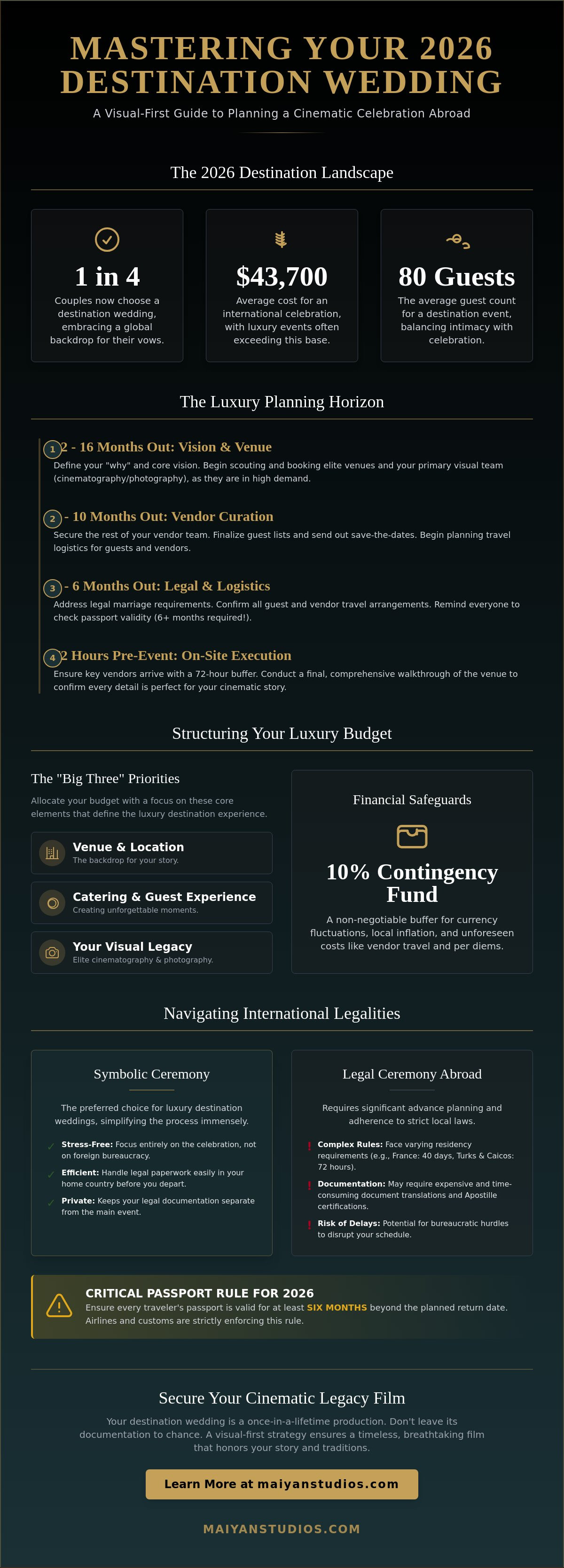
The planning horizon has shifted significantly. While a year was once the standard, the 2026 luxury market demands a 12-to-16 month lead time. Elite venues and top-tier wedding cinematography teams are booking out faster than ever. You'll also need to decide early between the convenience of an all-inclusive resort and the exclusivity of a private estate. While resorts offer streamlined planning, a private estate allows for the bespoke, high-end visual storytelling that defines a legacy event. It's the difference between a pre-set stage and a custom-built production designed specifically for your story.
Identifying the Perfect Global Locale
Choosing a location requires more than just a beautiful backdrop; it's a strategic decision based on seasonal patterns and accessibility. The rise of wedding tourism in regions like Lake Como and Tuscany has made these locales highly competitive, requiring early site visits. Beyond Europe, Rajasthan remains a pinnacle for luxury South Asian weddings due to its regal infrastructure. Always evaluate the "Guest Ease" factor. If your dream venue requires three flight transfers and a long drive, you might see your guest count drop from the 2026 average of 80 guests to a much smaller micro-wedding. Check for 2026 weather forecasts to avoid peak hurricane seasons in the Caribbean or extreme monsoon risks in Southeast Asia.
The Realistic 2026 Destination Budget
Understanding how to plan a destination wedding at the luxury level means accounting for the "Big Three": venue, catering, and your visual legacy. According to The Knot's 2026 data, the average international wedding costs $43,700, but luxury events often exceed this when accounting for multi-day itineraries. You must factor in the "hidden" costs of exporting your preferred vendors. Bringing your own wedding photography and cinematography team ensures a consistent style and eliminates language barriers, but it requires budgeting for their flights, lodging, and per diems. Finally, always maintain a 10% contingency fund. Currency fluctuations and local inflation can impact your final costs, so a financial buffer is non-negotiable for a stress-free experience.
Navigating International Legalities and Logistics
Deciding between a legal and symbolic ceremony is a foundational choice that impacts your entire timeline. Many luxury couples choose to handle the legal paperwork in their home country a few weeks before departure. This "paperwork wedding" allows you to focus entirely on the celebration abroad without worrying about local bureaucrats or expensive document translations. If you choose to marry legally on-site, you must master International Legalities and Logistics months in advance. For 2026 travel, ensure every guest knows their passport must be valid for at least six months beyond your return date. Airlines and customs officials are increasingly strict about this specific validity window.
Managing guest movement requires more than a simple hotel block. Luxury planners in 2026 often employ personalized concierge services to handle flight transfers and local transport. This ensures your guests receive high-touch support from the moment they land. You'll also need to consider the customs implications of your wedding wardrobe. Transporting intricate South Asian bridal attire or specific ritual items requires detailed manifests to avoid long delays at the border. While you focus on these logistics, a professional destination wedding coverage team can help document the journey from the moment you arrive, capturing the excitement of your guests' first night.
Marriage Licenses and Foreign Regulations
Every country has unique quirks that can disrupt your schedule. France requires a 40-day residency period before a legal ceremony can take place, while Turks and Caicos only requires 72 hours. You'll also likely need an Apostille, which is a specialized certificate that authenticates your birth certificates or divorce decrees for international use. In Mexico, legal ceremonies typically require local blood tests. These complexities are exactly why many experts recommend a symbolic ceremony when teaching couples how to plan a destination wedding without unnecessary stress.
Guest Communication and Tech Integration
Your wedding website serves as your primary logistics hub. In 2026, high-end sites integrate live travel maps and real-time RSVP apps that track flight delays for your planning team. Beyond tech, your physical hospitality sets the standard for the weekend. Sourcing local luxury items for welcome bags, like artisanal Italian leather goods or regional textiles, creates an immediate connection to the locale. It's also helpful to establish a clear social media policy. Encouraging a "Digital Detox" during the main ceremony ensures your guests are present, allowing your photography team to capture genuine moments instead of a sea of smartphones.
Curating Your Elite Vendor Team: The Visual First Strategy
Most couples begin their journey by scouting venues, but the secret to mastering how to plan a destination wedding at the luxury level is a visual-first approach. Your photography and cinematography team are your most critical "export" vendors. Unlike a local florist or caterer, your visual team travels with you to ensure your aesthetic remains consistent regardless of the geography. Relying solely on local resort photographers carries significant risks, including language barriers and a potential mismatch in artistic style. These vendors often prioritize high-volume turnover, which lacks the cinematic depth and storytelling nuance required for a high-end production.
Synergy between your photo and video teams is vital for a seamless production. When you hire a combined team, you reduce the physical footprint of vendors during intimate moments. A unified team shares a single creative vision, ensuring that the lighting, pacing, and color grading of your film perfectly match your photo gallery. This collaborative approach prevents "vendor clashing," where separate teams might inadvertently block each other's shots while trying to capture the same key moment. In a foreign environment where space and timing are often unpredictable, this level of coordination is the difference between a chaotic set and a professional film production.
Why Visual Legacy Matters Most Abroad
A destination wedding offers a scale that local venues simply cannot match. Capturing the grandeur of a cliffside ceremony or a palace courtyard requires specialized skills like drone cinematography and wide-angle lens mastery. For South Asian weddings, it's even more critical to have a team that understands the cultural weight of every ritual, from the exchange of garlands to the final farewell. Visual Legacy is the only tangible ROI of the wedding day. Without a team capable of translating the atmosphere of the locale into a timeless narrative, the investment in a global destination loses its long-term impact.
Vendor Logistics: Contracts and Coverage
Drafting contracts for international travel requires a higher level of detail than domestic agreements. Your contracts should explicitly cover travel insurance, equipment redundancy, and specific "Act of God" clauses to protect against unforeseen travel disruptions. While you're reviewing these details, you might also be considering the legal validity of your ceremony. Referencing the U.S. State Department guidance on marriage abroad can help you understand how these logistics intersect with your vendor needs.
At Maiyan Studios, we manage the entire logistical chain for our clients, from securing local drone permits in the Amalfi Coast to ensuring multi-day equipment backups for remote celebrations in Ceres. We specialize in the multi-day coverage required for luxury South Asian events, ensuring that every event from the Mehndi to the Grand Reception receives the same high-end cinematic treatment. This comprehensive oversight allows you to focus on your guests while we handle the complexities of global production logistics.
Cultural Preservation: Planning Multi-Day South Asian Rituals Abroad
South Asian weddings are marathons of joy, typically spanning a minimum of three distinct days of celebration. When you're researching how to plan a destination wedding of this magnitude, the architecture of your timeline is everything. You aren't just planning one event; you're coordinating a Mehndi, a high-energy Sangeet, and a Grand Ceremony, often for 80 to 150 guests. Sourcing traditional ritual items in a foreign country requires early intervention. Whether you need a Havan Kund in Tuscany or specific marigold varieties in the Caribbean, you'll need to work with a planner who understands these cultural necessities. Often, the best results come from a hybrid approach: sourcing heavy decor locally while flying in specialized items like high-quality henna or specific spices for the catering team.
The Baraat offers a unique opportunity to blend tradition with your chosen locale. In a coastal Italian village, a vintage wooden boat might replace the traditional horse or elephant. In a Mexican resort, a decorated jeep or even a local parade can create a memorable entrance. Food is the soul of a South Asian wedding, and ensuring authentic flavors with a local catering team is a common pain point. We recommend scheduling a tasting at least six months in advance. If the local chefs can't quite hit the right spice profiles, many luxury couples choose to fly in a specialty chef to oversee the traditional menus while the resort handles the international fare. To ensure every vibrant detail of these events is preserved, you should book an experienced South Asian wedding cinematography team that understands the flow of these complex rituals.
The Visual Narrative of the Sangeet and Mehndi
High-energy Sangeet performances require professional lighting design to look cinematic on film. Avoid the standard "wash" of purple or blue lights provided by many resorts, as these can distort skin tones in your photos. Instead, request warm, directional lighting that highlights the performers while keeping the background atmospheric. For the Mehndi, natural light is your best friend. We suggest scheduling the application during the day near a large window or in a shaded outdoor area. This allows your photography team to capture the intricate henna patterns with maximum clarity. This is also the perfect window to slip away for a pre-wedding shoot at a nearby landmark, creating a stunning visual contrast between your traditional attire and the local architecture.
The Ceremony: Tradition Meets the Landscape
Your Mandap should be a bridge between your heritage and your destination. In 2026, the trend is toward "open-air" Mandaps that use minimal, sculptural florals or transparent acrylic to frame the natural landscape rather than blocking it. Sound logistics are equally vital; ocean waves or mountain winds can easily drown out the priest’s prayers and your vows. Ensure your visual team uses high-quality lapel microphones to capture clear audio for your wedding film. Finally, be wary of the "Sunset Ceremony" trap. While a sunset backdrop is beautiful, the actual ritual should start at least 90 minutes before the sun goes down. This ensures you have enough "golden hour" light for the ceremony and your family portraits before the environment turns pitch black.
On-Site Execution and the Final Countdown
The final three days before your ceremony are the most critical for a successful luxury event. We recommend a strict 72-hour arrival rule for the couple and their core vendor team. This buffer allows everyone to acclimate to the local time zone and environment, reducing the physical toll of travel before the festivities begin. It also provides a vital safety net for any potential flight delays or luggage issues. During this window, your focus shifts from digital spreadsheets to physical presence, ensuring that every detail of your vision translates perfectly to the real world.
A final walkthrough with your planner and visual team is non-negotiable. This isn't just about checking the floor plan; it's about observing how the natural light hits your ceremony site at the exact time you plan to say your vows. We use this time to synchronize audio frequencies with the local sound technicians and identify backup locations in case of a sudden weather shift. When you're learning how to plan a destination wedding, these last-minute technical checks often make the difference between a flawless film and a production plagued by technical glitches.
Managing guest burnout is equally important during a multi-day itinerary. While it's tempting to fill every hour with activities, guests need downtime to enjoy the destination you've chosen. We suggest limiting scheduled events to five or six hours per day, leaving the mornings or afternoons free for leisure. This balance keeps everyone energized for the main events, resulting in more vibrant and joyful footage for your wedding film. At Maiyan Studios, our approach is built on this philosophy of stress-free capture, allowing us to document your story without adding to the logistical pressure of the weekend.
The Rehearsal and Welcome Event
Your welcome event serves as a vital warm-up for both your guests and the camera. It’s the perfect time for your photography team to build rapport with your family, making everyone feel more comfortable when the high-stakes moments arrive. We use the rehearsal to finalize our visual shot list based on real-time weather patterns and the specific lighting of the venue. Coordinating with the local transport team during the rehearsal ensures that guest shuttles and vendor movements are perfectly timed for the big day.
Post-Wedding: The Legacy Begins
Once the celebration ends, the focus shifts to the preservation of your digital assets. Managing high-end cinematography files across international borders requires rigorous data redundancy. We utilize multiple physical backups and cloud-based encryption to ensure your footage is secure from the moment it’s captured. You can expect a cinematic trailer within 4 to 6 weeks, with full fine art galleries and legacy films following shortly after. Your wedding isn't just a trip; it's a permanent record of your family history. Start planning your destination visual legacy with Maiyan Studios to ensure your story is told with the luxury and detail it deserves.
Secure Your Visual Legacy for 2026 and Beyond
Mastering how to plan a destination wedding is a journey that transforms a simple trip into a high-end cinematic production. You've now gained the strategy needed to prioritize a visual-first vendor approach, avoiding the common pitfalls of local-only teams while ensuring your cultural rituals remain authentic. By implementing a 72-hour arrival buffer and a rigorous final walkthrough, you've set the stage for a celebration that's as seamless as it is breathtaking. These steps ensure that your investment in a global locale results in a stunning visual legacy rather than logistical stress.
Your celebration deserves a team that understands both the weight of your heritage and the scale of your global vision. We're cinematic storytelling experts who specialize in luxury South Asian celebrations, bringing worldwide coverage experience to every frame we capture. Book Your Luxury Destination Consultation with Maiyan Studios today to begin crafting your timeless film and photo gallery. The world is your stage, and we're ready to document every breathtaking second of your journey.
Frequently Asked Questions
Is a destination wedding actually cheaper than a traditional wedding?
Not necessarily. While some all-inclusive packages range from $9,000 to $25,000, luxury events frequently surpass the $34,200 U.S. wedding average. When researching how to plan a destination wedding, you'll find that savings on guest counts (usually 40 to 80 people) are often redirected into high-end guest experiences. Multi-day itineraries and vendor travel costs make these celebrations a significant financial investment rather than a budget alternative.
How do I choose the best destination for a South Asian wedding?
Focus on infrastructure and cultural expertise. Destinations like Cancun have seen a 25% increase in resorts with specialized South Asian wedding departments. You need a venue that can accommodate a fire-based ceremony and has experience with 300-plus guest counts. Choosing a location with a proven track record for multi-day rituals ensures your traditions are handled with the respect and technical knowledge they deserve.
Should I hire a local photographer or bring one from home?
Bringing a trusted team from home is the preferred choice for 90% of luxury couples. Local resort photographers often lack the specific cinematic style and high-end equipment required for complex South Asian celebrations. When you're figuring out how to plan a destination wedding, remember that your visual team's travel costs are an investment. It ensures a consistent, high-quality legacy that isn't limited by local language barriers or stylistic differences.
What are the legal requirements for a destination wedding in 2026?
Legal requirements range from simple 72-hour stays to complex residency rules. For example, some regions require documents to be translated and notarized 6 months in advance. Because of these hurdles, many 2026 couples choose to sign legal papers at their local city hall before they depart. They then host a symbolic ceremony at the destination to focus on the celebration rather than navigating foreign government paperwork.
How do I handle guest travel and accommodations for a destination wedding?
Provide a dedicated travel concierge and a tiered list of at least three accommodation options. This helps guests with different budgets find a comfortable place to stay. Modern wedding websites in 2026 often include integrated RSVP tech that tracks flight details in real time. This data allows your on-site team to coordinate seamless airport transfers for every guest who arrives, ensuring a high-touch experience from the start.
What happens if it rains during my outdoor destination ceremony?
You must have a pre-negotiated "Plan B" indoor venue or a professional tenting solution ready. Check the 10-year historical weather data for your specific dates to assess the risk of tropical showers. Your cinematography team should use weather-sealed equipment to ensure they can capture the day even if the weather shifts. A well-prepared team can often turn a rainy day into a moody, cinematic masterpiece without missing a single moment.
How far in advance should I send out Save the Dates for a destination wedding?
You should send Save the Dates between 9 and 12 months before your wedding date. This timeline is essential for international travel, as it allows guests to find competitive flight prices and secure time off work. For a 2026 wedding, providing this 12-month window ensures your guests can navigate the current high demand for global travel and accommodation, leading to a much higher attendance rate.
Can I bring my own priest or officiant for a destination wedding?
Yes, and it's often the best way to ensure a personal and culturally accurate ceremony. Bringing a priest who understands your specific family traditions is vital for South Asian rituals. You'll need to budget for their round-trip flights and at least three nights of lodging at the venue. This ensures they're rested and ready to lead your multi-day rituals without the stress of navigating a foreign environment alone.


Comments