
Finding My Wedding Photography Style: The 2026 Luxury Visual Guide
Did you know that 87% of couples in 2026 now make their primary wedding planning decisions based on what they see on social media? While platforms like Instagram are excellent for inspiration, the sheer volume of options often makes finding my wedding photography style feel more like a chore than a creative journey. It's natural to worry that a style looking chic today might feel dated by your tenth anniversary, or that a trendy filter might wash out the vibrant, intricate colors of your cultural heritage.
You deserve a visual narrative that balances modern editorial flair with the timeless truth of your traditions. This guide provides the definitive framework to help you identify an aesthetic that honors your vision and preserves your luxury heritage. We'll explore how to build a curated moodboard strategy, define the technical vocabulary needed to communicate with elite vendors, and ensure your final gallery captures every unscripted emotion with cinematic precision.
Table of Contents
The Nuance of Finding Your Wedding Photography Style in 2026
Defining the Visual Language: Luxury Photography Styles Decoded
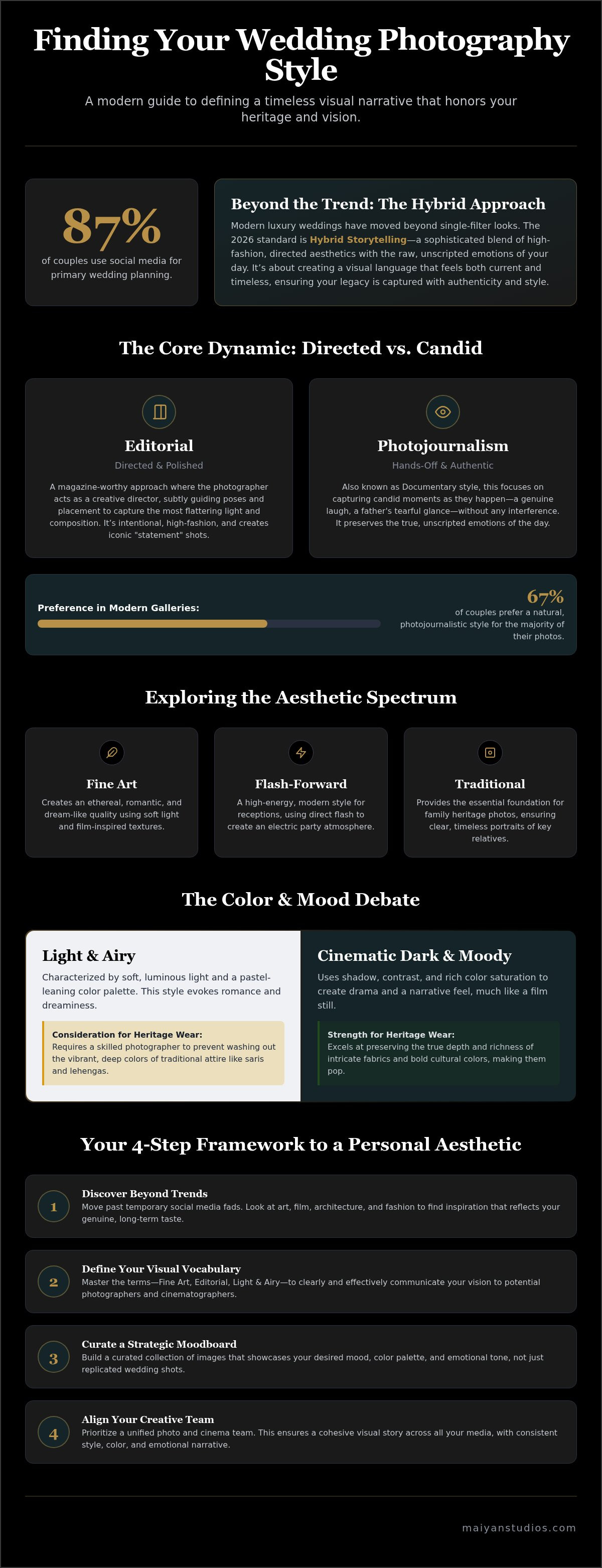
The Color Palette Debate: Light & Airy vs. Cinematic Dark & Moody
Your Step-by-Step Framework for Identifying Your Personal Aesthetic
Beyond the Lens: Syncing Your Style with Luxury Cinematography
The Nuance of Finding Your Wedding Photography Style in 2026
Luxury weddings in 2026 are moving away from the "one-size-fits-all" filter. Couples now prioritize a sophisticated approach known as Hybrid Storytelling. This method blends high-fashion aesthetics with the raw, unscripted moments of the day. When you begin the process of finding my wedding photography style, you're doing more than picking a favorite Instagram look. You're selecting a visual language that will represent your family's legacy for decades.
Success in this search depends on your visual vocabulary. Understanding the history of wedding photography reveals how the medium evolved from stiff, formal studio sessions to the fluid, artistic expressions we see today. A timeless aesthetic avoids heavy, era-specific presets in favor of true-to-life colors and balanced contrast. This is especially vital for South Asian celebrations, where preserving the specific gold of a lehenga or the deep red of a bridal sari is non-negotiable. Your venue and timing also dictate what's possible; a beach ceremony at high noon requires a different technical skill set than a candlelit reception in a historic ballroom.
Why Jargon Matters: Editorial vs. Photojournalism
The term "Editorial" refers to a directed, magazine-worthy approach. Your photographer acts as a creative director, subtly adjusting your pose or the placement of your veil to catch the best light. It's intentional and polished. In contrast, "Photojournalism" is entirely hands-off. It focuses on the "candid" power of the moment, capturing a father's reaction or a shared laugh between friends without interference. Recent data shows that 67% of couples now prefer this natural, unposed style for the majority of their gallery. Most luxury couples find that a balanced split between these styles ensures they get both the "hero" portraits and the genuine emotional beats of the day.
The Emotional Impact of Your Visual Choice
Every style carries a different emotional weight. Your photographer's "eye" determines how your memories will feel when you look back on them. Consider these popular 2026 directions:
Fine Art: This style creates a sense of ethereal romance. It often uses soft lighting and film-inspired textures to make images feel like a dream.
Flash-Forward: Perfect for the reception, this high-energy style uses direct flash to create an electric, modern party atmosphere. It's a favorite for capturing the vibrant movement of multi-day celebrations.
Cinematic Storytelling: This approach focuses on the narrative arc, ensuring that every frame feels like a still from a high-end film.
Matching your personality to your photographer's vision is the final piece of the puzzle. If you're naturally shy, a heavy editorial approach might feel forced. If you love the spotlight, a purely documentary style might leave you wanting more of those curated, high-fashion moments. The goal is to find a professional who captures your essence without making you feel like you're playing a character.
Defining the Visual Language: Luxury Photography Styles Decoded
Deciding on a specific aesthetic requires more than just scrolling through social media. You need to understand the technical foundations of different aesthetics to see how they align with your vision. This comprehensive guide to wedding photography styles offers a detailed breakdown of the industry standards that define modern luxury. By learning these terms, the process of finding my wedding photography style becomes a structured creative exercise rather than a guessing game.
Fine Art photography is one of the most sought-after looks for luxury events. It's characterized by a soft, luminous quality that often mimics the grain and pastel palette of traditional film. If you want your gallery to feel romantic and airy, this is the direction to take. Conversely, the Editorial approach borrows from the pages of high-fashion magazines. It uses dramatic lighting and intentional posing to create "hero" shots that feel curated and expensive. While Fine Art is about the "dream," Editorial is about the "statement."
Documentary photography and Traditional styles provide the necessary balance to these artistic choices. Documentary, or photojournalism, is about the photographer being a silent observer. They capture raw laughter and tears without any interference or direction. However, don't overlook Traditional photography. This style provides the essential foundation for family heritage photos. It ensures every key relative is captured in a clear, timeless manner that will be cherished by future generations.
South Asian Context: Capturing Tradition and Color
South Asian celebrations present unique visual challenges that standard photography guides often overlook. When finding my wedding photography style, you must consider how a professional handles high-saturation environments. "True-to-life" color is critical in this context. It ensures the intricate details of intricate henna and the specific jewel tones of a bridal lehenga aren't lost to trendy, desaturated filters. Documenting fast-paced rituals like the Milni or Sangeet requires a professional who understands the cultural flow. For a deeper look at these nuances, explore our South Asian Wedding Photography Styles: The 2026 Luxury Guide.
The Rise of 'Cinematic' Photography
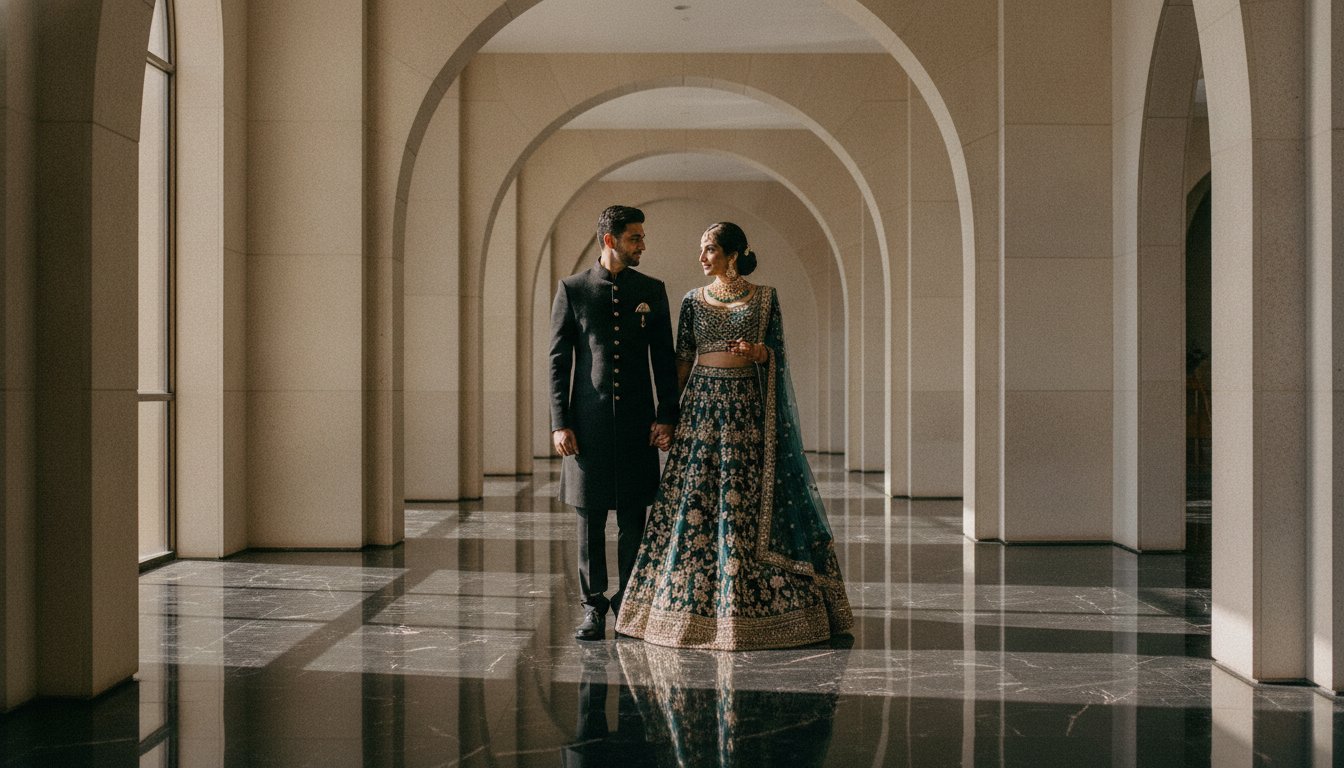
In 2026, luxury couples are increasingly gravitating toward a Cinematic approach. This style uses wide-angle lenses to capture the grandeur of luxury venues and expansive destination landscapes. It often incorporates intentional motion blur or "film-still" compositions to create a sense of movement and drama. This style is particularly effective for destination weddings where the environment is as much a part of the story as the ceremony itself. If you're looking for a team that understands how to blend these aesthetics, our experts in wedding photography can help you translate your vision into a cohesive gallery.
The Color Palette Debate: Light & Airy vs. Cinematic Dark & Moody
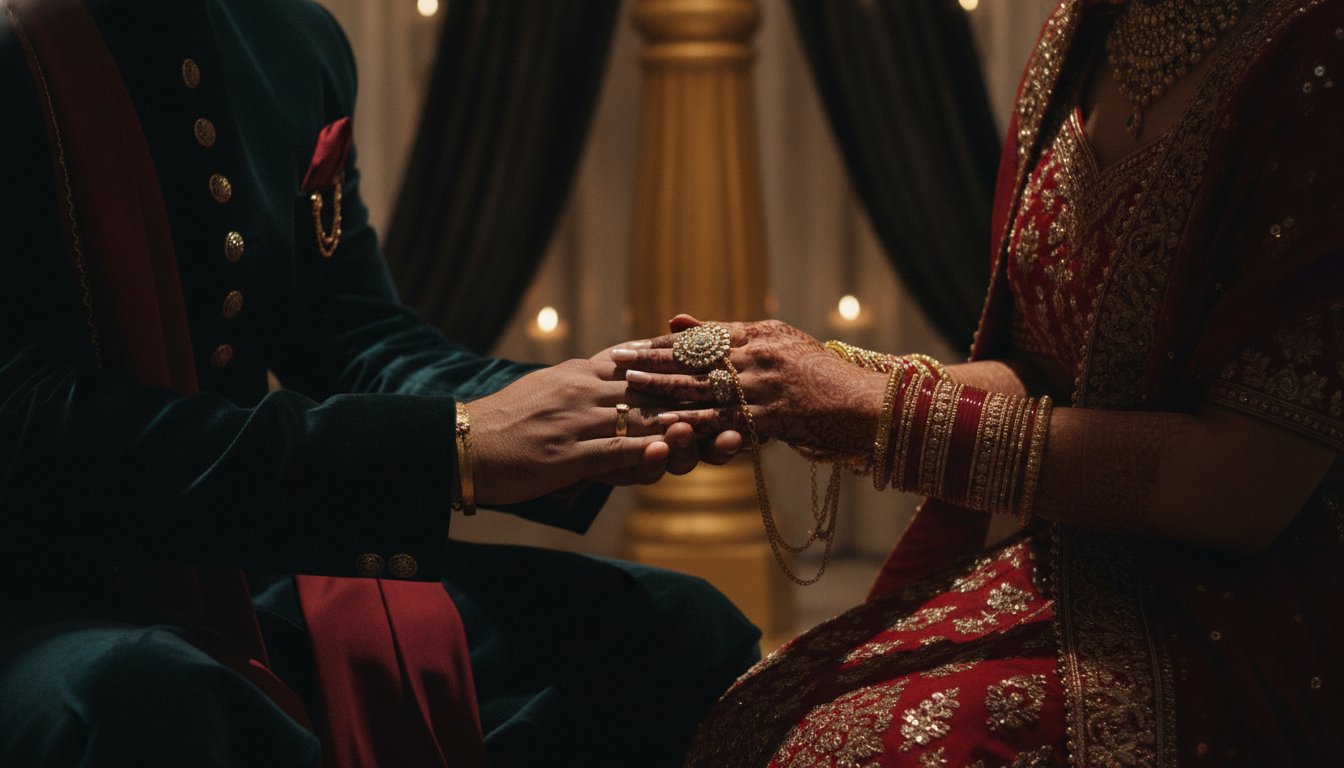
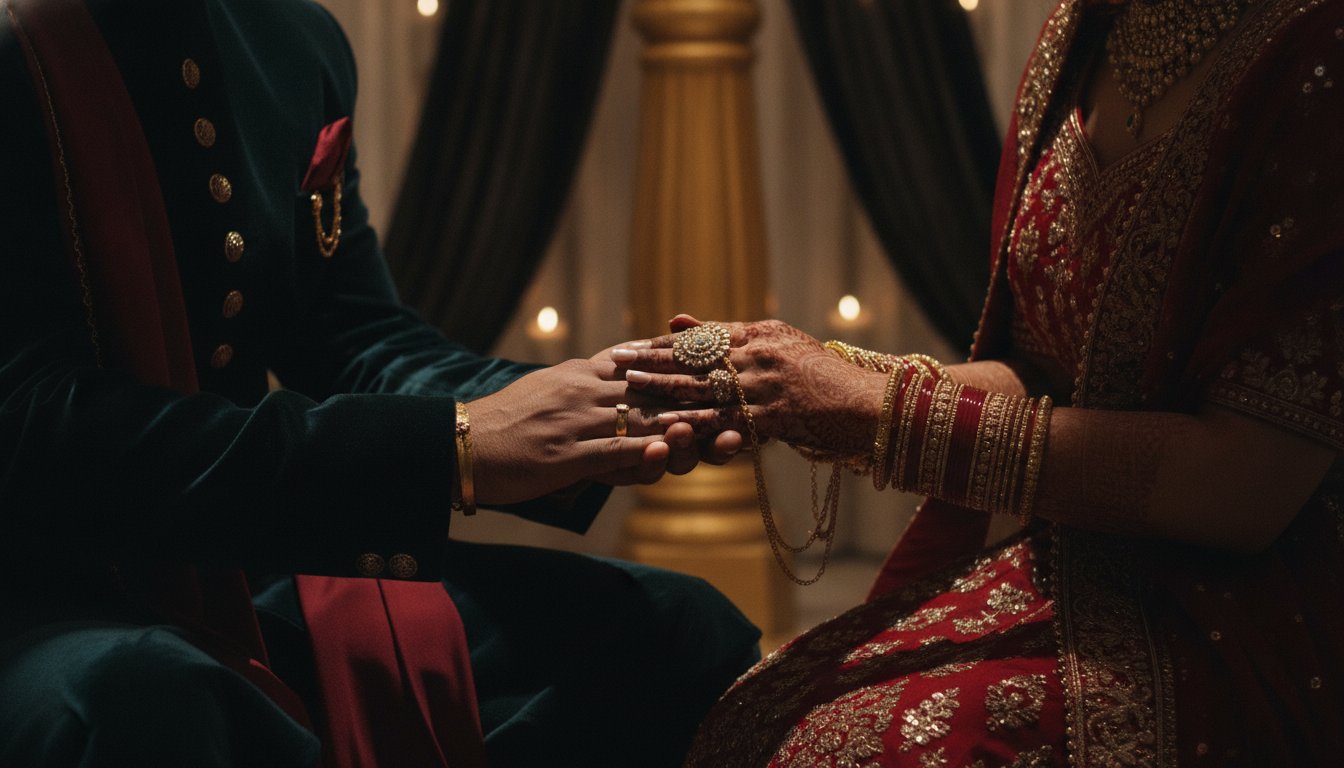
The choice between a bright, ethereal look and a deep, cinematic one is perhaps the most visible decision you'll make when finding my wedding photography style. Light and Airy photography typically relies on intentional overexposure and low contrast to create a soft, romantic feel. It's frequently associated with garden ceremonies and pastel color palettes. On the other end of the spectrum, Dark and Moody photography embraces heavy shadows and rich textures. This style creates a sense of mystery and drama, often making the viewer feel like they're looking at a high-end film still rather than a traditional photograph.
Between these two extremes lies the "True-to-Life" or vibrant aesthetic. For many luxury couples in 2026, this is the preferred middle ground. It offers the punchiness of modern digital sensors while maintaining the accuracy of the colors present on the day. Post-processing, or editing, acts as the final transformation of your images. It's the stage where a photographer applies their signature look; it can fundamentally change the "soul" of a photograph from a standard document to a piece of art. When you're finding my wedding photography style, remember that the editing style is just as important as how the photo was taken.
Lighting Conditions and Your Style Choice
Your venue's architecture and lighting often dictate which styles will look best. A Light and Airy aesthetic can struggle in dark, indoor ballrooms because it requires significant amounts of natural light to look authentic. Forcing this style in a dim environment often results in "muddy" shadows and unnatural skin tones. Conversely, a Dark and Moody approach can enhance the intimacy of candle-lit receptions or historic venues with dark wood paneling. Professional photographers use off-camera lighting equipment to bridge these gaps, but the base environment will always influence the final result.
Preserving the Heritage of Color
Cultural celebrations require a nuanced eye for color. Moody presets, while trendy, can sometimes dull the vibrant gold and red hues that are central to South Asian attire. If a filter is too aggressive, a bright crimson sari might appear rust-colored, or intricate gold embroidery could lose its luster. Ensuring skin tones remain natural and luminous is the top priority for any luxury specialist. Color grading is the intentional adjustment of tone and hue in post-production to create a specific atmospheric mood across an entire wedding gallery. Finding a balance ensures your photos look like a piece of art without sacrificing the reality of your traditions.
Your Step-by-Step Framework for Identifying Your Personal Aesthetic
Moving beyond a simple collection of random images requires a structured approach to finding my wedding photography style. Instead of looking solely at other people's weddings, start by examining your personal taste in everyday life. Use this four-step framework to distill your vision into a clear, actionable aesthetic.
Step 1: The Non-Wedding Moodboard: Look at architecture, cinema, and fashion. Do you prefer the clean lines of modern minimalism or the intricate textures of historical estates? Identifying your favorite film aesthetics can reveal if you lean toward dramatic lighting or soft, romantic tones.
Step 2: The 'Gut-Reaction' Pinterest Audit: Scroll through your saved images quickly. Delete anything that doesn't immediately spark excitement. You'll likely notice a pattern, such as a preference for high-contrast shadows or a specific way photographers capture movement.
Step 3: Analyzing the Venue's Natural Aesthetic: A glass-walled modern gallery suggests a different style than a rustic vineyard. Your style should complement the lighting and architecture of your chosen space.
Step 4: The 'Ritual Check': Determine which moments matter most to your family. If the priority is capturing every second of a three-day celebration, a documentary-heavy style is essential.
Building a Moodboard with Intention
A successful moodboard isn't just a gallery of pretty pictures. It's a tool to identify recurring patterns in the imagery you love. Look for common threads in color, composition, and emotion. To help define your vibe, use the 'Rule of Three.' Pick three words, such as "Timeless, Vibrant, and Cinematic," to serve as your North Star throughout the planning process. This clarity is especially helpful when planning your initial shoots. For inspiration on how to apply these concepts early on, check out our guide on 25+ Creative Engagement Photo Ideas for a Cinematic 2026 Pre-Wedding Session.
Communicating with Your Photographer
Once you have a clearer vision, the consultation is your chance to test style alignment. Don't just look at a curated Instagram feed. Ask to see two or three full galleries from start to finish. This reveals how the photographer handles different lighting conditions and fast-paced rituals. Ask questions like, "How do you approach candid moments during high-energy events?" or "How do you ensure skin tones remain natural in dark venues?"
Chemistry is the final, most important factor. You'll spend more time with your photographer than almost any other vendor. If you feel relaxed and comfortable with them, your photos will reflect a natural, unforced style that no amount of editing can replicate. If you're ready to see how a professional team can bring your specific vision to life, you can contact us at Maiyan Studios to discuss your luxury celebration.
Beyond the Lens: Syncing Your Style with Luxury Cinematography
Your wedding isn't just a series of isolated frames. It's a comprehensive visual brand. In 2026, the process of finding my wedding photography style must include a conversation about cinematography. If your photos follow a soft, Fine Art aesthetic while your film uses high-contrast, moody lighting, the final collection will feel fragmented. Cinematic storytelling acts as the essential bridge here. It combines the structured beauty of editorial shots with the raw energy of live motion to create a unified narrative. For a deeper look at this process, see our Wedding Cinematography: The Ultimate Guide to Luxury Visual Storytelling.
A unified approach ensures that the emotional tone remains consistent from the first engagement session to the final reception dance. This synergy is particularly important for luxury events where the scale of the production is high. When your visual team shares a single creative philosophy, they don't compete for the same angles. Instead, they work in tandem to document your legacy. This level of coordination is what separates a standard wedding gallery from a curated masterpiece of family history.
The Cohesive Visual Brand of Your Wedding
Consistent color grading across both mediums is the hallmark of a luxury event. When your photo and cinema teams work under a single creative director, the specific jewel tones of your attire and the atmospheric lighting of your venue remain identical in every format. There are logistical advantages too. A unified team means fewer tripods, better communication between operators, and a significantly reduced equipment footprint. Maiyan Studios specializes in this integrated approach, ensuring that multi-day South Asian celebrations are captured with a single, unwavering vision that respects every ritual.
Planning for Destination Excellence
Adapting your visual style to global landscapes requires a specialized skill set. Whether you're planning a sunset ceremony in Napa, a villa wedding in Lake Como, or a grand celebration in Dubai, your aesthetic must harmonize with the environment. For those looking abroad, our The Ultimate Guide to Luxury 3-Day Wedding Photography Coverage in Dubai offers specific insights into managing light and scale in iconic locations. The final step in finding my wedding photography style is simply committing. Once you've identified the look that honors your heritage and personal vision, trust your professional team to tell your unique story through a lens of timeless luxury.
Your Legacy Deserves a Timeless Vision
The process of finding my wedding photography style is a journey that moves from initial Pinterest inspiration to a sophisticated, technical understanding of light, color, and narrative. By defining your visual vocabulary and choosing an aesthetic that preserves the vibrant colors of your heritage, you ensure your gallery remains as moving in twenty years as it is today. You've learned how to audit your tastes and why a synchronized approach between photo and cinema is the hallmark of a modern luxury celebration.
Whether you're planning a grand local event or an intimate destination wedding, your visual team should be an extension of your personal vision. Ready to see these principles in action? Explore the Maiyan Studios Portfolio and Find Your Vision. With our deep expertise in multi-day South Asian celebrations and worldwide destination coverage, we specialize in seamless photo and cinema integration that honors every ritual. We're excited to help you document a legacy that is authentically yours.
Frequently Asked Questions
What is the most timeless wedding photography style for 2026?
A "True-to-Life" aesthetic combined with documentary storytelling is widely considered the most timeless choice. This style avoids heavy, era-specific filters that can make images look dated in a few years. By focusing on accurate skin tones and natural contrast, you ensure your gallery remains as vibrant and relevant on your silver anniversary as it was on the day of your celebration.
Can I have a mix of photojournalistic and editorial photos?
Most luxury photographers actually specialize in a hybrid approach. They provide editorial direction during your portraits and family sessions to ensure magazine-quality results, then shift to a photojournalistic mode for the ceremony and reception. This balance is a core part of finding my wedding photography style because it captures both the planned beauty and the unscripted emotions of the day.
How do I know if a photographer's style will work with my dark venue?
You should request to see a full gallery from a wedding held in a similar environment, such as a dim ballroom or a candle-lit cathedral. A professional with a luxury background will use off-camera lighting and high-end sensors to maintain their signature look without losing detail in the shadows. Look for images where the subjects are crisp and the colors remain rich despite the low light.
Does the photography style affect the price of the package?
While the aesthetic itself doesn't usually dictate the price, the technical complexity and equipment required for certain styles can influence costs. An editorial or cinematic style often requires more lighting gear and extensive post-production work compared to a purely documentary approach. You'll find that specialists with a highly refined, niche aesthetic often reflect that expertise in their service structures.
What is the difference between 'Fine Art' and 'Traditional' photography?
Fine Art photography is an artistic approach that prioritizes a soft, romantic, and often film-inspired look with pastel tones. Traditional photography focuses on clear, eye-level documentation of the key people and events. While Fine Art is about creating a specific "dreamy" atmosphere, Traditional photography acts as a foundational record of the day, ensuring every family member is captured in a classic, straightforward manner.
How do I describe my style if I don't know the technical terms?
Don't worry about the jargon; instead, use descriptive words like "vibrant," "candid," "moody," or "polished." The best way to communicate your vision during the process of finding my wedding photography style is to share a curated moodboard. Showing five to ten images that resonate with you tells a photographer more about your taste than technical labels ever could.
Why is color accuracy so important for South Asian weddings?
Cultural celebrations involve specific shades of crimson, gold, and saffron that carry deep symbolic meaning. If a photographer uses a trendy filter that desaturates colors, the integrity of the bridal lehenga or the intricate henna can be lost. Color accuracy ensures that the vibrancy of the traditions is preserved exactly as it appeared, honoring the heritage of the event.
Should my engagement photos be in the same style as my wedding photos?
Consistency between your engagement and wedding photos helps create a cohesive visual brand for your celebration. It makes your wedding website and save-the-dates feel unified. Booking the same team for both sessions also allows you to build chemistry with your photographer, which leads to a more relaxed and natural style when the high-pressure wedding day arrives.
Comments