
Destination Wedding Photography Tips: The 2026 Luxury Planning Guide
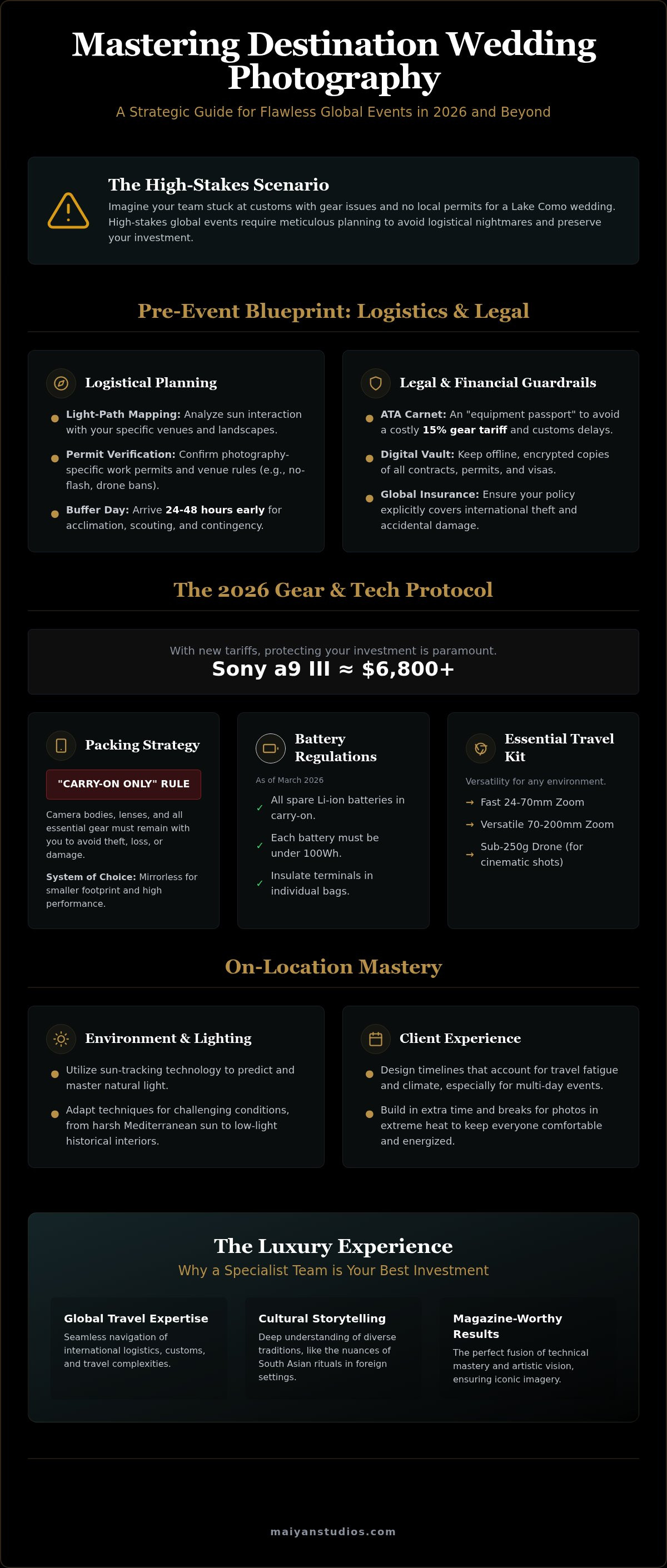
Imagine landing in Lake Como for a three-day celebration only to realize your photography team is stuck at customs with gear issues and no local permits. It's a nightmare scenario that often shadows the excitement of a high-stakes global event. You've spent months perfecting every detail, so it's natural to seek out the best destination wedding photography tips to ensure your memories are preserved without a hitch. Whether you're worried about equipment safety during transit or how lighting will behave in a tropical climate, these concerns are manageable with the right professional strategy.
This guide provides the expert insights you need to master everything from 2026's 15% gear tariffs to the nuances of South Asian rituals in foreign settings. We'll show you how to turn logistical hurdles into a seamless experience that results in magazine-worthy imagery. You'll learn how to protect your investment, manage complex multi-day schedules, and ensure your photos reflect the true essence of your chosen landscape.
Table of Contents
Pre-Trip Logistics: Research and Planning for Global Destinations
Success in high-end destination weddings begins months before the first shutter click. It's about moving beyond standard travel planning to technical environmental mapping. Researching your location must include light-path mapping to understand how the sun interacts with specific architecture or natural landscapes at different times of the year. For instance, the harsh Mediterranean sun in July creates high-contrast shadows that require a different approach than the soft, diffused light of a coastal morning in Bali. While the history of wedding photography shows a shift from static studio portraits to dynamic global storytelling, the logistical burden on modern professionals has increased significantly. One of the most effective destination wedding photography tips is to coordinate with local vendors early to identify venue-specific restrictions, such as "no-flash" rules in historic European cathedrals or drone flight bans in sensitive urban areas like Dubai.
Don't overlook the necessity of a "buffer day." Arriving at least 24 to 48 hours before the first event allows for physical acclimation to new climates and time for a final on-site scout. This period is vital for testing how local humidity might affect gear or how your team manages the physical toll of travel before a multi-day South Asian celebration begins. It ensures you aren't walking into a high-stakes ceremony with jet lag or technical surprises.
Digital and Legal Preparation
Navigating international borders with professional gear requires meticulous documentation. As of early 2026, the 15% tariff on imported camera gear makes an ATA Carnet essential for high-end kits. This "equipment passport" proves you aren't importing gear for sale, helping you avoid massive customs deposits or delays. Digital vaulting is equally critical. Keep offline copies of all contracts, permits, and photography-specific travel visas in a secure, encrypted folder. Don't rely on cloud storage in regions where high-speed internet is inconsistent. Finally, verify that your insurance policy explicitly covers international theft and accidental damage, as many standard domestic plans exclude coverage once you cross borders.
Client Communication and Timelines
A luxury destination timeline must account for travel fatigue, not just the ceremony schedule. When Designing Your Multi-Day Wedding Photography Schedule, build in extra time for group photos if you're working in extreme heat. Guests in heavy traditional attire will need frequent breaks. Managing these expectations early prevents stress and ensures the couple remains energized for their portraits. Clear communication about the impact of the local environment ensures everyone stays comfortable while you capture magazine-quality results.
Gear Management: Packing, Protection, and 2026 Tech Workflows
In 2026, the stakes for gear management have never been higher. With a 15% tariff applied to all major camera brands since early 2025, a professional kit is a massive financial investment. The Sony a9 III, for example, now retails for approximately $6,800. These soaring costs make protecting your equipment a central part of your destination wedding photography tips. Mirrorless systems have become the gold standard for international work. They offer a smaller footprint without sacrificing the high-speed autofocus and hybrid video capabilities required for luxury events. Transitioning to mirrorless isn't just about weight; it's about fitting a professional-grade kit into a carry-on bag to avoid the risks of checked luggage.
Adhering to a strict "carry-on only" rule for camera bodies and lenses is non-negotiable. Checking these items risks theft or damage that could derail a multi-day international booking. Managing destination wedding logistics also requires a deep understanding of airline safety. As of March 2026, all spare lithium-ion drone and camera batteries must be in carry-on luggage. Each battery must stay under the 100Wh limit with terminals insulated in individual bags to prevent short-circuiting. This level of technical preparation is why many couples choose to work with a team providing professional wedding photography rather than relying on local vendors who may lack travel-specific redundancy.
The Destination Photography Packing List
Your lens choice should cover everything from wide-angle vistas in the Amalfi Coast to intimate portraits during a Sangeet. A fast 24-70mm and a 70-200mm zoom often form the backbone of a travel kit. For cinematic perspectives, the trend in 2026 leans toward sub-250g drones. These smaller units often bypass strict registration thresholds in the EU and North America, which simplifies international travel. For lighting, prioritize compact, battery-powered strobes that offer high-speed sync. These are essential for battling harsh midday sun in tropical climates without the bulk of traditional studio gear.
Backup and Data Security Abroad
Data security is the final hurdle. Use a 3-2-1 backup strategy: three copies of the files, stored on two different types of media, with one copy off-site. In a hotel setting, this means dual-slot recording in-camera followed by an immediate transfer to two portable SSDs. Your second shooter should carry one of these drives on their person during the flight home. This physical separation of media ensures that even if one bag is lost or stolen, the wedding memories remain safe. High-speed cloud uploads provide an extra layer of security if the local infrastructure supports it.
Navigating Cultural Traditions in a Destination Setting
Success in a global setting means more than just having the right lenses. Cultural fluency is the most powerful tool for your destination wedding photography tips. It allows you to anticipate the emotional peak of a ceremony before it happens. Managing a three-day celebration abroad requires a team that understands the rhythm of Sikh and Hindu traditions. For example, coordinating a Baraat in a public international space like a European city square requires careful permit management and a team that can direct a large, high-energy crowd without losing focus on the couple. You're not just taking photos; you're managing a cultural event in a setting that might not be familiar with such vibrant traditions.
The visual contrast of a Sangeet is another area where expertise matters. You're often capturing vibrant, multi-colored attire against diverse backdrops, from desert dunes to historic castles. Your team must know how to balance these rich tones so they don't clash with the environment's natural palette. This requires advanced lighting skills to ensure the intricate embroidery of a lehenga stands out against the stone of a French chateau or the sleek glass of a Dubai skyline.
South Asian Rituals Abroad
When photographing an Anand Karaj in an international Gurudwara, respect for the space is the priority. Strategic positioning ensures you capture the Kirtan and Lavan without disrupting the sanctity of the service. Similarly, capturing the Mandap offers a chance to blend local architecture with traditional Hindu elements. Placing a Mandap to utilize a sunset view in Cabo or a cliffside in Greece is a hallmark of South Asian Wedding Photography Styles: The 2026 Luxury Guide. This approach highlights both the ritual and the destination's unique beauty while maintaining the luxury feel of the event.
The Synergy of Photo and Video Teams
Hiring a unified team for wedding cinematography and photography is essential for multi-day events. A single team operates with shared cues, meaning they won't block each other's angles during the fast-paced Jai Mala or the emotional Vidai. This synchronization is vital when you're working in unfamiliar foreign venues with limited space. A combined team also ensures the final films and photos share a consistent luxury aesthetic. You get a cohesive visual narrative where the colors, lighting, and storytelling style match perfectly across all your media, providing a "safe pair of hands" for your high-value memories.
Mastering the Environment: Scouting and Lighting Techniques
Scouting a destination requires more than a quick look at street view. Advanced professionals use sun-tracking apps to predict the exact angle of the 'Golden Hour' across different hemispheres. In the Northern Hemisphere, the sun's trajectory in July differs wildly from its path in the Southern Hemisphere or equatorial regions like Bali. Knowing exactly when the light will hit a specific balcony or mountain ridge is one of the most practical destination wedding photography tips for achieving a luxury aesthetic. This technical foresight allows you to plan environmental portraits that highlight the grandeur of the landscape without losing the intimacy of the couple's connection. It's about working with the environment rather than fighting it.
Extreme lighting environments demand specialized technical responses. Whether you're facing the relentless Mediterranean sun or the dim, cavernous interiors of a European cathedral, your approach must be adaptable. The goal is to incorporate local landmarks in a way that feels organic rather than like a generic travel postcard. Use the architecture to frame the couple, creating layers of depth that tell a story of their journey. This prevents the "tourist shot" look and elevates the imagery to a magazine-worthy standard. Using a long lens to compress the background can bring distant landmarks closer, making the destination feel like an integral part of the couple's story.
Lighting for Every Climate
Mastering High-Speed Sync (HSS) is essential for outdoor portraits in bright destinations like Los Cabos or Santorini. It allows you to use wide apertures to blur the background while keeping the sky's vibrant details intact. Indoors, use off-camera flash to create editorial looks in luxury hotel suites, mimicking natural window light to enhance the mood. In tropical regions, managing humidity is just as important as the light itself. Let your gear acclimate to the outdoor temperature for at least thirty minutes before the shoot to prevent lens fogging. Keep silica gel packets in your bags to protect sensitive electronics from moisture damage during multi-day events.
Creative Composition in Iconic Locations
Finding unique angles in over-photographed locations like Lake Como or Paris is a creative challenge. Instead of the standard wide shot, look for foreground elements like local flora or architectural details to add a sense of place. This technique is particularly effective during 25+ Creative Engagement Photo Ideas for a Cinematic 2026 Pre-Wedding Session, where the focus is on cinematic storytelling. By using these layers, you create a visual narrative that feels personal and exclusive to the couple's experience. If you want a team that masters these environmental complexities, consider booking destination wedding coverage with experts who specialize in global logistics and high-end aesthetics.
The Luxury Experience: Why a Specialist Team is Your Best Investment
Choosing a photography team for a global event is about more than just reviewing a portfolio. It's about securing a "safe pair of hands" for a high-stakes logistical operation. When you invest in a destination wedding, you aren't just paying for images; you're paying for the peace of mind that comes with a team experienced in global logistics. These professionals manage the unseen details of international wedding coverage, from navigating changing travel visa trends in major hubs like Italy or the UAE to ensuring high-value gear clears customs without delay. Utilizing expert destination wedding photography tips means recognizing that a specialist team brings a level of technical and cultural fluency that local generalists might lack.
While hiring a local photographer might seem convenient, they often don't have the specific experience required for niche cultural celebrations. For a multi-day South Asian wedding, having a team that already understands the intricacies of Sikh and Hindu rituals is vital. This expertise allows the photographers to move seamlessly through the event, capturing every emotional beat without needing constant direction. Maiyan Studios specializes in these complex international events, providing a unified visual narrative where wedding cinematography and photography work in perfect sync. This coordination ensures that your story is told with a consistent luxury aesthetic, regardless of where in the world the ceremony takes place.
The Cost of Excellence
A specialist team brings their own high-end lighting and backup systems, ensuring they are prepared for any environment. This is a critical part of the investment. Transparency in destination packages is essential, covering travel, lodging, and kit handling to avoid surprise costs later. The value lies in long-term heritage. High-end cinematic storytelling preserves family traditions in a way that remains timeless for future generations. By bringing a dedicated team, you ensure that the technical risks of travel, such as gear damage or data loss, are managed by professionals who have redundant systems already in place.
Booking Your Destination Team
Due to the high demand for luxury international coverage, the ideal booking window is 12 to 18 months before your date. This lead time allows for thorough planning and ensures you lock in current rates before annual price adjustments. During initial consultations, prioritize the "vibe" as much as the technical skill. You will spend several days with your photography team, so a strong personal connection is necessary for natural, relaxed portraits. Once you've selected your team, the process culminates in a pre-departure logistics meeting. This final check ensures every permit, timeline detail, and cultural nuance is finalized, allowing you to focus entirely on your celebration once you land.
Securing Your Vision for 2026 and Beyond
Planning a wedding across borders involves much more than just a plane ticket. It requires a deep understanding of international regulations, light-path mapping, and the technical resilience of your gear. By prioritizing these destination wedding photography tips, you ensure that the complexities of travel never overshadow the joy of your celebration. Whether you're navigating a high-energy Baraat in a European square or managing harsh tropical lighting, preparation is the foundation of every magazine-worthy gallery.
Bringing a team that understands the nuances of multi-day South Asian rituals and global logistics is the ultimate investment in your family's heritage. You've worked hard to curate a beautiful event; don't let technical hurdles compromise your memories. Book Maiyan Studios for Your Global Destination Celebration and partner with an award-winning cinematography and photography team. Our global experience with multi-day logistics ensures your story is told with precision and grace. Your international journey deserves nothing less than a seamless, stress-free experience that captures the true essence of your destination.
Frequently Asked Questions
Do I need to pay for my photographer's travel and accommodation?
Yes, you're responsible for covering the travel expenses for a destination team. These costs typically include round-trip airfare, ground transportation, and a minimum of two to three nights of lodging near the venue. Most luxury photographers provide these as a transparent line item in their destination wedding photography tips or initial quotes to ensure there aren't any surprises later.
Is it better to hire a local photographer or fly one in for a destination wedding?
Flying in a specialist team is generally better for luxury or cultural celebrations. While local vendors know the area, they might not understand the specific nuances of South Asian rituals or your desired editorial style. Bringing a team you trust ensures a consistent visual narrative and eliminates the risk of a "cultural gap" during your most important ceremonies.
What happens if the photography gear is damaged or lost during travel?
Professional teams mitigate these risks by carrying comprehensive international insurance and redundant equipment. They travel with multiple camera bodies and lenses, ensuring that if one piece of gear fails, the shoot continues without interruption. High-end teams also use dual-slot recording to save your photos to two separate cards simultaneously, providing an immediate backup of your memories.
How do photographers handle lighting in unfamiliar international venues?
Experts master new environments by using sun-tracking technology and portable, high-speed sync lighting kits. These tools allow them to predict exactly where the sun will be in different hemispheres and provide consistent, high-quality light in dark European cathedrals or under the harsh Mediterranean sun. This technical foresight ensures your photos maintain a luxury aesthetic regardless of the local weather or venue challenges.
Do I need a special permit for wedding photography in public places like Paris or Rome?
Yes, most iconic international cities require permits for professional photography in public squares or near monuments. Cities like Paris and Rome have strict regulations to manage crowds and protect historical sites. A specialist team will help you identify these requirements early in the planning process to ensure your session isn't interrupted by local authorities.
How many days should a destination wedding photographer arrive before the event?
A photographer should arrive at least 24 to 48 hours before the first official ceremony. This buffer day is vital for physical acclimation and on-site scouting. It allows the team to test the local light and find unique angles at the venue, ensuring they're ready to perform at their best as soon as the celebrations begin.
Can one team handle both photography and cinematography for a destination wedding?
Yes, and hiring a unified team is the most efficient choice for a destination event. A single team coordinates their movements and lighting strategies, which prevents them from blocking each other's shots during high-energy rituals. This synergy creates a cohesive look across your wedding cinematography and photography while simplifying your vendor communication.
What are the most important questions to ask a destination wedding photographer?
Focus on their logistical experience and technical redundancy. Ask how they manage gear safety under 2026 lithium-ion battery regulations and if they have experience navigating customs with professional kits. If you're planning a South Asian celebration, ensure they have a proven portfolio of multi-day international events and understand the specific flow of Sikh or Hindu rituals.
Comments