
The Ultimate 3-Day Indian Wedding Photography Timeline for 2026
- Maiyan Studios
- Jun 27
- 12 min read
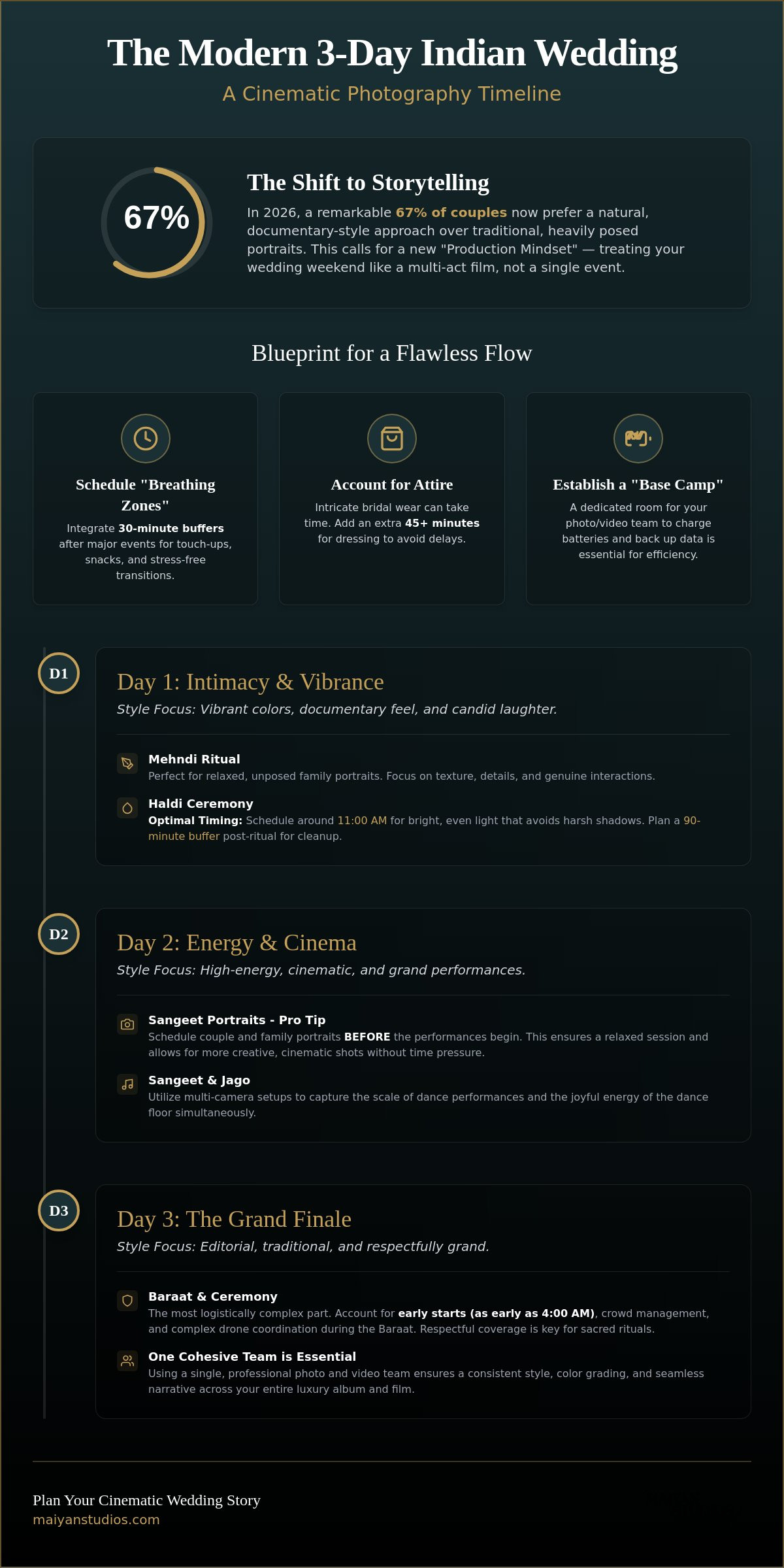
Did you know that 67% of couples getting married in 2026 now prefer a natural, documentary-style approach over traditional, heavily posed portraits? While the aesthetic is shifting toward candid storytelling, the complexity of a luxury South Asian celebration remains high. Balancing the sacred intimacy of a Haldi with the high-energy production of a Sangeet requires more than just a camera. It requires a precise wedding photography timeline for 3-day Indian wedding that accounts for every ritual, family portrait, and lighting shift across the weekend.
It's completely natural to feel overwhelmed by the fear of missing a key religious moment or the exhaustion of back-to-back events. You deserve to stay present while ensuring your gallery reflects the high-end cinematic quality your investment deserves. This guide will show you how to master the logistics of your celebration with a ritual-by-ritual schedule designed for the modern couple. We'll walk through how to create "editorial windows" for portraits, manage large family groups without the stress, and set clear expectations for your vendors to ensure a seamless flow from the first Mehndi henna stroke to the final reception dance.
Table of Contents
The Complexity of the Multi-Day South Asian Wedding Timeline
Standard photography packages often rely on a simple eight-hour window. For a South Asian celebration, that barely covers the morning rituals. A successful wedding photography timeline for 3-day Indian wedding requires a "Production Mindset." This means viewing the weekend as a multi-act film rather than a single event. You need to balance the raw, candid moments of a tearful goodbye with high-fashion editorial portraits that belong in a magazine. Because these events are so physically and logistically demanding, the old-school approach of "just showing up" no longer works for luxury celebrations.
In 2026, we're seeing a rise in "Ritual Micro-Events." These are smaller, intimate gatherings like a private prayer or a specific family blessing that happen in the quiet hours between the larger parties. Capturing these requires your photo and video team to have a designated "Base Camp." This is a central room at the venue where they can back up data, charge batteries, and swap lenses. Without this logistical hub, the team loses precious time traveling back to vehicles or hotel rooms. Managing a wedding photography timeline for 3-day Indian wedding also means accounting for the physical demands on the crew to ensure they stay sharp from the first prayer to the final dance.
Defining Your Photography Style for Each Day
Each day of your celebration has a distinct emotional frequency. Day 1 is usually about the vibrant, documentary feel of the Mehndi and Haldi. The focus here is on color, texture, and candid laughter. Day 2 shifts to a high-energy, cinematic style for the Sangeet and Jago. This is where multi-camera setups capture the scale of the performances and the joy of the dance floor. By Day 3, the tone becomes editorial and grand. This is the time for the most significant Hindu wedding rituals, such as the Saptapadi or Kanyadana, which require a respectful yet comprehensive approach to capture the weight of tradition.
The 2026 Shift: Why Buffer Times are Your Best Friend
The most common mistake in planning a wedding day photography schedule is ignoring the reality of "Indian Standard Time." Guests often arrive later than the invite states, which can compress your portrait window if you aren't prepared. Additionally, luxury South Asian bridal attire is incredibly complex. Heavy embroidery, intricate jewelry, and the pinning of a dupatta can easily add 45 minutes to a dressing timeline. To keep the energy high and the stress low, we recommend 30-minute "breathing zones" after every major event. These gaps allow you to touch up makeup, grab a snack, or simply catch your breath before the next ritual begins.
Day 1: The Intimacy of Mehndi and Haldi Rituals
Day 1 sets the emotional foundation for the entire weekend. While the final day is about grand tradition, these opening rituals focus on the bride and groom’s individual family circles. Establishing a clear wedding photography timeline for 3-day Indian wedding begins with these intimate moments. It's often the best time for relaxed, candid family portraits. Since the pressure of the main ceremony hasn't arrived yet, guests are more at ease, making it easier to capture genuine laughter and unposed interactions. If you're hosting separate events at different locations, your photography team needs a synchronized plan to ensure they don't miss the simultaneous joy happening at both houses.
Logistics are everything on Day 1. Moving between the bride’s and groom’s pre-events requires a coordinated effort, often involving a second shooter to maintain a consistent narrative. This is the day to focus on the textures and colors that define South Asian celebrations. If you want to see how these vibrant colors translate into a professional gallery, browsing through luxury wedding photography portfolios can provide a clear vision of the storytelling potential of Day 1.
The Haldi Timeline: From Ritual to Clean-up
The Haldi is a visual masterpiece of yellow and orange hues. We recommend scheduling this ritual around 11:00 AM. This timing offers bright, even light that enhances the "glow" of the turmeric paste without the harsh shadows of high noon. Photographers look to capture the symbolism of Hindu ceremonies, specifically the purification and blessing of the couple. Focus on high-speed action shots of turmeric application and the inevitable flower showers. Always build a 90-minute "breathing zone" into your schedule after the Haldi rituals. This allows you plenty of time to wash up and change without feeling rushed for the next event.
Mehndi Artistry: Macro-Photography and Storytelling
Mehndi application is a long process, but your photographer doesn't need to be there for the entire duration. Schedule them for the "Final Hour" of application. This ensures they capture the completed, intricate design while the henna is still wet and dark. Macro-photography is essential here to highlight hidden symbols or the groom's name woven into the patterns. You can also use this time for a relaxed mini-session, integrating some engagement photo ideas while you wait for the henna to dry. These casual portraits offer a beautiful, lifestyle-oriented contrast to the heavy, formal editorial shots you'll take on the wedding day.
Day 2: Sangeet and Jago—Balancing Energy and Editorial Portraits
Day 2 is where the production value of your celebration truly peaks. While Day 1 is about intimate family connections, the Sangeet and Jago are high-octane events that demand a sophisticated wedding photography timeline for 3-day Indian wedding. Most couples make the mistake of waiting until the party starts to take photos. By then, the decor is crowded and the carefully planned lighting is obscured by hundreds of guests. We advocate for a "Pre-Party" editorial session. This allows your team to treat the venue as a high-fashion set, capturing pristine shots of the stage, floral arrangements, and your outfits before the first guest arrives. It's the only way to ensure those magazine-quality images that showcase the scale of your investment.
The Jago ceremony presents a unique technical challenge. It often involves fast-paced movement through dimly lit corridors or outdoor spaces, with participants carrying flickering oil lamps or LED-lit pots. This isn't the time for a standard flash; it requires a photographer who understands how to balance ambient light with professional movement-tracking. In 2026, we're seeing a significant shift away from traditional, cluttered photo booths. Instead, luxury couples are opting for high-end "Portrait Stations." These are essentially mini-studios with professional lighting and a dedicated photographer, providing guests with a studio-quality portrait that matches the editorial aesthetic of the rest of your gallery.
The Sangeet Portrait Window
Timing is critical for your Sangeet glamor shots. We recommend scheduling the couple's session between 5:00 PM and 6:00 PM. This "Blue Hour" window provides a soft, cool natural light that complements the warm, vibrant interior lighting of most Sangeet halls. Use the decor as a high-fashion backdrop; whether it's a wall of marigolds or a modern geometric installation, these elements are designed to be seen. This window also allows for a cinematic "Grand Entrance" sequence. By capturing the family's arrival before the room fills up, your cinematography team can utilize wider angles and drone movements to emphasize the grandeur of the venue.
Capturing the Choreography
Performances are the heart of the Sangeet, and they move fast. To capture the energy of every dance, your team should use multi-camera setups. Coordination with the DJ and lighting technician is vital to ensure the stage isn't washed out by harsh strobes or left in total darkness. Wide-angle shots are essential here to capture the full scale of the dance floor and the reactions of the crowd. Sangeet photography requires high-ISO expertise because the team must freeze fast-paced dance movements in low-light environments without losing the vibrant colors of the stage design. This technical precision ensures that every spin and jump is captured with crystal clarity, even in the middle of a high-energy bhangra set.
Day 3: The Grand Finale—From Baraat to Reception
Day 3 is a logistical marathon that requires peak performance from your media team. It begins while the rest of the world is still asleep, often with a 4:00 AM call time for the bridal suite. This early start isn't just for hair and makeup; it's a critical component of a wedding photography timeline for 3-day Indian wedding that accounts for the sheer weight and complexity of luxury South Asian attire. To maintain your energy through such a long day, many couples turn to resources like Meghna's Food Magic for healthy, revitalizing recipe ideas. A heavy lehenga and intricate jewelry can add 45 minutes to a dressing schedule. If your timeline doesn't include these specific "jewelry buffers," you'll likely lose your window for bridal portraits before the ceremony begins.
The energy shifts dramatically with the Baraat. This is where drone logistics become essential to capture the scale of the procession and the groom's entrance. Following the high-energy Baraat, the ceremony (whether it's an Anand Karaj or Hindu Pheras) demands a shift to respectful, silent storytelling. Your team must navigate the Mandap with a "Production Mindset," ensuring they have a 360-degree clear path to capture the sacred fire or the Guru Granth Sahib without obstructing the view of your guests or the priest.
Morning Prep and First Look
We allocate the first 45 minutes of the morning specifically for "Flat Lays." This is when your photographer captures your jewelry, shoes, and invitation suite in a styled, editorial composition. Once you're dressed, we highly recommend a 15-minute private "First Look" window. This moment is a staple of modern South Asian wedding photography styles, offering a rare quiet moment for the couple before the chaos of the day. Simultaneously, a second shooter should be with the groom, capturing the precision of the turban tying and the emotional family blessings that precede the Baraat.
The Ceremony and Mandap Rituals
The transition from the Milni greetings to the Mandap is fast-paced. Your photography team needs to be mobile, using a mix of wide-angle shots to show the scale of the crowd and tight, intimate lenses for the rituals. Whether you're performing the Saptapadi or the Lavan, the focus is on the "Seven Steps" and the exchange of vows. To ensure every sacred moment is documented from the best angle, consider booking a team that specializes in luxury wedding cinematography to complement your still gallery.
The Reception Gala
After the ceremony, the "Reception Flip" occurs. This is when the couple re-emerges with a completely different high-fashion look. We require a 60-minute "Grand Room Reveal" window for the photography team before guests enter. This allows us to capture the pristine decor, the cake, and the lighting design in its perfect state. As the night progresses, the style shifts from formal editorial to a "party-paparazzi" approach. During the final hour of the after-party, we focus on high-energy, candid shots that capture the raw joy of your guests on the dance floor, providing a high-contrast finish to your luxury wedding album.
Why a Single Professional Team is Essential for Timeline Execution
Executing a complex wedding photography timeline for 3-day Indian wedding requires more than just technical skill; it requires seamless choreography between your visual teams. When you hire separate companies for photo and video, you often end up with vendors competing for the same angles. A single, unified team operates under a shared lead. This "One Team" advantage means the photographer knows exactly where the cinematographer is standing, and vice versa. They move in sync, ensuring that a stray light stand or a rogue camera operator never ruins a once-in-a-lifetime shot during the Pheras or the Sangeet performances.
Beyond the logistics on the day, a unified team ensures consistency in color grading across your entire luxury album. You don't want your Mehndi photos to look bright and airy while your Reception gallery feels dark and moody because two different editors handled the files. By using one studio, the visual narrative remains cohesive from the first ritual to the final dance. This approach also reduces the physical footprint in your bridal suite or on the Mandap. Fewer vendors in the room creates a more intimate, relaxed atmosphere, allowing you to stay present in the moment rather than feeling like you're on a crowded movie set.
Streamlining your communication also saves you from the exhaustion of managing multiple points of contact. Having one lead for all three days means your schedule is handled by a single professional who understands the nuances of your specific family dynamics. They know which rituals are high-priority and which moments need a more documentary approach, ensuring that nothing is lost in translation between Day 1 and Day 3.
Cinematography vs. Photography Sync
A professional team understands how wedding cinematography and photography must work in tandem. They share lighting setups, which prevents the "light pollution" that occurs when multiple teams bring their own conflicting gear. This coordination is especially vital during the Baraat. While one team captures the ground-level energy of the groom, another manages the drone flights for maximum cinematic impact. This level of synchronization ensures that the high-energy movement of the procession is documented safely and beautifully from every possible angle without the teams blocking each other's shots.
Booking for 2026: The Luxury Lead Time
Luxury South Asian weddings are high-production events that require significant planning. For 3-day coverage in 2026, we recommend a lead time of 12 to 18 months for booking. This ensures your preferred team is available for all three dates and allows for a comprehensive pre-wedding consultation. During this meeting, you'll finalize your ritual list and refine your wedding photography timeline for 3-day Indian wedding to account for any specific family traditions or unique venue logistics. Ready to secure your dates? View our portfolio of luxury South Asian weddings and book your 2026 dates today.
Elevate Your Three-Day Celebration with Precision
Planning a luxury South Asian wedding is an exercise in high-stakes production. Success relies on more than just showing up with a camera; it requires a detailed wedding photography timeline for 3-day Indian wedding that respects the cultural weight of rituals while carving out dedicated windows for high-fashion editorial portraits. To ensure every design detail and logistical element is flawlessly executed, check out Swanky Affair Event Design. By prioritizing buffer times for intricate bridal styling and ensuring your photo and video teams operate as a single, synchronized unit, you can navigate the weekend with total confidence.
Your legacy deserves to be captured with the technical mastery and emotional depth that only comes from deep industry experience. With 15+ years of South Asian wedding expertise and a portfolio of global destination wedding experience, our team specializes in award-winning cinematic storytelling. Secure your 2026 wedding date with Maiyan Studios to ensure your multi-day celebration is documented with the luxury it deserves. You've done the hard work of planning. Now it's time to enjoy every second of your celebration while we handle the production.
Frequently Asked Questions
How many hours of coverage do I need for a 3-day Indian wedding?
Most luxury celebrations require 30 to 40 hours of total coverage across the weekend. A standard wedding photography timeline for 3-day Indian wedding typically allocates 6 hours for pre-wedding rituals on Day 1, 8 hours for the Sangeet on Day 2, and 14 to 16 hours for the wedding day and reception. This range ensures full documentation from the early morning prep to the final dance floor moments.
What is the best time for the Baraat to start for good lighting?
The best time for a Baraat to start is either mid-morning between 9:00 AM and 10:00 AM or late afternoon around 4:30 PM. These windows provide softer, directional light that avoids the harsh, unflattering shadows of high noon. If your ceremony is indoors, a late afternoon Baraat allows for a seamless transition into a sunset cocktail hour and evening reception portraits.
Do we need a separate photographer for the Groom’s pre-events?
Yes, having a second lead photographer is essential to capture the groom's pre-events simultaneously with the bride's rituals. Since Mehndi or Haldi ceremonies often happen at different locations, a single photographer cannot be in two places at once. A multi-person team ensures that both sides of the family receive equal coverage and that no key blessings are missed during the busy first day.
How much time should we allow for bridal portraits on the wedding day?
You should allow at least 60 to 90 minutes for bridal portraits on the wedding day. This window should be scheduled after hair and makeup are complete but before the first look or ceremony. This time is crucial for capturing high-fashion editorial shots and detailed close-ups of your jewelry and henna before the fast-paced energy of the Baraat begins.
Can one photography team cover both a Sikh and a Hindu ceremony?
A single professional team with South Asian expertise can certainly cover both Sikh and Hindu ceremonies. Many modern couples choose to honor both traditions over the weekend or even on the same day. An experienced team will understand the specific protocols for both a Gurdwara and a Mandap, ensuring respectful and comprehensive storytelling for each distinct religious ritual.
Is drone photography allowed at most Indian wedding venues?
Most outdoor venues allow drone photography, but you must verify local airspace regulations and specific venue policies first. Drones are a common expectation for capturing the scale of the Baraat and outdoor Mandaps. However, some luxury hotels or historic sites have strict "no-fly" zones for privacy or safety reasons, so always check with your coordinator during the planning phase.
What happens if our ceremonies run late—how does that affect the timeline?
If ceremonies run late, your team will rely on the 30-minute "breathing zones" built into your wedding photography timeline for 3-day Indian wedding. These buffers act as a safety net to absorb delays without cutting into your portrait time. If a delay exceeds an hour, your photographer will prioritize the most critical rituals and may shift family portraits to the cocktail hour to keep the day moving.
When should we schedule the family formal portraits?
Schedule family formal portraits immediately following the ceremony while everyone is still at the Mandap or altar. This is the most efficient time because your extended family is already gathered in one place. For the Sangeet or Reception, try to finish immediate family portraits 30 minutes before the doors open to ensure you have time to refresh before your grand entrance.


Comments