
The Real Cost of Flying in a Wedding Photographer for 2026 Destination Events
- Maiyan Studios
- Jun 29
- 12 min read
Hiring a local photographer for your destination wedding might feel like a savvy budget move, but it often becomes a gamble with your once-in-a-lifetime memories. You've likely spent months planning every detail of your 2026 celebration, and you don't want to worry about a vendor missing a flight or struggling with international gear customs. Understanding the total cost of flying in a wedding photographer is about more than just booking a ticket; it's about securing a specialist who brings stylistic continuity and professional reliability to your global event.
We'll provide a comprehensive breakdown of the travel logistics you'll need to cover, including accommodation standards, daily expenses, and those easily overlooked hidden fees. You'll get a clear look at essential requirements like ATA Carnets for equipment and the reality of overweight baggage charges that can often top $500. By the end of this guide, you'll have a complete checklist of expenses and the peace of mind that comes with knowing your backup plans are as solid as your itinerary.
Table of Contents
A Realistic Breakdown of Wedding Photographer Travel Expenses
Accurately calculating the cost of flying in a wedding photographer for a 2026 event involves more than just checking flight prices on a travel app. You're investing in the safe arrival of a professional production team and their specialized tools. For high-end global celebrations, the travel budget must account for the physical weight of the craft and the logistical speed required to cover every moment. It's a strategic expense that ensures your visual storytellers arrive ready to work, rather than exhausted by travel delays or missing equipment.
Airfare and the 'Heavy Gear' Factor
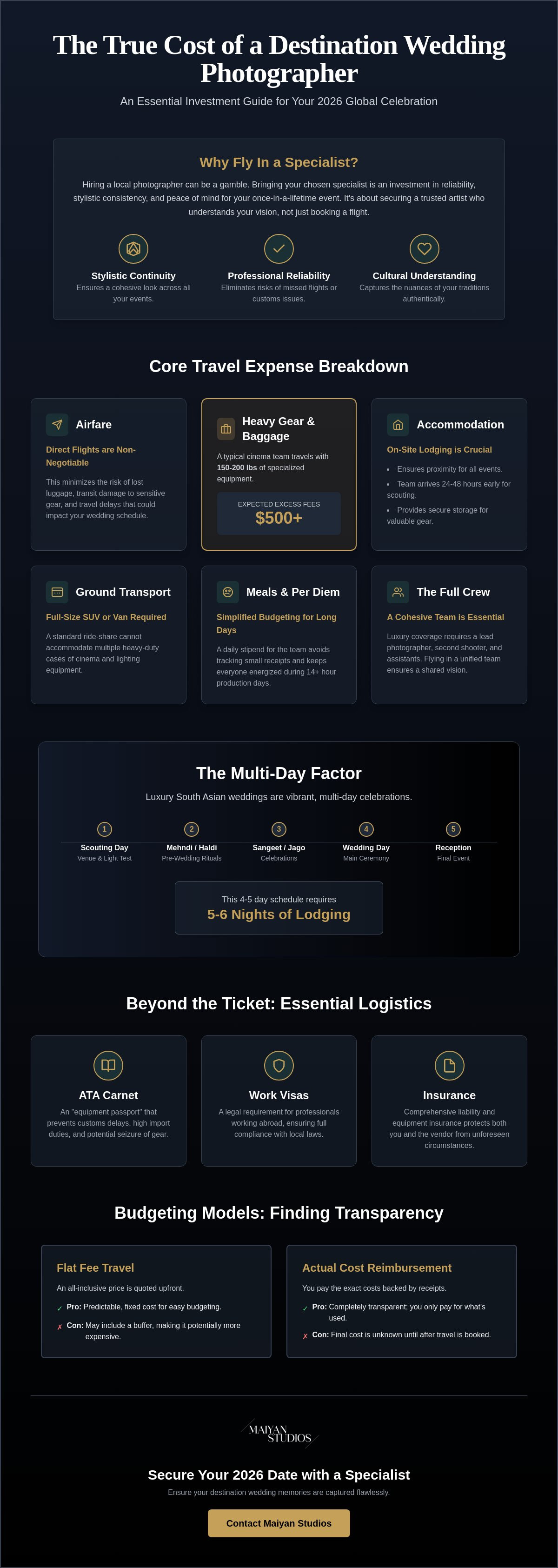
Direct flights are a necessity for gear safety, not a luxury. Every connection increases the probability of equipment being lost or mishandled by ground crews. For destination wedding photography, priority boarding is equally vital to ensure overhead bin space for sensitive camera bodies and lenses. While some might suggest booking the cheapest available flights to save money, this often leads to restrictive baggage policies and higher risks of delays that can derail a tight wedding schedule. A two-person cinema team typically travels with approximately 150 to 200 pounds of specialized equipment across multiple heavy-duty cases. Expect significant excess baggage fees for lighting kits, tripods, and cinema rigs, as these always exceed standard weight limits for international travel.
Lodging Logistics for the Creative Team
Proximity to the venue is the most important factor when choosing vendor accommodation. In the context of multi-day South Asian celebrations, the schedule is often relentless. Staying at the host hotel allows the team to move quickly between pre-wedding rituals and main ceremonies without fighting local traffic. Professionals often arrive 24 to 48 hours before the first event to scout the venue and test lighting in the local environment. Security is another major concern; rooms must provide enough space and safety to store high-value equipment during the few hours the team isn't shooting.
Ground transportation and meals round out the essential travel pillars. A standard ride-share rarely has the cargo capacity for a full production kit; therefore, a full-size rental SUV or a dedicated driver is a much safer choice for a luxury cinema team. To keep the planning process simple, many couples establish a daily per diem or meal stipend. This prevents the administrative burden of tracking small receipts and ensures the team stays energized through long, 14-hour production days. Establishing a clear budget for the cost of flying in a wedding photographer early in your planning ensures there are no surprises when the final invoices arrive.
This need for robust ground transportation is a shared reality for all field-based media professionals; for example, specialists providing mobile podcast recording Montreal must transport heavy audio consoles and acoustic treatments to ensure a studio-quality result on-site, regardless of the venue's location.
The Multi-Day Factor: Costs Specific to Luxury South Asian Weddings
Most destination wedding guides focus on a single day of coverage. This is a massive oversight for couples planning a luxury South Asian celebration. These events are vibrant, complex marathons that often span four to five days. When you analyze the cost of flying in a wedding photographer for these occasions, the math changes significantly. You aren't just paying for a Saturday ceremony; you're securing a team that remains on-call from the initial Mehndi to the final reception. This extended presence is what allows for the deep, cinematic storytelling these celebrations deserve.
Extended Stays for Traditional Rituals
Traditional rituals like the Sangeet, Haldi, and Jago are just as visually critical as the wedding itself. Experts in luxury Indian wedding photographer Dubai settings know that a Scouting Day is a mandatory part of the itinerary. This day allows the team to map the sun's path at the specific venue, ensuring the lighting for the Pheras or the Anand Karaj is perfect. Because of this, travel budgets must include five to six nights of lodging to cover the full scope of the festivities and preparation. If you're hiring a destination wedding photographer for a multi-day event, transparency about the full ritual schedule is the best way to avoid logistical friction later.
The Multi-Person Crew Dynamic
Luxury cinematography and photography for South Asian weddings require a larger crew than a standard event. A typical high-end team includes a lead photographer, a second shooter, and a production assistant. Flying in a unified team is often more efficient than hiring separate vendors who haven't worked together. A single, cohesive crew shares a creative vision and moves as one unit through the venue. While you'll need to cover airfare for each member, lodging costs can sometimes be managed through shared multi-room suites, provided they offer enough space for gear security and data offloading stations.
This multi-person dynamic ensures that while the lead captures the emotional peak of the ceremony, a second shooter is there for the family's reaction. It's about capturing the scale of the event without missing the intimate details. If you want to see how these multi-day stories come together, exploring our wedding cinematography portfolio can give you a clear sense of the production scale required. Managing these extended schedules requires a specialist who understands the cultural weight and timing of every moment, making the cost of flying in a wedding photographer a vital investment in your heritage.
Navigating Hidden Logistics: Visas, Carnets, and Insurance
Beyond the visible expenses of airfare and hotel suites, a layer of administrative logistics exists that can make or break an international production. When you evaluate the cost of flying in a wedding photographer, you're also accounting for the legal and protective measures that ensure your vendor can actually perform their job. Navigating foreign labor laws and customs regulations requires months of preparation. Most experts recommend starting the visa and permit process 6 to 12 months before the wedding date to avoid last-minute crises.
Legal compliance is non-negotiable for 2026 destination events. A standard tourist visa is not sufficient for professional work in the EU; non-EU citizens generally require a specific work visa to photograph weddings legally. Attempting to bypass these rules puts the entire event at risk of being shut down by local authorities. Additionally, professional liability insurance must be extended to cover international venues. Monthly plans for travel-ready photographers start at approximately $12 for basic liability, while comprehensive gear coverage adds about $30.17 to that monthly total. These protections ensure that if an accident occurs at a remote villa or a historic palace, the financial and legal fallout is fully managed.
International Customs and Equipment Permits
For international events, professional gear needs its own passport called an ATA Carnet. This document allows photographers to temporarily import high-value equipment into over 90 countries without paying duties or taxes. As of June 2026, the cost for a carnet starts at approximately $499, with additional fees based on the total value of the gear. Without this proper documentation, your production team faces the very real risk of local authorities seizing their cameras and lighting rigs at the border. Professional teams build time into their travel schedule to manage these customs inspections, ensuring everything is cleared before the first pre-wedding event begins.
Contingency Planning and Gear Backup
A specialist doesn't just bring one camera; they follow a strict 'Double Kit' rule. This means flying with redundant camera bodies, lenses, and lighting components to ensure the shoot continues even if a piece of hardware fails. Data redundancy is equally critical during transit. While cloud backups are useful, many luxury teams use a dual physical drive system, keeping one copy on their person and another in a secure carry-on during the return flight. Reliable professionals also maintain a network of local equipment rental contacts in major destination hubs like London, Dubai, or Paris. This level of preparation is a key component in the total cost of flying in a wedding photographer, providing a safety net that local generalists might lack.
Why Flying in a Specialist Outweighs the Cost of Hiring Local
Choosing a local photographer often seems like a way to simplify logistics, but it can introduce significant creative risks. A local generalist might know the best sunset spots in Tuscany or Cabo, but they likely lack the specialized cultural shorthand required for a complex luxury event. The cost of flying in a wedding photographer reflects the value of a shared vision and linguistic fluency. When you hire a specialist for your wedding cinematography, you aren't just paying for their presence; you're paying for their ability to anticipate moments that an outsider might miss entirely.
Mastery of South Asian Wedding Traditions
Luxury South Asian weddings are defined by intricate rituals that require precise timing. A local 'Western' photographer might capture beautiful images, but they often struggle to navigate the specific family dynamics of a Hindu or Sikh ceremony. They might not know where to stand during the Anand Karaj to avoid obstructing the priest, or they may miss the subtle emotional exchange between parents during the Vidaai. Specialist photographers understand every ritual from the high energy of the Baraat to the solemnity of the Pheras. They speak the same cultural language as your guests and elders, which reduces friction and ensures every culturally significant moment is documented with respect and precision.
The Editorial Edge and Artistic Vision
Consistency is the hallmark of luxury. If you've already worked with a photographer for your engagement session, bringing them to your destination ensures a cohesive aesthetic across your entire wedding gallery. Flown-in specialists are often more motivated to produce portfolio-tier work because they've been selected specifically for their unique style. You can explore different South Asian wedding photography styles to see how an editorial approach elevates traditional rituals into cinematic art. This artistic continuity is difficult to replicate when hiring a local vendor who is an unknown quantity.
Ultimately, the peace of mind that comes from a pre-existing relationship is priceless. You won't spend your wedding day managing a new vendor or worrying about language barriers during high-stress moments. Instead, you can focus on the celebration while your trusted team handles the visual storytelling. If you're ready to secure a team that understands the weight of your traditions, explore our destination wedding coverage options to begin planning your 2026 event.
Booking and Planning for 2026: Contract and Budgeting Strategies
Finalizing the financial details of your destination event requires a clear framework to prevent budget creep. Many couples offset these premium photography investments by making sustainable choices in other areas, such as using Bride2Bride to source or sell pre-owned designer gowns. When you calculate the total cost of flying in a wedding photographer, two primary booking models emerge: the flat fee and the actual cost reimbursement. Each has its merits depending on your preference for administrative ease or line-item transparency. For 2026 events, establishing these terms early is the best way to maintain a professional and stress-free relationship with your creative team.
Structuring the Travel Agreement
The flat fee model offers a predictable, all-inclusive rate for travel. It's often preferred by couples who want to set their budget once and move on. Conversely, the actual cost model involves reimbursing the team based on receipts with a pre-approved cap. While this requires more tracking, it ensures you only pay for what is actually used. Regardless of the model, your contract should specify who handles the booking. Most professionals prefer to book their own flights to ensure they have the necessary layover times for gear transfers and priority boarding access. It's also standard to cover at least two to three nights of lodging at a hotel grade that ensures both the safety of the equipment and the rest of the crew.
Managing the 2026 Global Wedding Calendar
Booking timelines for 2026 are already tightening. Because luxury destination specialists often limit their calendar to a specific number of global events per year, a lead time of 12 to 18 months is now standard. This is especially true for South Asian weddings, which require multi-day blocks on a vendor's calendar. Beyond the shooting days, expect to see a 'Travel Day' fee in the agreement. This compensates the team for the time spent in transit, acknowledging that they are dedicated exclusively to your event even when they aren't behind the camera.
Don't overlook the importance of contingency clauses. Your agreement must clearly outline the protocol for flight cancellations or severe travel delays. It's also vital to integrate the photographer into your wedding transport plan, particularly for remote venues where local ride-shares are unreliable. By addressing these logistics early, you secure more than just a vendor; you secure a partner dedicated to preserving your legacy. Finalizing these details early in your planning phase ensures that the cost of flying in a wedding photographer remains a transparent and manageable part of your luxury celebration.
Secure Your Global Legacy for 2026
Investing in the right creative team means looking past the initial airfare. You're securing professionals who understand the weight of your traditions and the technical demands of international travel. From managing ATA Carnets to ensuring every ritual of a multi-day celebration is captured with precision, the cost of flying in a wedding photographer is an investment in certainty. You won't have to worry about local vendor language barriers or missing the emotional peaks of your ceremony. Clear contracts and early planning ensure that your budget remains transparent and your focus stays on the celebration.
Ready to bring your vision to life? At Maiyan Studios, we specialize in luxury South Asian destination cinematography with global experience capturing complex, multi-day celebrations. We manage the seamless travel logistics for international events so you don't have to. Plan your 2026 destination wedding with Maiyan Studios and ensure your story is told with the editorial elegance it deserves. Your global celebration is a once-in-a-lifetime event. We're here to make sure every frame is perfect.
Frequently Asked Questions
Do I have to pay for the photographer's flight and hotel?
Yes, covering travel expenses is the standard industry practice for destination events. This typically includes round-trip airfare, lodging for the duration of the event plus scouting time, and ground transportation. These costs are usually separate from the photography package fee and are either paid upfront as a flat rate or reimbursed after booking.
Is it cheaper to book the photographer's travel myself?
Booking travel yourself might seem cheaper if you have airline points, but it often creates logistical friction. Photographers require specific flight times to ensure they arrive with enough buffer for scouting and gear checks. It's usually more efficient to let the team book their preferred routes and reimburse them to ensure they have the necessary baggage allowances for heavy equipment.
What happens if the photographer's gear is lost or stolen during the flight?
Professional destination specialists carry worldwide equipment insurance and travel with redundant kits to handle these exact scenarios. This level of risk management is a key factor in the total cost of flying in a wedding photographer. While standard travel insurance is often insufficient, a specialist's professional gear coverage ensures they can source replacement equipment locally without disrupting your wedding schedule.
How many days of accommodation should I provide for a destination wedding?
You should plan to provide at least two to three nights of lodging for a standard weekend wedding. This allows the team to arrive 24 hours early to scout the venue and adjust to the local time zone. For multi-day luxury events, such as South Asian celebrations, you'll need to provide accommodation for the full duration of the rituals plus the scouting day.
Should I provide a meal allowance for the photography team?
Yes, providing a daily meal stipend or per diem is standard when the team is off-duty. Daily expenses for a photographer can be budgeted at around $100 to $150 per day for meals and ground transport. During the actual wedding events, the team is typically included in your guest catering count so they can stay on-site and ready to shoot.
Can I hire a local photographer as a second shooter to save on travel costs?
While this saves on airfare, it often compromises the final gallery. A unified team that works together regularly has a shared creative shorthand and consistent editing style. Hiring a local stranger as a second shooter can lead to gaps in coverage or inconsistent image quality because they aren't familiar with the lead photographer's specific workflow or your aesthetic preferences.
What is a travel fee vs. travel expenses in a wedding contract?
Travel expenses refer to the direct out-of-pocket costs like flights and hotels. A travel fee is a separate professional charge that compensates the team for their time spent in transit and away from their studio. The cost of flying in a wedding photographer often includes both to ensure the business remains sustainable while the team is dedicated exclusively to your international event.
Is it worth flying in a photographer for a 2026 destination wedding?
Absolutely, because the peace of mind of having a trusted specialist is invaluable. You're investing in cultural precision and a guaranteed artistic style that a local generalist might not provide. By bringing a photographer you've already vetted, you eliminate the stress of language barriers and ensure your once-in-a-lifetime memories are captured by someone who truly understands your vision.


Comments